
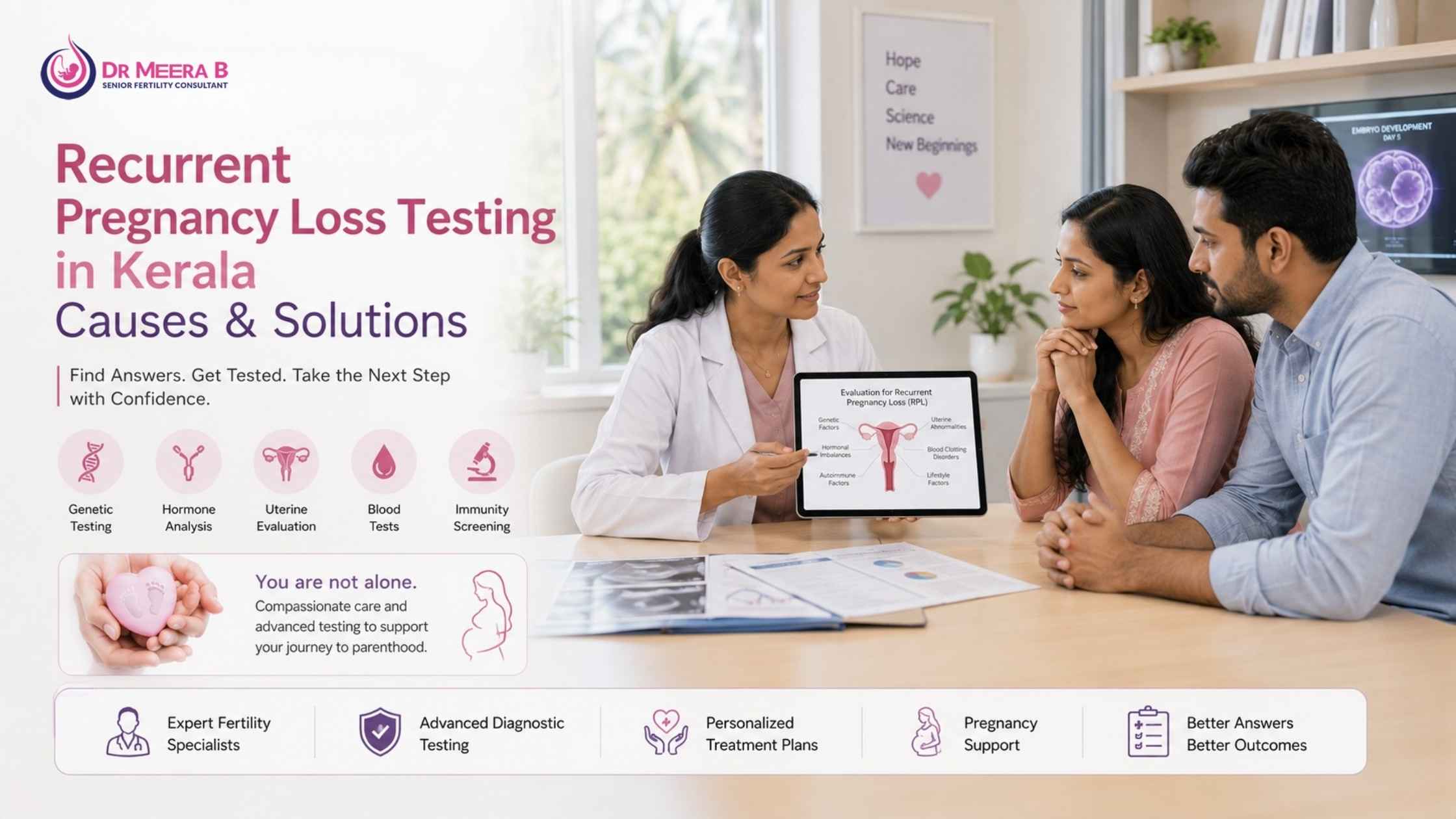
Recurrent Pregnancy Loss Testing in Kerala: Causes & Solutions
According to studies published by global reproductive medicine authorities, recurrent pregnancy loss affects nearly 1% to 2% of couples trying to conceive. For many families, repeated miscarriages are not only medically challenging but emotionally devastating. Fortunately, modern fertility medicine now offers advanced diagnostic pathways that can identify the underlying cause in a significant number of cases. This is why many couples are actively searching for recurrent pregnancy loss testing Kerala to find evidence-based answers instead of relying on guesswork or repeated failed attempts.
For couples in Kerala and particularly around Kollam, expert-guided fertility evaluation under Dr. Meera B has become an important turning point in their reproductive journey. With more than three decades of experience in obstetrics, gynecology, reproductive medicine, and IVF, Dr. Meera B combines clinical precision, internationally trained expertise, and ethical fertility guidance to help couples move toward safer and healthier pregnancies.
At Dr Meera B’s place of practice, including consultations associated with Aster PMF Hospital, Sasthamkotta, couples gain access to structured fertility investigations, miscarriage assessment protocols, reproductive endocrinology support, and modern assisted reproductive technologies tailored to their individual medical condition.
What is recurrent pregnancy loss?
Recurrent pregnancy loss refers to repeated miscarriages occurring before fetal viability. Most international reproductive medicine societies recommend detailed evaluation after two or more pregnancy losses, especially when the woman is above 35 years of age or when infertility coexists with miscarriage history.
Many couples delay evaluation because they assume miscarriages are simply due to “bad luck.” However, repeated pregnancy loss may indicate a treatable medical condition involving genetics, hormonal imbalance, uterine abnormalities, autoimmune disease, sperm health, or metabolic disorders.
Why is early testing important after repeated miscarriages?
Early testing helps identify correctable causes before additional emotional trauma and financial burden occur. Delayed fertility assessment can sometimes worsen reproductive outcomes, particularly when age-related fertility decline becomes a factor.
- Identifies hormonal and genetic causes
- Detects uterine abnormalities early
- Improves future pregnancy planning
- Reduces unnecessary treatment delays
- Helps couples avoid repeated emotional distress
- Supports personalized fertility treatment strategies
This proactive approach is one reason many couples now seek consultation with specialists experienced in both fertility medicine and recurrent miscarriage management rather than depending solely on generalized treatment.
What causes recurrent pregnancy loss?
Repeated miscarriages can occur due to multiple medical factors. In some couples, more than one cause may coexist simultaneously.
Chromosomal abnormalities
Genetic abnormalities in embryos remain one of the leading causes of miscarriage. Egg quality and sperm quality both influence chromosomal stability. As maternal age increases, chromosomal errors become more common.
Hormonal imbalance
Conditions involving thyroid disorders, insulin resistance, uncontrolled diabetes, and progesterone deficiency may affect implantation and pregnancy progression.
Uterine abnormalities
Fibroids, uterine septum, adhesions, and structural anomalies can interfere with implantation or fetal growth.
Immune and clotting disorders
Autoimmune disorders such as antiphospholipid syndrome can increase miscarriage risk by affecting placental blood flow.
Male factor infertility
Many couples are surprised to learn that sperm DNA quality can influence miscarriage risk. This is why consultation with a male infertility treatment specialist Kollam may become relevant during recurrent pregnancy loss evaluation.
Factors such as infection, fever, smoking, alcohol use, obesity, and environmental toxin exposure may negatively affect sperm quality. Questions surrounding sperm count recovery after viral fever are especially common because severe infections and high fever can temporarily reduce sperm production and motility.
What tests are included in recurrent miscarriage evaluation?
A comprehensive fertility and miscarriage assessment is individualized based on age, reproductive history, prior reports, and associated infertility concerns.
| Evaluation Area | Purpose |
|---|---|
| Hormonal blood tests | Assess thyroid, ovarian reserve, insulin resistance, and reproductive hormones |
| Genetic testing | Identify chromosomal abnormalities in parents or pregnancy tissue |
| Ultrasound imaging | Evaluate uterus, ovaries, fibroids, and endometrial lining |
| Hysteroscopy | Detect structural abnormalities inside the uterus |
| Semen analysis | Assess sperm count, motility, morphology, and possible DNA damage |
| Autoimmune testing | Evaluate clotting disorders and immune-related pregnancy complications |
Rather than applying a “one-size-fits-all” approach, Dr. Meera B focuses on evidence-based fertility evaluation pathways that are clinically appropriate for each couple.
How does age affect fertility and miscarriage risk?
Fertility naturally declines with age because egg quantity and egg quality reduce over time. Women above 35 years may face higher miscarriage risk due to chromosomal abnormalities.
In some patients, ovarian reserve testing reveals significantly reduced egg reserve, making timely fertility planning critical. Couples seeking diminished ovarian reserve treatment Kollam often require individualized reproductive strategies that may include ovarian stimulation, fertility preservation discussions, IVF-based treatment planning, or embryo assessment protocols depending on their clinical condition.
Can PCOS contribute to recurrent pregnancy loss?
Yes. Polycystic ovarian syndrome can contribute to miscarriage risk through insulin resistance, hormonal imbalance, obesity, inflammation, and ovulation dysfunction.
Interestingly, not all PCOS patients are overweight. Many women diagnosed with “lean PCOS” appear physically slim while still experiencing significant metabolic and hormonal irregularities. Proper diagnosis and lean PCOS treatment Kerala require careful hormonal evaluation rather than assumptions based only on body weight.
Treatment may involve:
- Ovulation regulation
- Insulin resistance management
- Lifestyle correction
- Nutritional optimization
- Weight management where applicable
- Fertility monitoring and cycle tracking
How advanced fertility technology improves outcomes
Modern reproductive medicine has transformed the management of infertility and recurrent miscarriage. Couples today have access to sophisticated reproductive technologies that were unavailable even a decade ago.
At Dr Meera B’s place of practice, patients may gain access to facilities utilizing advanced IVF technology Kerala, depending on clinical indication and treatment planning. These technologies may include:
- High-resolution embryo monitoring
- Blastocyst culture techniques
- Advanced ovarian stimulation protocols
- Sperm selection methods
- Fertility preservation approaches
- Precision hormonal monitoring
- Individualized embryo transfer planning
Importantly, ethical reproductive medicine focuses on improving safety, personalization, and evidence-based success optimization rather than promising unrealistic outcomes.
How do doctors decide between IUI and IVF?
The decision between IUI and IVF depends on age, ovarian reserve, sperm quality, duration of infertility, tubal status, and miscarriage history.
Many couples researching IUI vs IVF cost in Kollam are often more concerned about choosing the most effective treatment rather than simply the least expensive one. While IUI may be appropriate in selected mild infertility cases, IVF may offer higher success potential in situations involving recurrent miscarriage, advanced maternal age, tubal disease, severe male factor infertility, or diminished ovarian reserve.
An experienced fertility specialist evaluates:
- Likelihood of conception with natural methods
- Time-sensitive fertility decline
- Financial considerations
- Miscarriage history
- Underlying medical disorders
- Embryo quality concerns
This individualized planning often prevents couples from losing valuable reproductive time.
Are weight loss injections safe while planning pregnancy?
Questions surrounding weight loss injections and pregnancy safety have increased significantly due to the growing popularity of injectable obesity medications.
Current evidence suggests that many weight loss injections should not be continued during pregnancy. Women planning conception should always consult qualified reproductive specialists before starting or stopping these medications.
Dr. Meera B emphasizes medically supervised fertility preparation rather than unsupervised weight-loss trends circulating on social media. Proper nutritional correction, metabolic stabilization, hormonal balance, and preconception optimization remain essential components of safe fertility planning.
Why couples in Kerala are seeking specialized fertility guidance
Couples today are more informed than ever before. They understand that repeated miscarriages should not be ignored and that advanced fertility medicine can often identify treatable causes.
The combination of internationally trained expertise, ethical counseling, modern reproductive evaluation, and patient-centered communication has made Dr. Meera B a trusted name among couples searching for fertility guidance in Kerala.
At Aster PMF Hospital, Sasthamkotta, and associated places of practice, patients benefit from:
- Structured recurrent miscarriage evaluation
- Evidence-based fertility protocols
- International reproductive medicine exposure
- Personalized treatment planning
- Compassionate counseling support
- Access to modern reproductive technology pathways
About Dr. Meera B
Dr. Meera B is a senior gynecologist and reproductive medicine specialist with more than thirty years of clinical experience in fertility care, obstetrics, gynecology, and IVF guidance. She holds qualifications including MBBS, DGO, DNB (Obstetrics & Gynaecology), MRCOG (UK), and FRCOG (UK).
After graduating from Government Medical College, Trivandrum, and completing post-graduation at Government Medical College, Kottayam, she pursued advanced international exposure in reproductive medicine. Her IVF training includes experience at the renowned Bourn Hall Clinic, Cambridge, UK — globally recognized as the birthplace of the world’s first IVF baby.
Her approach focuses on scientifically validated fertility medicine, transparent counseling, realistic treatment guidance, and individualized reproductive planning tailored to each couple’s circumstances.
Book a consultation with Dr. Meera B
Couples struggling with repeated miscarriage, unexplained infertility, hormonal imbalance, ovarian reserve concerns, or fertility planning can schedule a consultation with Dr. Meera B through her place of practice associated with Aster PMF Hospital, Sasthamkotta.
To book an appointment:
- Fill and submit the consultation form at https://drmeerab.com/contact/
- Call or WhatsApp: +91 9447145101
- Use the WhatsApp interface available on the website to request an appointment
Dr. Meera B’s team will coordinate the scheduling process and keep patients informed regarding appointment availability and consultation details.
Frequently Asked Questions
What causes recurrent pregnancy loss and when should couples seek medical help?
Recurrent pregnancy loss can happen due to several medical and lifestyle factors including hormonal imbalance, thyroid disorders, uterine abnormalities, genetic conditions, autoimmune disease, poor egg quality, sperm-related issues, or uncontrolled metabolic conditions. Dr. Meera B recommends evaluation after two or more consecutive miscarriages, especially when the couple is planning another pregnancy soon.
Through comprehensive recurrent pregnancy loss testing Kerala couples can identify the root cause early and receive a personalized fertility and pregnancy care plan. Early diagnosis often improves the chances of a successful pregnancy while reducing emotional stress and repeated treatment failures.
What tests are commonly recommended for recurrent pregnancy loss?
Dr. Meera B may recommend blood investigations, hormone testing, genetic screening, pelvic scans, uterine cavity evaluation, infection screening, clotting disorder assessment, and semen analysis depending on the couple’s medical history. These tests help identify hidden fertility or pregnancy complications that may contribute to repeated miscarriages.
In many cases, advanced fertility evaluation combined with advanced IVF technology Kerala clinics now offer can improve embryo selection and implantation success. Individualized care remains important because every couple’s reproductive history and fertility profile is different.
Can low ovarian reserve affect pregnancy outcomes?
Yes. A reduced egg reserve can affect embryo quality and increase the risk of unsuccessful pregnancies in some women. Women above their mid-thirties or those with irregular cycles may benefit from early fertility assessment to understand ovarian function before attempting conception again.
Dr. Meera B provides individualized fertility support including diminished ovarian reserve treatment Kollam patients often seek when trying to improve egg quality, fertility response, and pregnancy outcomes. Timely intervention can help couples avoid unnecessary delays in treatment planning.
How do PCOS and weight-related hormonal issues impact recurrent miscarriages?
Hormonal imbalance linked with PCOS may interfere with ovulation quality, implantation, and pregnancy maintenance. Insulin resistance, obesity, and inflammation can also affect reproductive health and increase miscarriage risk if not properly managed.
Dr. Meera B offers fertility-focused lifestyle counseling and lean PCOS treatment Kerala patients can benefit from when they have irregular periods despite having a normal body weight. Treatment may include nutrition guidance, ovulation monitoring, hormonal correction, and fertility optimization before conception.
Some patients also ask about weight loss injections and pregnancy safety. These medications should only be used under medical supervision because certain injections may not be recommended during conception planning or pregnancy attempts.
Can male fertility problems contribute to recurrent pregnancy loss?
Yes. Sperm DNA damage, low sperm quality, infections, lifestyle habits, and untreated medical conditions can affect embryo development and pregnancy stability. Male fertility evaluation is an important part of recurrent miscarriage assessment and should not be overlooked.
Couples consulting a male infertility treatment specialist Kollam families trust may undergo detailed semen testing, hormonal evaluation, and lifestyle counseling. Dr. Meera B works with couples to ensure both partners receive complete fertility assessment before deciding the most suitable treatment approach.
Many couples also ask about sperm count recovery after viral fever. Temporary reduction in sperm quality can occur after high fever or viral infections, but recovery is possible over time with proper medical guidance, nutrition, and follow-up testing.
How do doctors decide between IUI and IVF after recurrent pregnancy loss?
The decision depends on age, ovarian reserve, sperm quality, previous pregnancy history, and the underlying cause of miscarriage. Some couples may conceive successfully with ovulation support or IUI, while others may benefit more from IVF with advanced embryo monitoring techniques.
During consultation, many couples also discuss IUI vs IVF cost in Kollam along with treatment success rates and timelines. Dr. Meera B explains the advantages, limitations, and expected outcomes of each option so couples can make informed decisions based on their fertility goals and medical condition.
What lifestyle changes can improve the chances of a healthy pregnancy after miscarriage?
Maintaining a healthy weight, controlling diabetes or thyroid disorders, avoiding smoking and alcohol, improving sleep quality, reducing stress, and following a balanced fertility-friendly diet can positively support reproductive health. Regular medical follow-up also helps detect complications early.
Dr. Meera B focuses on holistic fertility care by combining evidence-based medical treatment with emotional support and long-term reproductive wellness planning. Personalized treatment protocols help couples move forward confidently after the emotional experience of recurrent pregnancy loss.
Comments are closed