
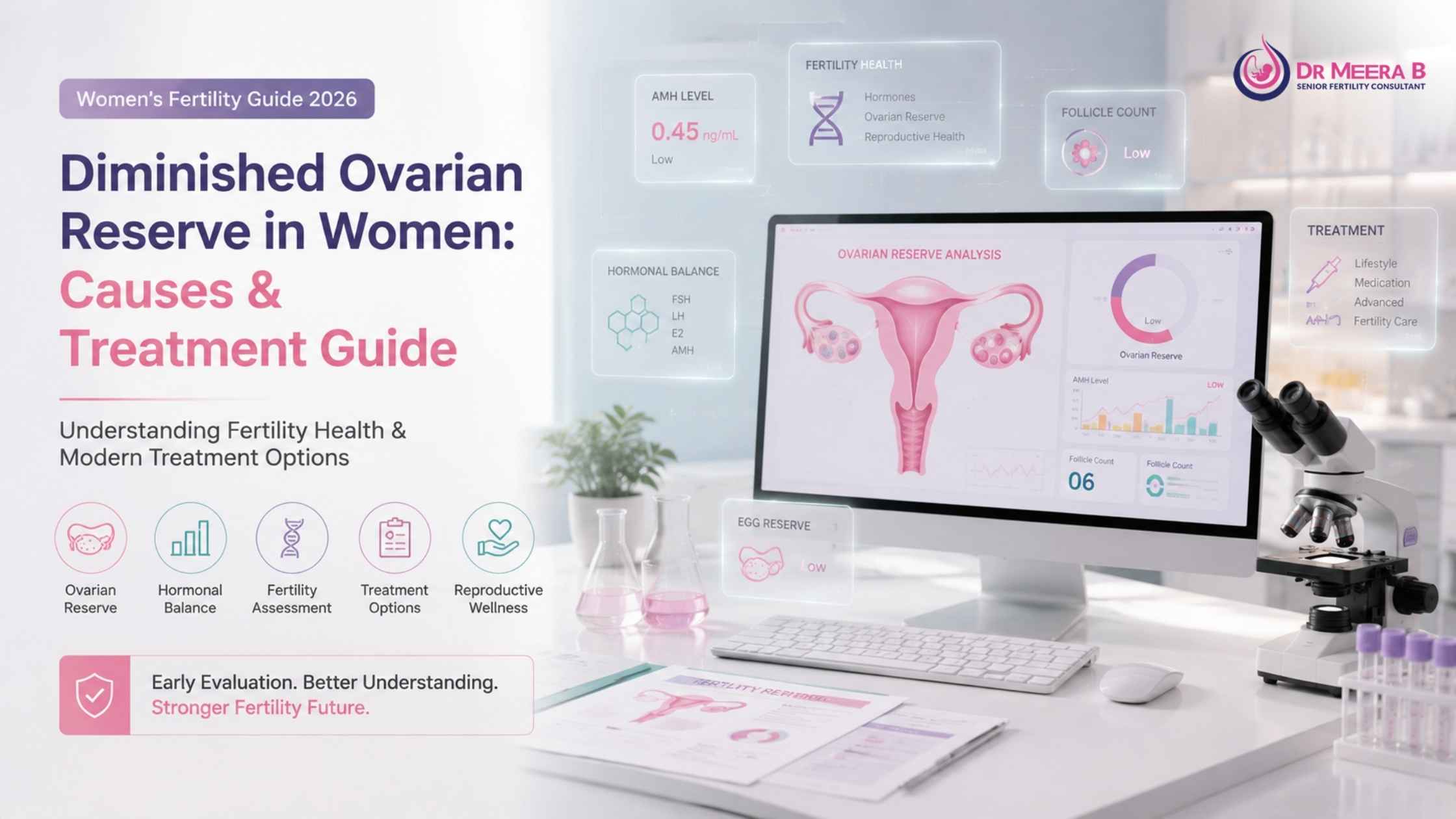
Diminished Ovarian Reserve in Women: Causes & Treatment Guide
Studies suggest that fertility begins to decline gradually after the age of 30 and more rapidly after 35, largely due to changes in egg quantity and quality. One of the most important yet often overlooked reasons behind delayed conception today is diminished ovarian reserve. Many women discover the condition only after months or years of trying to conceive. Early diagnosis and timely fertility guidance can significantly improve the chances of pregnancy, especially when expert reproductive care is available at Dr Meera B’s place of practice at Aster PMF Hospital, Sasthamkotta.
Diminished ovarian reserve does not always mean pregnancy is impossible. It means the ovaries may contain fewer eggs than expected for a woman’s age, and in some cases the egg quality may also decline. With evidence-based fertility planning, advanced investigations, lifestyle optimization, and modern reproductive support, many women are still able to pursue successful pregnancy outcomes.
What is diminished ovarian reserve?
Diminished ovarian reserve refers to a reduction in the number or quality of eggs present in the ovaries. Every woman is born with a finite number of eggs, and this reserve naturally decreases over time. However, in some women, this decline happens earlier or more rapidly than expected.
The condition can affect women in their late twenties, thirties, or forties. Some women continue to have regular menstrual cycles despite reduced ovarian reserve, which is why proper fertility assessment becomes essential when pregnancy is delayed.
What causes diminished ovarian reserve?
Several factors may contribute to reduced ovarian reserve. In many women, more than one factor may be involved.
Age-related ovarian decline
The most common cause is age. As women grow older, the number of healthy eggs gradually decreases. After the age of 35, the decline often accelerates, making fertility planning more time-sensitive.
Genetic and family history factors
Women with a family history of early menopause may have a higher risk of experiencing reduced ovarian reserve earlier in life.
Medical and surgical causes
- Ovarian cyst surgeries
- Endometriosis
- Chemotherapy or radiation
- Pelvic infections
- Autoimmune conditions
These conditions may affect ovarian tissue or disrupt normal ovarian function.
Lifestyle-related contributors
Smoking, severe stress, sleep disturbances, obesity, and nutritional deficiencies may negatively influence reproductive health. Increasingly, research is also examining how sleep affects female fertility and hormonal balance. Poor sleep patterns can disrupt reproductive hormones, menstrual regularity, and ovulation.
What are the symptoms of diminished ovarian reserve?
Many women may not notice obvious symptoms initially. Others may experience subtle fertility-related changes.
- Difficulty conceiving naturally
- Irregular menstrual cycles
- Shorter menstrual cycles
- Reduced response during fertility treatment
- Repeated IVF failures
- Miscarriages linked to poor egg quality
Women trying to conceive for six months to one year without success should consider fertility evaluation, especially after the age of 35.
How is diminished ovarian reserve diagnosed?
Accurate diagnosis requires a detailed fertility evaluation performed by an experienced specialist like Dr Meera B.
AMH blood test
Anti-Müllerian Hormone testing helps estimate ovarian reserve. Lower AMH levels may indicate reduced egg reserve.
Antral follicle count scan
An ultrasound scan is performed to count small follicles in the ovaries. This provides additional insight into ovarian response potential.
Hormonal evaluation
Tests for FSH, LH, estradiol, thyroid function, prolactin, and metabolic markers may be advised depending on the patient’s history.
Comprehensive fertility assessment
Fertility treatment should never focus only on the female partner. Male fertility assessment is equally important. Conditions such as infections and fever may affect sperm health temporarily, and discussions regarding sperm count recovery after viral fever may become relevant during fertility evaluation.
Why early fertility consultation matters
One of the biggest mistakes couples make is waiting too long before seeking help. Fertility potential changes over time, and delays may reduce treatment options later.
At Dr Meera B’s place of practice, fertility planning is approached with individualized care. Instead of generalized treatment promises, every patient undergoes detailed assessment before recommendations are made. This evidence-based approach helps couples understand realistic expectations and scientifically proven pathways.
Can women with diminished ovarian reserve still get pregnant?
Yes, many women with reduced ovarian reserve can still conceive naturally or with fertility support. The treatment approach depends on:
- Age
- Egg reserve levels
- Egg quality
- Duration of infertility
- Male fertility factors
- Previous pregnancy history
Timely intervention is often the key difference between delayed treatment and improved reproductive opportunities.
What are the treatment options available?
Lifestyle and fertility optimization
Before advanced fertility procedures are considered, several modifiable health factors may be addressed.
- Nutritional improvement
- Weight management
- Stress reduction
- Sleep optimization
- Exercise planning
- Hormonal balance evaluation
Women dealing with metabolic conditions may require individualized guidance. Discussions regarding lean PCOS treatment Kerala are becoming increasingly important because even women with normal body weight can experience hormonal imbalances affecting ovulation.
Ovulation support and timed conception
For selected women, medications may be used to support ovulation and improve timing for conception attempts.
Intrauterine insemination
IUI may be considered in carefully selected cases where ovarian reserve decline is mild and other fertility factors are favorable. Many couples also ask about IUI vs IVF cost in Kollam before deciding on treatment. While IUI may initially appear less expensive, IVF may sometimes offer better success rates depending on age and ovarian reserve status. A proper consultation helps determine which pathway is medically appropriate.
Advanced reproductive technologies
Women with significantly reduced ovarian reserve may require IVF-based treatment approaches. Modern fertility care now includes advanced IVF technology Kerala couples increasingly seek for better precision and monitoring.
At the place of practice where Dr Meera B consults, patients may gain access to sophisticated reproductive support technologies including:
- Advanced embryo culture systems
- Individualized ovarian stimulation protocols
- Blastocyst culture techniques
- Cryopreservation support
- Embryo monitoring technologies
- Male fertility optimization strategies
The focus remains on medically appropriate treatment selection rather than exaggerated guarantees.
What role does recurrent pregnancy loss evaluation play?
Some women with reduced ovarian reserve may experience miscarriages due to chromosomal abnormalities associated with egg quality decline. In such situations, recurrent pregnancy loss testing Kerala couples increasingly seek can become an important part of comprehensive fertility evaluation.
Testing may include:
- Genetic investigations
- Hormonal assessments
- Autoimmune evaluation
- Uterine cavity assessment
- Thrombophilia screening in selected cases
Proper diagnosis helps avoid repeated emotional distress and allows for more focused fertility planning.
Can weight loss medications affect fertility treatment?
Questions regarding weight loss injections and pregnancy safety are increasingly common among women planning conception. Some medications used for weight management may not be suitable during pregnancy attempts and fertility treatment.
This is why individualized medical supervision becomes essential. Women should never begin or stop medications without discussing fertility goals with a qualified reproductive specialist.
Why fertility treatment should never be delayed unnecessarily
Many couples spend years trying supplements, internet remedies, or unverified treatments before seeking professional help. Unfortunately, ovarian reserve continues to decline with time. Delayed intervention can narrow future treatment options.
Patients consulting Dr Meera B benefit from over three decades of clinical experience combined with international exposure in reproductive medicine. Her training at Bourn Hall Clinic in Cambridge, UK — the birthplace of the world’s first IVF baby — contributes to a globally informed yet ethically grounded fertility approach.
The availability of advanced reproductive support systems at Aster PMF Hospital, Sasthamkotta further strengthens the ability to provide structured fertility pathways for couples across Kerala.
How emotional stress affects fertility journeys
Infertility often affects emotional wellbeing, relationships, confidence, and family dynamics. Women with diminished ovarian reserve may feel overwhelmed after hearing terms like “low AMH” or “poor ovarian reserve.”
However, fertility care should never create panic. Scientific counseling, proper investigations, and transparent communication help couples make informed decisions instead of fear-driven choices.
Dr Meera B’s approach emphasizes realistic counseling, evidence-based treatment planning, and compassionate reproductive care tailored to each couple’s medical profile.
About Dr Meera B
Dr Meera B is a highly respected gynecologist and fertility specialist with more than thirty years of experience in women’s health and reproductive medicine. She holds MBBS, DGO, DNB(O&G), MRCOG(UK), and FRCOG(UK) qualifications and has received advanced reproductive medicine training at the renowned Bourn Hall Clinic in Cambridge, UK.
Her expertise includes fertility evaluation, IVF guidance, ovulation disorders, reproductive endocrinology, and individualized fertility planning. Patients from Kollam and across Kerala seek consultation with her for scientifically guided fertility solutions rooted in ethical medical practice.
Dr Meera B currently consults at Aster PMF Hospital, Sasthamkotta, where modern reproductive support systems and advanced fertility technologies are available to support couples pursuing parenthood.
How to book a consultation with Dr Meera B
Couples seeking expert evaluation for ovarian reserve concerns, delayed conception, IVF planning, or reproductive health support can schedule a consultation with Dr Meera B through the contact form at:
Appointments may also be requested by calling +91 9447145101. Patients additionally have the option of sending a WhatsApp message through the website interface requesting an appointment. Dr Meera’s team will coordinate scheduling and provide further guidance regarding consultation timings and fertility evaluation requirements.
Frequently Asked Questions
What is diminished ovarian reserve and when should women seek medical guidance?
Diminished ovarian reserve refers to a reduction in the quantity and quality of eggs available in the ovaries. Women may notice irregular menstrual cycles, difficulty conceiving, lower AMH levels, or poor response during fertility treatment. While age is a major factor, genetics, autoimmune disorders, previous ovarian surgery, chemotherapy, smoking, and severe stress can also contribute.
Dr. Meera B provides individualized fertility evaluations and fertility preservation guidance for women facing early fertility decline. Patients looking for diminished ovarian reserve treatment Kollam often benefit from early hormone assessment, ultrasound monitoring, and customized reproductive planning designed around their age and reproductive goals.
Can lifestyle habits and sleep quality affect fertility outcomes?
Yes. Hormonal balance is closely connected to lifestyle, stress management, nutrition, and sleep patterns. Many couples underestimate how sleep affects female fertility because poor sleep can influence ovulation, cortisol levels, insulin resistance, and reproductive hormone regulation.
Dr. Meera B encourages a holistic fertility approach that includes sleep optimization, healthy body weight, stress reduction, and nutritional counseling alongside medical fertility treatment. Improving overall reproductive health may support better ovarian response and improved conception outcomes.
How is PCOS linked to reduced fertility and ovarian reserve concerns?
Polycystic Ovary Syndrome can affect ovulation quality, hormone balance, and egg maturation. Some women with lean PCOS may appear healthy externally while still experiencing irregular ovulation and infertility challenges. Proper diagnosis is important because treatment strategies differ between classic PCOS and lean variants.
Dr. Meera B offers evidence-based fertility management including ovulation tracking, metabolic evaluation, and lean PCOS treatment Kerala for women trying to conceive naturally or through assisted reproductive techniques. Treatment plans are personalized based on hormone profiles, body composition, and fertility history.
What tests are recommended for couples with repeated miscarriages?
Recurrent miscarriage may result from chromosomal abnormalities, uterine structural issues, thyroid imbalance, autoimmune conditions, clotting disorders, or sperm quality concerns. Comprehensive evaluation helps identify treatable causes and improves future pregnancy planning.
Couples seeking recurrent pregnancy loss testing Kerala can consult Dr. Meera B for advanced diagnostic screening that may include hormonal testing, genetic assessment, ultrasound imaging, hysteroscopy, and immune-related investigations. Early identification of underlying problems allows more targeted fertility support and pregnancy care.
Are weight management injections safe while trying to conceive?
Weight management medications may influence hormone balance and fertility timing, so medical supervision is important for women planning pregnancy. Questions surrounding weight loss injections and pregnancy safety should always be discussed with a fertility specialist before conception attempts begin.
Dr. Meera B carefully evaluates metabolic health, BMI, ovulation status, and medication history before advising patients on fertility treatment timelines. In many cases, healthy lifestyle correction and medically guided nutrition support are recommended before conception or assisted reproductive procedures.
What fertility treatment options are available for women with low ovarian reserve?
Treatment depends on age, AMH levels, antral follicle count, and previous fertility history. Some women may respond well to ovulation induction or IUI, while others may require IVF with individualized stimulation protocols. Timely intervention is especially important because ovarian reserve can decline further with age.
Dr. Meera B incorporates advanced IVF technology Kerala to support improved embryo development, monitoring, and treatment planning. Depending on the clinical condition, patients may also receive guidance regarding egg freezing, embryo freezing, or donor egg options when appropriate.
How do couples decide between IUI and IVF treatment?
The choice between IUI and IVF depends on multiple factors including age, ovarian reserve, sperm quality, tubal health, and duration of infertility. IUI is generally less invasive and more affordable, while IVF offers higher success rates in complex fertility cases or advanced maternal age.
Many couples ask about IUI vs IVF cost in Kollam while planning fertility treatment. Dr. Meera B explains both procedures in detail, including expected outcomes, treatment timelines, medication requirements, and cost considerations so patients can make informed reproductive decisions with confidence.
Can viral fever temporarily affect male fertility and sperm health?
Yes. High fever and viral infections can temporarily affect sperm production, motility, and morphology. In many men, sperm quality gradually improves over time after recovery, although the timeline may vary depending on the severity of illness and overall health.
Couples concerned about sperm count recovery after viral fever may benefit from semen analysis, antioxidant support, and fertility counseling. Dr. Meera B evaluates both partners together because fertility outcomes are often influenced by combined male and female reproductive health factors.
Comments are closed