
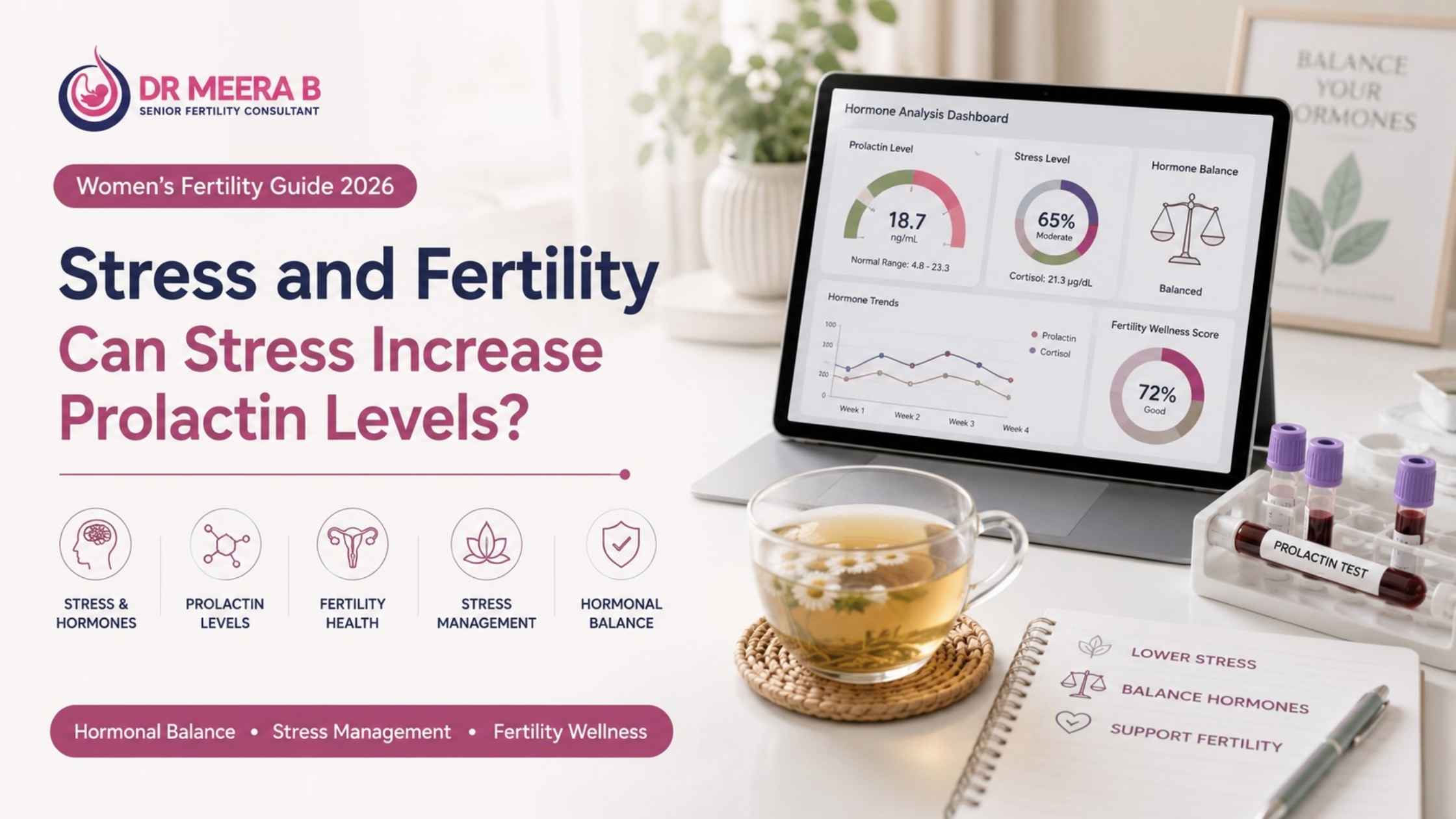
Stress and Fertility: Can Stress Increase Prolactin Levels?
Can stress raise prolactin and affect your fertility? Yes – research shows up to 40% of women struggling with infertility have elevated prolactin levels, often linked with chronic stress1. If you’re seeking answers and solutions for fertility stress in Kerala, Dr Meera B, one of Kollam’s most experienced gynecologists, offers expert guidance backed by over three decades of compassionate care.
What Is The Link Between Stress And Prolactin?
Stress and prolactin are closely connected through the body’s hormonal response system. Prolactin is a hormone produced by the pituitary gland, primarily known for its role in enabling lactation. However, it also plays key roles in reproductive health for both women and men. When you experience ongoing psychological or emotional stress, your body releases stress hormones, including cortisol and adrenaline, triggering a cascade that may lead to elevated prolactin levels.
- Prolactin elevation can disrupt ovulation and menstrual cycles in women.
- In men, high prolactin can impair testosterone production and sperm quality.
- Chronic stress, if unmanaged, is a significant risk factor for hormonal imbalance that undermines fertility potential.
Dr Meera B has observed, in her experience at Aster PMF Hospital, Sasthamkotta and other places of practice, that stress is often underestimated as a cause of unexplained infertility. Addressing stress and prolactin is a critical part of any comprehensive fertility evaluation.
How Does Fertility Stress Affect Your Hormones?
Fertility stress refers to the psychological and emotional burden experienced by individuals and couples facing difficulties in conceiving. This stress can be acute (around fertility treatments or diagnosis) or chronic (persistent worry about fertility outcomes). Stress triggers the hypothalamic-pituitary-adrenal (HPA) axis, resulting in the release of stress hormones like cortisol and adrenaline.
Here’s how fertility stress can disrupt your hormonal balance:
- Elevated cortisol suppresses the release of gonadotropin-releasing hormone (GnRH), which is essential for the production of reproductive hormones.
- Changes in stress hormones can increase prolactin secretion, leading to hormonal imbalance and menstrual irregularities.
- High prolactin may cause anovulation, where the ovaries do not release an egg during the menstrual cycle, further reducing fertility.
Dr Meera B emphasizes the importance of recognizing the signs of fertility stress and addressing them early, as timely intervention can restore hormonal harmony and improve fertility outcomes.
Why Does Hormonal Imbalance Matter In Fertility?
Hormonal imbalance is one of the most common causes of infertility in both women and men. Hormones like prolactin, cortisol, estrogen, and progesterone must work in precise harmony to regulate ovulation, fertilization, and embryo implantation. When stress disrupts this balance, the following complications may arise:
- Irregular menstrual cycles or missed periods
- Shortened or lengthened luteal phase (the time between ovulation and menstruation)
- Reduced egg quality or sperm motility
- Difficulty sustaining pregnancy after conception
Dr Meera B has successfully guided many couples through restoring hormonal imbalance by using proven diagnostic tools and targeted therapies at her place of practice. Her personalized approach ensures that each patient’s unique hormonal profile is addressed with utmost precision.
How Do Cortisol And Infertility Relate?
Cortisol and infertility are intricately linked through the body’s stress response. Cortisol, known as the primary “stress hormone,” is released in higher amounts during periods of psychological or physical stress. While short bursts of cortisol are necessary for survival, chronic elevation can be detrimental to reproductive health.
- High cortisol levels suppress GnRH, reducing the production of FSH and LH, which are necessary for ovulation and sperm production.
- Chronic stress may also increase prolactin levels, compounding the negative effects on fertility.
- Studies have shown that women with consistently high cortisol are twice as likely to experience infertility compared to those with lower levels.
Dr Meera B uses advanced diagnostic protocols to assess cortisol and infertility in her patients, ensuring that root causes are addressed for optimal outcomes.
What Are The Proven Ways To Manage Stress Hormones For Fertility?
Managing stress hormones is essential for those hoping to conceive. Dr Meera B recommends the following evidence-based strategies, which are tailored and monitored in her place of practice to ensure safety and efficacy:
- Medical evaluation and hormone profiling: Comprehensive blood tests to check levels of prolactin, cortisol, thyroid hormones, and reproductive hormones.
- Targeted medications: If elevated prolactin is detected, medications such as cabergoline or bromocriptine may be prescribed under strict medical supervision.
- Counseling and stress management: Evidence-based psychological support, including cognitive-behavioral therapy (CBT) and mindfulness techniques, has been shown to lower fertility stress and improve hormonal balance.
- Diet and lifestyle modifications: A balanced diet, regular exercise, and adequate sleep can naturally regulate stress hormones and support reproductive well-being.
- Yoga and relaxation therapies: Dr Meera B incorporates these practices where appropriate, as clinical studies show their effectiveness in reducing cortisol and infertility risk.
Every patient receives a customized care plan at Dr Meera B’s place of practice, ensuring that interventions are both effective and evidence-based.
Why Choose Dr Meera B For Managing Stress And Fertility?
| Feature | Benefit |
|---|---|
| Over 30 Years of Experience | Unmatched expertise in reproductive medicine and IVF |
| Global Training | Trained at Bourn Hall Clinic, Cambridge, UK |
| Personalized Care | Each patient receives a tailored treatment plan |
| Comprehensive Diagnostics | Advanced hormonal and fertility assessments |
| Trusted Reputation | Known for compassionate, ethical, and effective care |
Missing out on the expertise of Dr Meera B means risking delays in addressing the critical links between stress and prolactin and fertility. Her approach is rooted in clinical evidence, ensuring you only receive tested and proven treatments that safeguard your reproductive health.
How To Book An Appointment With Dr Meera B?
Taking the first step towards resolving your hormonal imbalance and improving fertility is easy:
- Fill in the consultation form on the official website.
- Call +91 9447145101 to request an appointment.
- Send a WhatsApp message via the interface on the website for prompt scheduling.
Dr Meera B’s team will schedule your appointment at her current place of practice, including Aster PMF Hospital, Sasthamkotta, and keep you updated throughout the process.
About Dr Meera B
Dr Meera B is a renowned gynecologist and fertility expert based in Kollam, Kerala. With MBBS, DGO, DNB (O&G), MRCOG (UK), and FRCOG (UK) qualifications, she brings over 30 years of experience to reproductive medicine. Trained at the world-renowned Bourn Hall Clinic in Cambridge, UK, Dr Meera B is committed to ethical, evidence-based care for couples struggling with infertility and hormonal issues. Her dedication to advancing fertility care in Kerala is reflected in her patient-first approach and consistent success rates.
Frequently Asked Questions
How does stress affect fertility and hormone levels?
Stress can disrupt the body’s hormonal balance, impacting key reproductive hormones. Elevated stress hormones, such as cortisol, can suppress ovulation, reduce sperm count, and interfere with menstrual regularity. Furthermore, chronic fertility stress may raise levels of prolactin, a hormone that can inhibit fertility when present in excess. Managing stress is vital for supporting natural reproductive health.
Can stress increase prolactin levels in the body?
Yes, ongoing emotional or physical stress can increase the production of prolactin. This connection between stress and prolactin is well documented; higher prolactin levels may cause irregular periods, lack of ovulation, or even temporary infertility in women. Addressing stressors is an important step in restoring hormonal equilibrium.
What are the symptoms of high prolactin due to stress?
Symptoms of elevated prolactin from stress can include irregular or missed periods, milky nipple discharge (when not pregnant or breastfeeding), reduced libido, and difficulties with conception. Some may also experience mood changes or headaches. Dr. Meera B. recommends hormonal testing if you suspect these symptoms are linked to stress and prolactin.
How do cortisol and infertility relate to each other?
Cortisol is the body’s main stress hormone, and persistently high levels can negatively impact fertility. Elevated cortisol can disrupt ovulation, reduce endometrial receptivity, and impair sperm production. This link between cortisol and infertility highlights the importance of stress management for couples trying to conceive.
What solutions does Dr. Meera B. offer for stress-induced hormonal imbalance?
Dr. Meera B. provides an integrative approach to addressing hormonal imbalance caused by stress. Her solutions include lifestyle counseling, personalized stress reduction strategies, targeted nutritional advice, and, when necessary, safe medical interventions to rebalance hormones like prolactin and cortisol. Each plan is tailored to the individual’s unique health needs and fertility goals.
Are there natural ways to lower stress hormones and support fertility?
Absolutely. Dr. Meera B. recommends regular physical activity, mindfulness practices (such as meditation and yoga), adequate sleep, and a diet rich in whole foods to help regulate stress hormones. These lifestyle changes not only reduce the negative effects of fertility stress but also promote overall reproductive health.
Should I get my prolactin levels checked if I’m experiencing fertility issues?
If you are facing difficulties conceiving, experiencing irregular periods, or have other symptoms of hormonal imbalance, Dr. Meera B. advises checking your prolactin levels. Early detection of elevated prolactin can guide effective treatment and improve your chances of successful conception.
How quickly can stress management improve fertility outcomes?
Improvements vary from person to person, but many individuals notice positive changes in menstrual regularity and mood within a few weeks of adopting stress management techniques. According to Dr. Meera B., consistent efforts to reduce stress and balance hormones can significantly enhance fertility outcomes over time.
How can I book a consultation with Dr. Meera B. for fertility stress and hormonal concerns?
Booking a consultation is simple. Visit Dr. Meera B.’s official website or contact her clinic directly to schedule an appointment. She offers both in-person and virtual consultations tailored to address fertility stress, hormonal imbalance, and overall reproductive wellness.
Comments are closed