
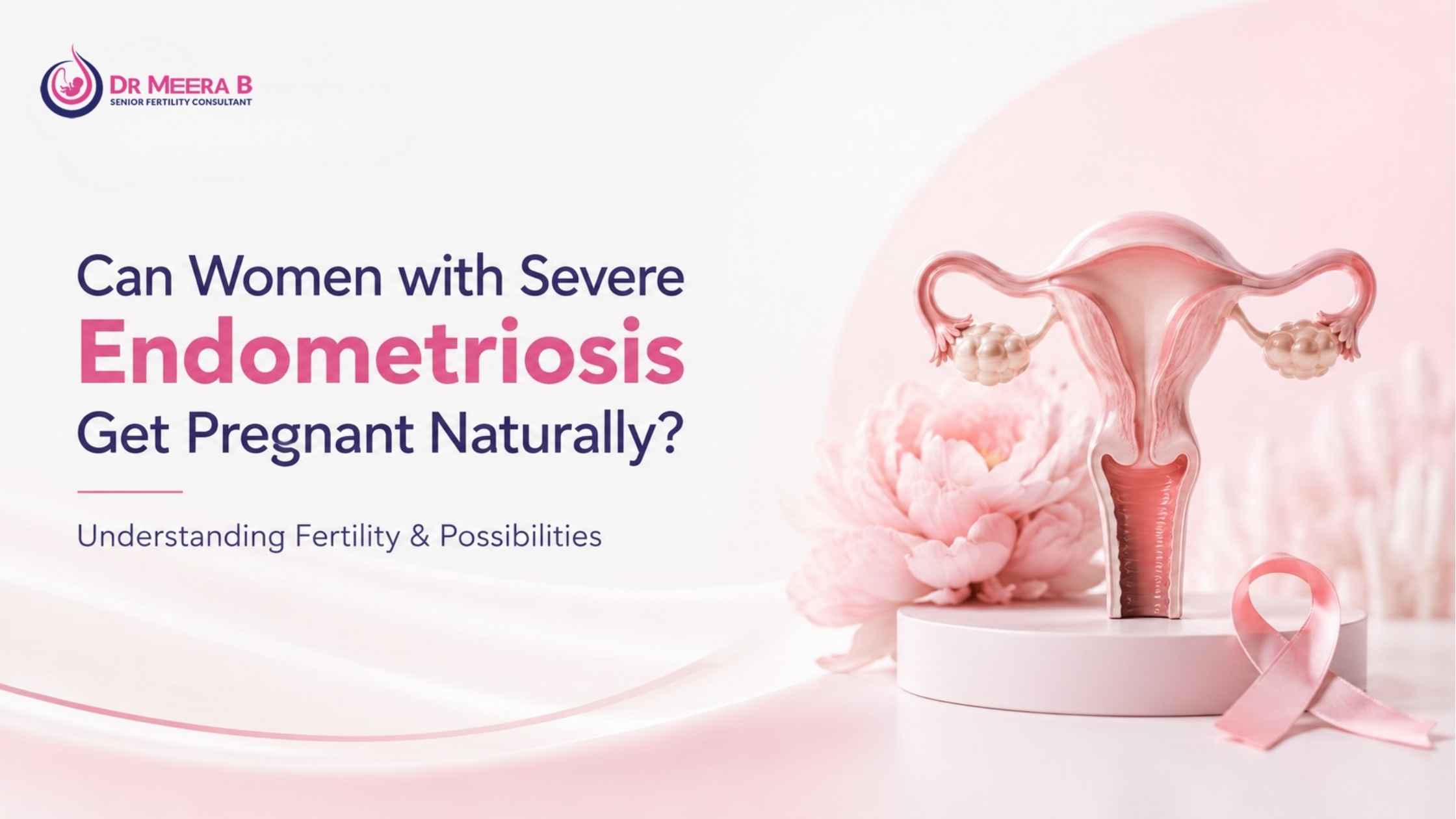
Can Women with Severe Endometriosis Get Pregnant Naturally?
Yes, women with severe endometriosis can sometimes conceive naturally, although the chances may be lower compared to women without the condition. According to data published by the American Society for Reproductive Medicine and other reproductive health authorities, endometriosis affects approximately 30%–50% of women experiencing infertility. However, many women with even advanced disease have successfully conceived naturally with appropriate evaluation, symptom management, and fertility-focused guidance.
For women diagnosed with severe endometriosis pregnancy concerns often become emotionally overwhelming. The fear that motherhood may never happen can affect confidence, relationships, and long-term family planning decisions. The encouraging reality is that severe endometriosis does not automatically mean infertility. Every case is unique, and with expert assessment from an experienced fertility specialist such as Dr Meera B, many women discover opportunities and treatment pathways they were unaware existed.
With more than three decades of experience in Obstetrics, Gynaecology, Reproductive Medicine, and IVF, Dr Meera B provides evidence-based fertility guidance at her place of practice, including Aster PMF Hospital, Sasthamkotta. Her international training, including advanced exposure at the renowned Bourn Hall Clinic in Cambridge, UK, enables her to evaluate fertility challenges comprehensively and recommend proven solutions tailored to each patient’s circumstances.
What is severe endometriosis and why does it affect fertility?
Severe endometriosis refers to advanced stages of the condition where tissue similar to the uterine lining grows outside the uterus, often causing significant inflammation, scar tissue formation, adhesions, and ovarian cysts known as endometriomas.
Fertility may be affected through several mechanisms:
- Distortion of pelvic anatomy
- Blocked or damaged fallopian tubes
- Reduced egg quality in some cases
- Inflammatory changes affecting fertilization
- Adhesions around reproductive organs
- Reduced implantation potential
However, fertility impairment varies considerably. Some women with mild disease struggle to conceive, while others with advanced disease achieve spontaneous pregnancies. This variation highlights the importance of individualized assessment rather than assuming pregnancy is impossible.
Can natural pregnancy still happen with severe endometriosis?
Yes. Natural pregnancy with endometriosis remains possible even in advanced cases. The probability depends on factors such as age, ovarian reserve, fallopian tube function, partner fertility status, and the extent of disease involvement.
Many women are surprised to learn that natural conception may occur despite severe disease. Fertility specialists evaluate whether the reproductive system remains functionally capable of achieving pregnancy before recommending more advanced interventions.
Factors that improve the possibility of natural pregnancy with endometriosis include:
- Younger reproductive age
- Healthy ovarian reserve
- Patent fallopian tubes
- Good sperm parameters
- Limited impact of adhesions on reproductive organs
- Timely fertility-focused management
Dr Meera B emphasizes realistic counseling based on medical findings rather than assumptions. This approach helps couples make informed decisions without unnecessary delays.
What are the fertility chances for women with severe endometriosis?
The answer depends on multiple clinical factors. There is no single percentage that applies to all women. Instead, specialists evaluate individual reproductive potential.
| Factor | Impact on Fertility |
|---|---|
| Age | One of the strongest predictors of pregnancy success |
| Ovarian Reserve | Determines available egg quantity |
| Tubal Function | Essential for natural conception |
| Severity of Adhesions | May interfere with fertilization |
| Male Fertility Factors | Critical component of conception |
| Duration of Infertility | Longer duration may require advanced intervention |
When discussing fertility chances endometriosis, Dr Meera B focuses on measurable fertility indicators instead of generalized predictions. This evidence-based strategy allows couples to understand their realistic opportunities and available options.
How is fertility evaluated in women with severe endometriosis?
A detailed fertility workup helps identify obstacles that may be preventing conception.
Assessment may include:
- Detailed medical and reproductive history
- Pelvic examination
- Ultrasound evaluation
- Assessment of ovarian reserve
- Hormonal testing
- Fallopian tube evaluation
- Semen analysis of the partner
- Advanced imaging when necessary
This comprehensive approach prevents unnecessary delays and helps determine whether natural conception remains feasible or whether assisted reproductive techniques should be considered.
Can surgery improve natural conception chances?
In selected cases, surgery may improve fertility outcomes. However, surgery is not appropriate for every patient and must be carefully individualized.
The goals of surgery may include:
- Removing endometriotic lesions
- Restoring pelvic anatomy
- Reducing adhesions
- Improving access between egg and sperm
- Managing large endometriomas when clinically indicated
Current fertility guidelines emphasize balancing the potential benefits of surgery against possible effects on ovarian reserve. This is why expert decision-making becomes critically important.
Dr Meera B carefully evaluates whether surgical intervention offers meaningful reproductive benefits before recommending it.
When should women consider fertility treatment instead of waiting?
While natural conception remains possible, waiting indefinitely can reduce future opportunities, especially as age advances.
You should seek fertility-focused consultation if:
- You are over 35 years of age
- You have been trying to conceive unsuccessfully
- You have severe pelvic pain
- You have known stage III or stage IV endometriosis
- You have undergone previous surgery
- You have recurrent ovarian cysts
- You have experienced pregnancy loss
Early consultation does not necessarily mean IVF is required. Instead, it helps identify the most appropriate path forward while preserving reproductive potential.
What infertility solutions are available today?
Modern reproductive medicine offers numerous evidence-based infertility solutions for women affected by severe endometriosis.
Depending on individual circumstances, options may include:
- Timed intercourse guidance
- Ovulation monitoring
- Lifestyle optimization
- Medical management when appropriate
- Fertility-preserving strategies
- Laparoscopic surgery in selected cases
- Intrauterine insemination (IUI)
- In vitro fertilization (IVF)
Importantly, no ethical fertility specialist can guarantee pregnancy. Instead, proven fertility treatments aim to maximize the probability of success based on each patient’s medical profile.
Why does early fertility planning matter in severe endometriosis?
One of the biggest challenges with endometriosis is the tendency to delay fertility evaluation. Many women assume symptoms are normal or hope conception will occur eventually.
The problem is that reproductive time cannot be recovered. As age increases, egg quantity and quality naturally decline. When severe endometriosis is present, delaying evaluation may further complicate fertility planning.
Prompt consultation enables:
- Accurate fertility assessment
- Identification of reproductive risks
- Personalized treatment planning
- Preservation of fertility opportunities
- Improved long-term reproductive outcomes
This proactive approach can make a significant difference in helping couples pursue parenthood with confidence.
What lifestyle measures may support fertility?
Lifestyle modifications cannot cure endometriosis, but they may support overall reproductive health when combined with appropriate medical care.
- Maintain a healthy body weight
- Follow a balanced diet
- Engage in regular physical activity
- Manage stress effectively
- Avoid smoking
- Limit alcohol consumption
- Prioritize adequate sleep
- Attend regular fertility evaluations
These recommendations are not substitutes for medical treatment but may complement fertility-focused care.
Why choose Dr Meera B for fertility guidance?
Dr Meera B is one of Kerala’s highly respected fertility-focused gynecologists with more than thirty years of clinical experience. Her qualifications include MBBS, DGO, DNB (O&G), MRCOG (UK), and FRCOG (UK), reflecting advanced national and international expertise.
She graduated from Government Medical College, Trivandrum, completed postgraduate training at Government Medical College, Kottayam, became a Member of the Royal College of Obstetricians and Gynaecologists in 2008, and earned Fellowship status in 2022.
Her specialized training in Reproductive Medicine and IVF at the historic Bourn Hall Clinic in Cambridge, UK, provides valuable insights into modern fertility treatment strategies. At her place of practice, including Aster PMF Hospital, Sasthamkotta, patients benefit from personalized evaluations, evidence-based recommendations, and compassionate fertility care.
About Dr Meera B
Dr Meera B is a senior gynecologist and fertility specialist serving patients from Kollam, Kerala, and beyond. She specializes in fertility evaluation, reproductive medicine, IVF guidance, high-risk obstetrics, and women’s health. Her commitment to ethical medical practice, individualized patient care, and evidence-based treatment has helped numerous couples navigate complex fertility challenges with confidence.
Take the next step toward understanding your fertility
If you have been diagnosed with endometriosis and are concerned about your ability to conceive, obtaining an expert fertility assessment may provide clarity and direction. Every month matters when planning a family, and understanding your reproductive potential today can help protect your opportunities for tomorrow.
To schedule a consultation with Dr Meera B, complete the appointment request form at https://drmeerab.com/contact/ or call +91 9447145101. You may also send a WhatsApp appointment request through the website interface. Dr Meera B’s team will coordinate the appointment and keep you informed regarding the next steps.
Frequently Asked Questions
Can women with severe endometriosis get pregnant naturally?
Yes, many women diagnosed with severe endometriosis pregnancy challenges are still able to conceive naturally. While severe endometriosis can affect the ovaries, fallopian tubes, pelvic anatomy, and overall reproductive function, pregnancy is not impossible. The likelihood depends on factors such as age, ovarian reserve, the extent of the disease, and the health of the partner’s sperm.
Dr. Meera B provides comprehensive fertility evaluations to determine how endometriosis is affecting reproductive health and helps patients understand the most suitable pathway toward conception, whether natural or assisted.
How does endometriosis affect fertility?
Endometriosis may affect fertility in several ways. Scar tissue and adhesions can distort pelvic anatomy, ovarian cysts may impact egg quality, and inflammation can interfere with fertilization and implantation. However, the degree of fertility impact varies greatly from one woman to another.
Through detailed diagnostic assessment, Dr. Meera B identifies the specific fertility barriers caused by endometriosis and develops a personalized treatment strategy designed to improve reproductive outcomes.
What are the chances of natural pregnancy if I have advanced endometriosis?
The possibility of natural pregnancy with endometriosis depends on the severity of the condition and individual reproductive factors. Some women with advanced disease conceive without medical intervention, while others may require fertility treatment.
A proper fertility assessment can provide a clearer understanding of reproductive potential. Dr. Meera B evaluates ovarian reserve, tubal patency, hormonal health, and other important factors before discussing realistic conception expectations and next steps.
Can surgery improve fertility in women with severe endometriosis?
In selected cases, surgery can improve fertility by removing endometriosis lesions, ovarian endometriomas, or scar tissue that interferes with normal reproductive function. However, surgery is not appropriate for everyone and should be carefully planned to preserve ovarian reserve.
Dr. Meera B evaluates whether surgical intervention is likely to enhance conception prospects and coordinates treatment plans that balance symptom relief with fertility preservation.
How are fertility chances affected by age and endometriosis together?
Age remains one of the most important fertility factors. As egg quantity and quality naturally decline with age, endometriosis may further complicate conception. For this reason, evaluating fertility chances endometriosis patients have at different ages is essential when planning treatment.
Dr. Meera B helps patients understand their current fertility status and recommends timely interventions when needed to maximize the opportunity for pregnancy.
When should I seek fertility treatment if I have endometriosis?
Women with moderate to severe endometriosis should consider consulting a fertility specialist sooner rather than later, especially if they have been trying to conceive for six months or longer, are over the age of 35, or have undergone previous endometriosis surgery.
Early evaluation often allows more treatment options and can prevent unnecessary delays in achieving pregnancy.
What infertility solutions are available if natural conception does not occur?
Several infertility solutions are available depending on the underlying cause and severity of endometriosis. These may include ovulation support, intrauterine insemination (IUI), fertility-preserving surgical procedures, or in vitro fertilization (IVF).
Dr. Meera B offers individualized fertility care and recommends evidence-based treatment options tailored to each patient’s medical history, reproductive goals, and timeline for conception.
Why should I consult Dr. Meera B for endometriosis-related fertility concerns?
Endometriosis-related infertility often requires a personalized approach rather than a one-size-fits-all solution. Dr. Meera B focuses on identifying the root causes affecting fertility, evaluating reproductive health comprehensively, and creating customized treatment plans aimed at improving conception outcomes.
Whether the goal is to pursue natural conception, preserve fertility for the future, or explore advanced reproductive techniques, patients receive guidance based on their individual needs and clinical circumstances.
Comments are closed