
Embryo Transfer Symptoms Day by Day After IVF: What Is Normal?
Did you know that globally, IVF success rates range between 30% to 40% per cycle depending on age and health factors? This means understanding embryo transfer symptoms is not just helpful—it is crucial for managing expectations and reducing anxiety during one of the most emotionally significant phases of fertility treatment.
For couples undergoing IVF, the days following embryo transfer can feel like a waiting game filled with hope, uncertainty, and constant observation of physical sensations. Under the expert guidance of Dr Meera B, a highly experienced fertility specialist practicing at Aster PMF Hospital, Sasthamkotta, patients receive clarity on what is normal and when to seek medical advice. With over three decades of experience and international training, Dr Meera B ensures that every patient understands the embryo transfer symptoms timeline in a scientifically grounded and reassuring manner.
What are embryo transfer symptoms and why do they occur?
Embryo transfer symptoms are the physical and hormonal responses your body experiences after an embryo is placed into the uterus during IVF. These symptoms are primarily influenced by progesterone support, uterine response, and early implantation processes.
It is important to understand that not all women experience noticeable symptoms, and the absence of symptoms does not indicate failure. Dr Meera B emphasizes that IVF outcomes cannot be judged based solely on after embryo transfer symptoms.
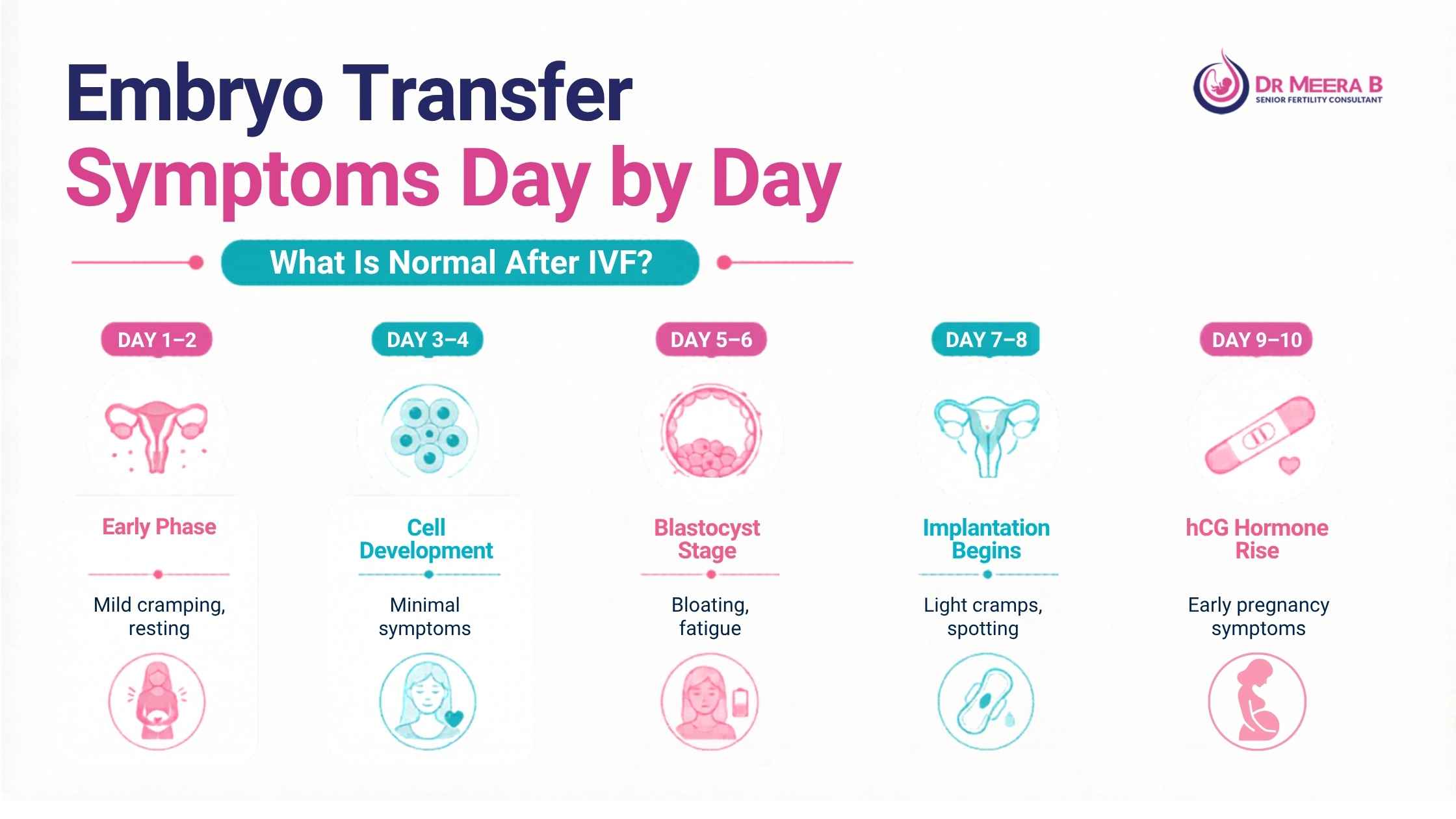
Day by day embryo transfer symptoms timeline
Day 1–2: Immediate post-transfer phase
During the first 48 hours, the embryo begins to settle in the uterine lining. Most women may not experience any major changes.
- Mild cramps after embryo transfer
- Light spotting in some cases
- Subtle body changes after embryo transfer due to hormonal support
These sensations are typically caused by the procedure itself rather than implantation.
Day 3–4: Early implantation window
This is when implantation may begin. However, symptoms can still be minimal or absent.
- Occasional lower abdominal pain after embryo transfer
- Increased fatigue
- Hormonal fluctuations causing mood changes
Dr Meera B advises patients not to overanalyze these early signs, as they vary widely among individuals.
Day 5–6: Possible implantation phase
This is often when implantation occurs if it hasn’t already.
- Light spotting (implantation bleeding in some cases)
- Mild backache after embryo transfer
- Subtle uterine sensations
It is important to note that implantation bleeding does not occur in all pregnancies.
Day 7–9: Hormonal response intensifies
As the embryo begins producing hCG, some women may notice:
- After embryo transfer white discharge due to progesterone
- Breast tenderness
- Increased tiredness
These after embryo transfer symptoms can mimic early pregnancy but may also be side effects of medication.
Day 10–14: Waiting period before pregnancy test
This phase can be emotionally intense. Symptoms may include:
- Persistent cramps after embryo transfer
- Heightened body changes after embryo transfer
- Emotional fluctuations
Dr Meera B strongly recommends waiting for the scheduled beta hCG test rather than relying on symptoms.
What body changes after embryo transfer are considered normal?
Understanding body changes after embryo transfer helps reduce unnecessary stress. Common normal changes include:
- Mild pelvic discomfort
- Hormonal bloating
- Increased vaginal discharge
- Fatigue due to progesterone
These are expected physiological responses and do not necessarily indicate success or failure of IVF.
When should you be concerned about symptoms?
While most after embryo transfer symptoms are harmless, certain signs require medical attention:
- Severe lower abdominal pain after embryo transfer
- Heavy bleeding
- Persistent fever
- Severe backache after embryo transfer with other symptoms
At Dr Meera B’s place of practice, patients are carefully monitored, ensuring that any complications are addressed promptly with evidence-based care.
Why symptoms alone cannot confirm pregnancy
One of the biggest misconceptions is that symptoms confirm implantation. In reality:
- Progesterone mimics pregnancy symptoms
- Each body reacts differently
- Some successful pregnancies show no symptoms at all
This is why Dr Meera B emphasizes relying on clinical testing rather than interpreting embryo transfer symptoms.
How Dr Meera B supports patients during the IVF journey
Dr Meera B is a distinguished gynecologist and fertility expert based in Kollam, with over 30 years of experience in reproductive medicine. Practicing at Aster PMF Hospital, Sasthamkotta, she offers:
- Personalized IVF protocols
- Accurate monitoring of embryo transfer symptoms timeline
- Evidence-based treatment plans
- Compassionate emotional support
Her international training at Bourn Hall Clinic, Cambridge—the birthplace of IVF—adds unmatched credibility to her approach.
What makes Dr Meera B’s approach different?
In a space filled with misinformation, Dr Meera B stands out by focusing strictly on proven medical science. She ensures that patients:
- Understand realistic expectations
- Avoid unnecessary stress from symptom interpretation
- Receive ethical, transparent guidance
This approach not only improves patient confidence but also enhances overall treatment outcomes.
How to manage symptoms after embryo transfer
To manage after embryo transfer symptoms effectively, Dr Meera B recommends:
- Maintaining light physical activity
- Following prescribed medications strictly
- Avoiding heavy lifting and stress
- Eating a balanced diet
These simple yet scientifically supported practices can significantly improve comfort during the waiting period.
Why early guidance can make all the difference
The period after embryo transfer is emotionally charged and medically sensitive. Without proper guidance, patients may misinterpret symptoms like after embryo transfer white discharge or cramps after embryo transfer, leading to unnecessary anxiety.
By consulting Dr Meera B early, couples gain clarity, confidence, and a structured roadmap for their fertility journey. Missing out on expert guidance at this stage can mean navigating one of the most critical phases without the right support.
Book your consultation with Dr Meera B
If you are planning IVF or currently in the post-transfer phase, expert guidance can make a meaningful difference.
You can book an appointment with Dr Meera B by:
- Filling out the form at: https://drmeerab.com/contact/
- Calling: +91 9447145101
- Sending a WhatsApp message via the website interface
Her team will schedule your consultation and guide you through the next steps at Dr Meera B’s place of practice.
About Dr Meera B
Dr. Meera B MBBS, DGO, DNB(O&G), MRCOG(UK), FRCOG(UK) is a highly respected gynecologist and fertility specialist with over 30 years of experience. She graduated from Govt Medical College, Trivandrum, and completed her post-graduation at Govt Medical College, Kottayam. She became a Member of the Royal College of Obstetricians and Gynaecologists in 2008 and was awarded Fellowship in 2022.
With advanced training in reproductive medicine at Bourn Hall Clinic, Cambridge, Dr Meera B combines global expertise with compassionate care, helping couples achieve their dream of parenthood.
Frequently Asked Questions
What are common embryo transfer symptoms after IVF?
Many women experience mild embryo transfer symptoms that are completely normal after the procedure. These may include light spotting, mild cramps, fatigue, and slight bloating. Under the guidance of Dr. Meera B, patients are reassured that these signs are usually due to hormonal changes and the body adjusting to implantation conditions.
What does the embryo transfer symptoms timeline look like day by day?
The embryo transfer symptoms timeline varies for each individual. In the first few days, you may notice minimal changes. Around days 3–5, some women report implantation-related sensations like light cramping or fatigue. By days 6–10, subtle signs such as breast tenderness or mild discharge may appear. Dr. Meera B emphasizes that absence of symptoms is also completely normal.
Are cramps after embryo transfer a cause for concern?
Experiencing cramps after embryo transfer is quite common and usually mild. It often feels similar to menstrual cramps and may be linked to implantation or hormonal medications. However, severe or persistent pain should be discussed with Dr. Meera B for proper evaluation.
Is backache after embryo transfer normal?
Yes, backache after embryo transfer can occur due to hormonal changes and uterine adjustments. It is typically mild and temporary. Dr. Meera B often advises gentle rest and hydration to ease discomfort while monitoring for any unusual intensity.
What kind of body changes after embryo transfer should I expect?
Common body changes after embryo transfer include fatigue, breast tenderness, mood fluctuations, and slight bloating. These are largely due to progesterone support medications. Dr. Meera B explains that these changes mimic early pregnancy symptoms but are not definitive indicators of success.
Is after embryo transfer white discharge a positive sign?
After embryo transfer white discharge is commonly reported and is usually linked to progesterone supplements rather than implantation itself. While it is generally harmless, Dr. Meera B advises patients to watch for unusual odor or irritation and report any concerns.
Should I worry about lower abdominal pain after embryo transfer?
Lower abdominal pain after embryo transfer is often mild and temporary. It may be associated with implantation or medication effects. However, if the pain becomes sharp or persistent, it is important to consult Dr. Meera B for further assessment.
Are after embryo transfer symptoms reliable indicators of pregnancy success?
After embryo transfer symptoms alone cannot confirm pregnancy. Some women experience multiple signs, while others have none and still achieve successful outcomes. Dr. Meera B highlights that only a blood test (beta hCG) provides accurate confirmation.
Comments are closed