
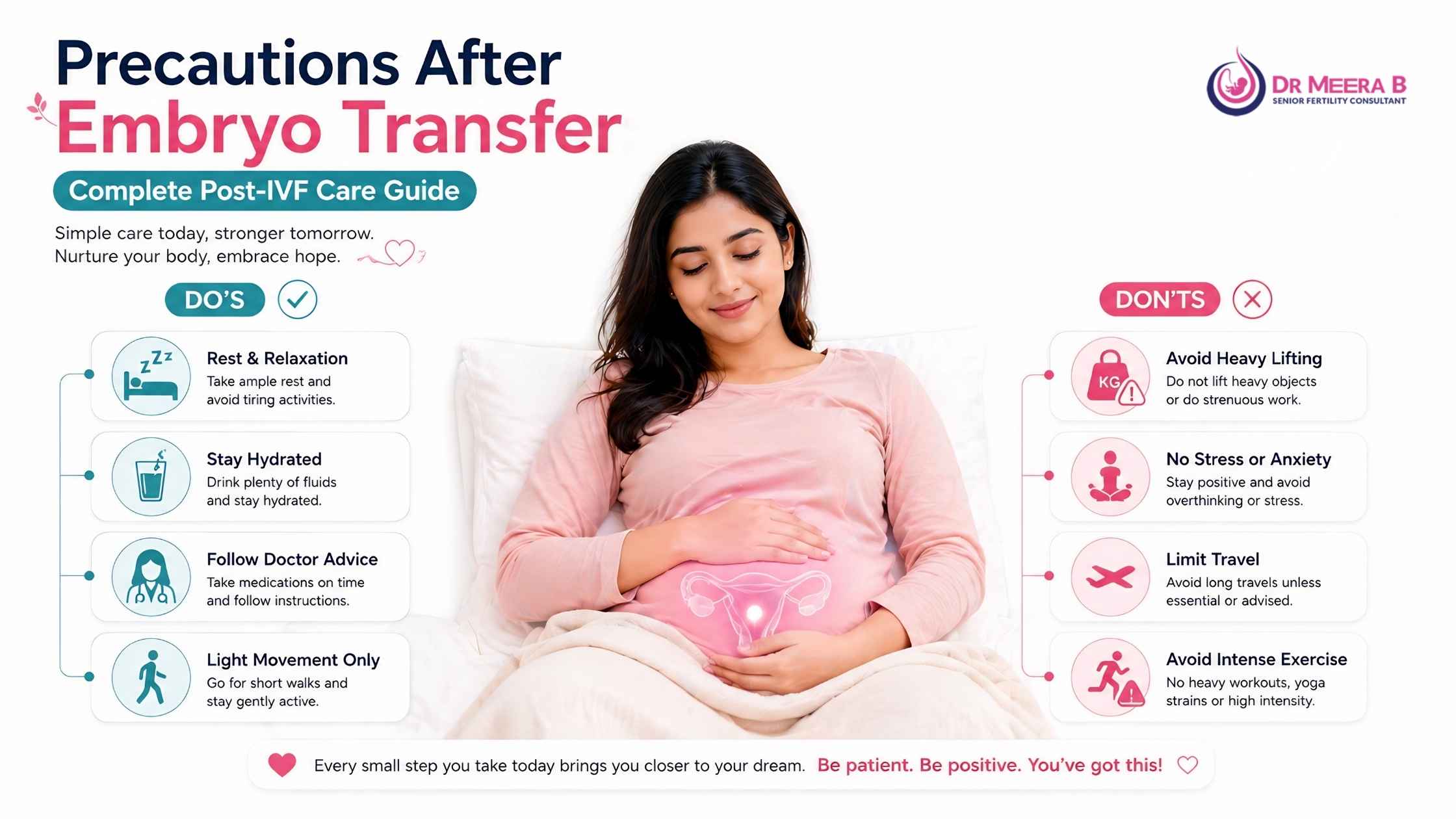
Precautions After Embryo Transfer: Complete Post-IVF Care Guide
Studies suggest that the implantation success rate after IVF can range between 30% to 60% depending on age, embryo quality, and post-procedure care. This makes understanding the right after embryo transfer precautions not just helpful—but absolutely essential. The time immediately following embryo transfer is delicate, and the steps you take during this phase can significantly influence outcomes.
At this critical stage, couples often feel anxious, uncertain, and overwhelmed. That’s where the expertise of Dr Meera B, a globally trained fertility specialist with over three decades of experience, becomes invaluable. Practicing at Aster PMF Hospital, Sasthamkotta, Dr Meera B provides evidence-based guidance that ensures patients follow only medically approved and scientifically proven care strategies.
What are the most important after embryo transfer precautions?
The most important after embryo transfer precautions include adequate rest, avoiding strenuous activity, following prescribed medications strictly, maintaining emotional balance, and adopting a healthy lifestyle. These steps support implantation and improve the chances of a successful pregnancy.
Understanding these precautions is not about fear—it’s about empowerment. Many patients unknowingly make mistakes due to misinformation. Dr Meera B emphasizes clarity, reassurance, and science-backed care to guide every patient through this phase.
Why embryo transfer after care is crucial for success
Embryo transfer after care plays a critical role in supporting implantation. While the procedure itself is minimally invasive, what follows is a highly sensitive biological process where the embryo attaches to the uterine lining.
- Supports uterine receptivity
- Maintains hormonal balance
- Reduces stress-induced hormonal disruptions
- Enhances blood flow to the uterus
Ignoring proper embryo transfer after care can reduce implantation chances—even when the embryo quality is excellent. This is why Dr Meera B insists on structured, personalized care plans tailored to each patient.
How to follow ivf after egg transfer care effectively
The right ivf after egg transfer care involves a combination of physical, medical, and emotional strategies. It is not about complete inactivity, but about controlled and mindful living.
Key medical instructions
- Take progesterone and other prescribed medications on time
- Do not skip follow-up appointments
- Avoid self-medication or herbal remedies without consultation
Physical care guidelines
- Light movement is encouraged, but avoid heavy lifting
- Stay hydrated and eat balanced meals
- Avoid overheating (hot baths, saunas)
Dr Meera B’s approach ensures that ivf after egg transfer care is practical and sustainable, reducing unnecessary restrictions while maintaining safety.
How to sleep after embryo transfer for best results
One of the most common concerns is how to sleep after embryo transfer. The good news is that there is no single “perfect” sleeping position required for implantation. However, comfort and relaxation are key.
- Sleep in a position that feels natural and stress-free
- Avoid sleeping on your stomach if uncomfortable
- Use pillows for support to reduce strain
- Ensure 7–8 hours of quality sleep
Scientific evidence shows that sleep quality impacts hormonal balance, which indirectly supports implantation. Dr Meera B often reassures patients that stress-free rest is more important than rigid positioning.
Post embryo transfer care tips that truly matter
There is a lot of misinformation online, but only a few post embryo transfer care tips are truly backed by science. Dr Meera B focuses strictly on what works.
Evidence-based tips
- Maintain a calm and positive mindset
- Follow medication schedules precisely
- Avoid smoking, alcohol, and caffeine excess
- Consume protein-rich and nutrient-dense foods
- Limit travel during the initial days if possible
These post embryo transfer care tips are designed to support your body without creating unnecessary anxiety or restrictions.
Complete embryo transfer post care guide for patients
This embryo transfer post care guide simplifies what can otherwise feel overwhelming. The goal is to create a balanced routine that supports implantation while allowing normal daily functioning.
| Aspect | Recommended approach |
|---|---|
| Activity | Light walking, avoid strenuous exercise |
| Diet | Balanced meals with proteins, fruits, and vegetables |
| Stress | Practice relaxation techniques like meditation |
| Medication | Strict adherence to doctor’s prescription |
Following a structured embryo transfer post care guide reduces confusion and ensures consistency—two factors that significantly impact outcomes.
After ivf embryo transfer precautions you should never ignore
Certain after ivf embryo transfer precautions are non-negotiable. Ignoring these can negatively impact implantation and early pregnancy.
- Avoid intense physical exertion
- Do not discontinue medications without advice
- Avoid exposure to infections
- Do not rely on unverified home remedies
Dr Meera B strongly emphasizes that every precaution recommended is based on clinical evidence and years of hands-on experience in reproductive medicine.
Understanding lifestyle after ivf transfer
Lifestyle after ivf transfer should be balanced—not restrictive. Many patients mistakenly believe they must remain completely inactive, which is not true.
Healthy lifestyle practices
- Maintain a regular daily routine
- Engage in light activities
- Eat home-cooked, nutritious food
- Stay emotionally supported by family
Lifestyle after ivf transfer is about creating a supportive environment for your body—not limiting your life unnecessarily. This is a key philosophy followed by Dr Meera B in her patient care approach.
Why choosing the right fertility expert matters
When it comes to IVF success, expertise matters as much as technology. Dr Meera B brings international training from Bourn Hall Clinic, Cambridge—the birthplace of IVF—and decades of clinical excellence.
At her place of practice, including Aster PMF Hospital, Sasthamkotta, patients benefit from:
- Advanced reproductive technologies
- Personalized treatment protocols
- Transparent and ethical medical guidance
- Global-standard fertility care
Many couples delay seeking expert guidance, not realizing that timely intervention can make a significant difference. Choosing Dr Meera B ensures you are not leaving your chances to uncertainty.
About Dr Meera B
Dr Meera B is a highly respected gynecologist and fertility specialist with qualifications including MBBS, DGO, DNB (O&G), MRCOG (UK), and FRCOG (UK). With over 30 years of experience, she has helped countless couples overcome fertility challenges both in India and internationally.
Trained at the prestigious Bourn Hall Clinic in Cambridge, UK—where the world’s first IVF baby was born—Dr Meera B combines global expertise with compassionate patient care. Her practice at Aster PMF Hospital, Sasthamkotta, offers access to advanced fertility solutions guided by evidence-based medicine.
Take the next step towards your parenthood journey
Every moment after embryo transfer matters. Missing the right guidance can reduce your chances—but the right support can make all the difference.
To book an appointment with Dr Meera B:
- Visit: https://drmeerab.com/contact/
- Call: +91 9447145101
- Use the WhatsApp interface on the website for quick scheduling
Dr Meera B’s team will assist you in scheduling your consultation and guide you through every step of your IVF journey with care, clarity, and confidence.
Frequently Asked Questions
What are the most important after embryo transfer precautions to follow?
The most essential after embryo transfer precautions include avoiding heavy lifting, limiting stress, staying hydrated, and strictly following medications prescribed by Dr. Meera B. Gentle daily activities are allowed, but rest is equally important. Maintaining a calm mindset and avoiding unnecessary travel can significantly support implantation success.
What does proper embryo transfer after care involve?
Embryo transfer after care focuses on physical rest, emotional well-being, and adherence to medication schedules. Dr. Meera B recommends light movement instead of strict bed rest, balanced nutrition, and avoiding alcohol or smoking. Regular follow-ups ensure that your body is responding positively to the procedure.
What is included in ivf after egg transfer care?
ivf after egg transfer care includes monitoring hormone levels, taking progesterone support, avoiding strenuous activity, and ensuring proper sleep. Dr. Meera B emphasizes individualized care plans depending on patient history, helping improve implantation chances and overall IVF success rates.
How to sleep after embryo transfer for better results?
If you’re wondering how to sleep after embryo transfer, the key is comfort rather than a fixed position. Sleeping on your back or side is perfectly safe. Dr. Meera B advises avoiding positions that cause discomfort or pressure on the abdomen, and maintaining a consistent sleep schedule to support hormonal balance.
What are the best post embryo transfer care tips?
Effective post embryo transfer care tips include staying relaxed, eating nutrient-rich foods, avoiding hot baths or saunas, and limiting caffeine intake. Dr. Meera B also encourages mindfulness practices like meditation to reduce anxiety during the waiting period.
What should I expect from an embryo transfer post care guide?
A comprehensive embryo transfer post care guide typically includes medication schedules, activity recommendations, dietary advice, and warning signs to watch for. Dr. Meera B provides detailed guidance tailored to each patient to ensure optimal recovery and implantation support.
Are there specific after ivf embryo transfer precautions for better success?
Yes, after ivf embryo transfer precautions include avoiding high-impact exercise, reducing stress, maintaining hydration, and following all prescribed medications without fail. Dr. Meera B also advises against self-medication and emphasizes regular monitoring during the critical implantation phase.
How should I manage lifestyle after ivf transfer?
Managing lifestyle after ivf transfer involves adopting a balanced routine with light physical activity, proper sleep, and a nutritious diet. Dr. Meera B recommends minimizing stress, avoiding smoking and alcohol, and maintaining a positive mindset, all of which contribute to improved IVF outcomes.
Comments are closed