
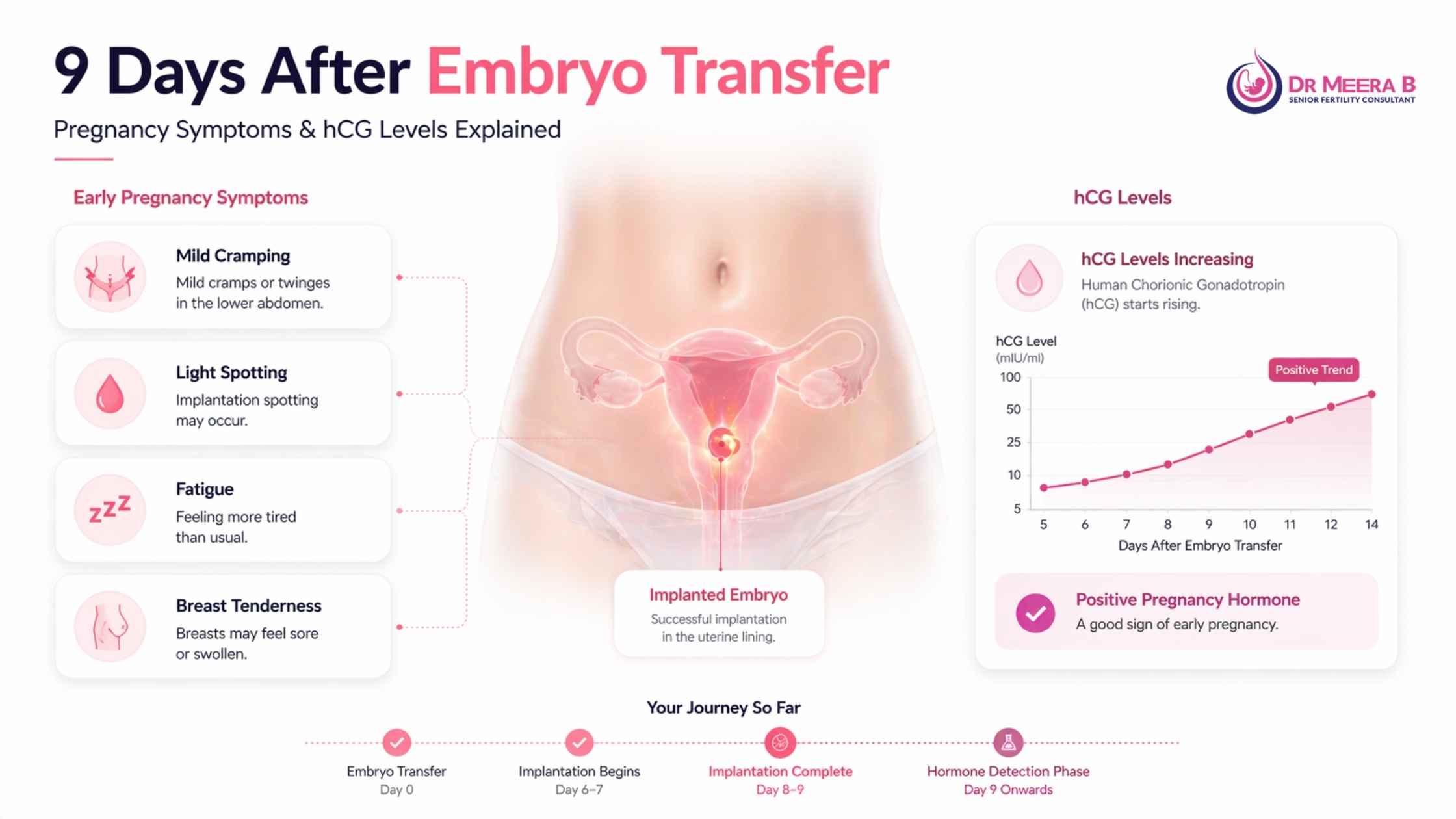
9 Days After Embryo Transfer: Pregnancy Symptoms & hCG Levels Explained
Did you know that nearly 65–70% of successful IVF implantations begin showing measurable hormonal changes within the first 9–10 days after embryo transfer? This makes 9 days after embryo transfer one of the most emotionally intense and medically significant milestones in your fertility journey. It’s the phase where hope, anxiety, and anticipation peak—and understanding what’s happening inside your body can make all the difference.
Under the expert guidance of Dr Meera B, a globally trained fertility specialist with over 30 years of experience, patients receive evidence-based insights and compassionate care at Dr Meera B’s place of practice, including Aster PMF Hospital, Sasthamkotta. This ensures that every step of your IVF journey is grounded in medical accuracy and personalized attention.
What Happens 9 Days After Embryo Transfer?
Day 9 post embryo transfer is typically when implantation has either already occurred or is nearing completion. At this stage, the embryo may begin producing detectable levels of hCG (human chorionic gonadotropin), the hormone responsible for pregnancy confirmation.
- The embryo embeds into the uterine lining
- hCG hormone production begins or increases
- Early biological signals of pregnancy may appear
- Subtle physical and hormonal changes occur
This is why day 9 after embryo transfer symptoms can vary greatly from person to person—some may notice changes, while others may not feel anything at all.
What Are The Common Symptoms 9 Days After Embryo Transfer?
Symptoms 9 days after embryo transfer are often mild and can overlap with premenstrual symptoms. However, certain signs may indicate early pregnancy.
Most Reported Symptoms
- Light spotting (implantation bleeding)
- Mild abdominal cramping
- Breast tenderness or sensitivity
- Fatigue and low energy levels
- Increased urination
- Bloating
These 9 days post embryo transfer symptoms are primarily driven by rising hormone levels and should not be over-interpreted without clinical confirmation.
Important Medical Insight
Dr Meera B emphasizes that symptoms alone cannot confirm pregnancy. Many IVF medications mimic pregnancy signs, making it crucial to rely on proper testing rather than assumptions.
How Do hCG Levels Behave At This Stage?
At 9 days after embryo transfer, hCG levels may begin to rise significantly if implantation is successful. However, levels can vary widely depending on:
- Embryo quality
- Timing of implantation
- Individual hormonal response
Typical hCG Expectations
| Days Post Transfer | Expected hCG Trend |
|---|---|
| Day 7–8 | Initial detection possible |
| Day 9 | Noticeable rise in hCG |
| Day 10–12 | Doubling every 48–72 hours |
These early hcg symptoms ivf are biochemical and often precede physical symptoms.
Should You Take A Pregnancy Test After Embryo Transfer?
A pregnancy test after embryo transfer is one of the most anticipated moments—but timing is everything.
When To Test?
- Home tests: Usually after 10–12 days
- Blood test (beta hCG): Recommended by doctors around day 12–14
Testing too early can lead to false negatives or confusion due to residual medication hormones.
Dr Meera B advises patients to follow a medically supervised testing schedule to avoid unnecessary stress and misinterpretation.
How Do IVF Pregnancy Symptoms Early Differ From Natural Pregnancy?
IVF pregnancy symptoms early can feel more pronounced due to hormonal medications used during the treatment cycle.
Key Differences
- Symptoms may appear earlier due to progesterone support
- Intensity of symptoms can be higher
- Some symptoms may not indicate pregnancy at all
This makes professional monitoring essential, which is a core part of care at Dr Meera B’s place of practice.
What Should You Do On Day 9 Post Embryo Transfer?
This stage is emotionally challenging—often referred to as the “two-week wait.” Here’s how to manage it effectively:
Recommended Actions
- Continue prescribed medications without interruption
- Avoid strenuous physical activity
- Stay hydrated and maintain a balanced diet
- Manage stress through relaxation techniques
What To Avoid
- Early testing without medical advice
- Overanalyzing symptoms
- Comparing with others’ experiences
Dr Meera B’s approach focuses on emotional reassurance combined with scientific clarity, helping patients navigate this sensitive phase with confidence.
Why Expert Guidance Makes A Critical Difference
Fertility treatment is not just about procedures—it’s about precision, timing, and expert interpretation. Missing subtle cues or misreading symptoms can lead to unnecessary anxiety or delayed care.
With training at the prestigious Bourn Hall Clinic in Cambridge, UK, and decades of experience, Dr Meera B brings world-class expertise to patients in Kerala. Her consultations at Aster PMF Hospital, Sasthamkotta, ensure access to advanced reproductive technologies and individualized treatment plans.
Patients who delay expert consultation often find themselves overwhelmed with misinformation online—while those who seek timely guidance gain clarity, confidence, and better outcomes.
When Should You Contact Dr Meera B?
If you are experiencing uncertainty, unusual symptoms, or simply need reassurance during day 9 post embryo transfer, it is the right time to consult an expert.
You can book an appointment by:
- Filling out the form at: https://drmeerab.com/contact/
- Calling: +91 9447145101
- Sending a WhatsApp message via the website
Dr Meera’s team will schedule your consultation and guide you through the next steps with care and professionalism.
About Dr Meera B
Dr Meera B is a highly respected gynecologist and fertility specialist based in Kollam, Kerala, with over three decades of experience. She holds prestigious qualifications including MBBS, DGO, DNB (O&G), MRCOG (UK), and FRCOG (UK).
Her expertise in reproductive medicine and IVF is backed by international training at Bourn Hall Clinic, Cambridge—the birthplace of IVF technology. Today, she continues to help couples from across India and beyond achieve their dream of parenthood through ethical, evidence-based fertility care.
Consultations are available at Dr Meera B’s place of practice, including Aster PMF Hospital, Sasthamkotta, where advanced fertility solutions are accessible under her expert supervision.
Final Thoughts: Don’t Navigate This Journey Alone
The phase of 9 days after embryo transfer is filled with uncertainty—but it doesn’t have to be overwhelming. With the right medical guidance, you can replace anxiety with clarity and informed decision-making.
Every day matters in your fertility journey. Waiting without expert insight could mean missing critical understanding about your body’s signals. Choosing the right specialist at the right time can make all the difference.
Take the next step today—connect with Dr Meera B and ensure that your IVF journey is guided by experience, precision, and care.
Frequently Asked Questions
What happens 9 days after embryo transfer?
At 9 days after embryo transfer, implantation has usually occurred and your body may begin producing measurable hCG. This is a crucial stage where early pregnancy signals may start appearing. Many patients working with Dr. Meera B are guided carefully during this phase to monitor changes while avoiding unnecessary stress.
What are 9 days post embryo transfer symptoms?
Common 9 days post embryo transfer symptoms include mild cramping, fatigue, breast tenderness, and light spotting. However, symptoms vary widely. Under Dr. Meera B’s care, patients are educated to understand which signs are normal and when to seek reassurance.
Are symptoms 9 days after embryo transfer reliable indicators of pregnancy?
Symptoms 9 days after embryo transfer are not always definitive. Some women experience noticeable changes, while others feel nothing at all. Dr. Meera B emphasizes that hormone medications can mimic pregnancy symptoms, so clinical confirmation is essential.
What is significant about day 9 post embryo transfer?
Day 9 post embryo transfer is often when hCG levels become detectable in blood tests. This is why fertility specialists like Dr. Meera B may recommend specific testing timelines to ensure accurate results and avoid false negatives.
What are day 9 after embryo transfer symptoms to watch for?
Typical day 9 after embryo transfer symptoms include mild bloating, mood swings, and increased tiredness. Some women also report heightened sensitivity to smells. Dr. Meera B provides personalized monitoring plans to help patients interpret these signs correctly.
What are early hcg symptoms ivf patients may notice?
Early hcg symptoms ivf patients might experience include nausea, fatigue, and breast soreness. However, these can overlap with medication effects. Dr. Meera B ensures patients understand the difference between hormonal side effects and genuine pregnancy signs.
When should I take a pregnancy test after embryo transfer?
A pregnancy test after embryo transfer is usually recommended around 9–12 days post transfer for accurate results. Dr. Meera B advises against testing too early, as it can lead to confusion due to fluctuating hormone levels.
What are ivf pregnancy symptoms early and how are they managed?
ivf pregnancy symptoms early may include fatigue, nausea, mild cramping, and emotional sensitivity. Dr. Meera B offers comprehensive support, including counseling, hormone monitoring, and follow-up care to ensure both physical and emotional well-being during this phase.
Comments are closed