• Meera Bhavan, Kollam, Kerala
  • meerahridya1@rediffmail.com

Category: Blogs

increase sperm count naturally

10 best foods to increase sperm count naturally

Global fertility research indicates that nearly 40–50% of infertility cases involve male-related factors, with reduced sperm count being one of the most frequently identified concerns. This single statistic explains why so many men actively search for reliable and medically sound

Read More
Infertility Causes

Infertility: causes, diagnosis & treatment options

  Infertility is more common than most couples expect—global public health estimates indicate that around 1 in 6 people experience it at some point in their reproductive life. If you are facing inability to conceive, the most powerful next step

Read More
Progesterone

When to Stop Progesterone After IVF or FET? (Updated Guide)

A medically grounded, patient-friendly guide by Dr Meera B (MBBS, DGO, DNB(O&G), MRCOG(UK), FRCOG(UK)) for couples seeking confident IVF decisions in Kerala. If you’re searching for when to stop progesterone after fet, you’re in the majority—because progesterone continuation is one

Read More
Folicle Size

Mature follicle size for IUI success: Measurement guidelines

Quick answer: In most IUI cycles, the best outcomes are commonly seen when the dominant follicle is around 18–22 mm on ultrasound, and insemination is timed carefully around ovulation (often with a trigger shot). A widely quoted public statistic is

Read More
fertility measurements

Egg size for pregnancy in mm: Fertility measurements explained

A key reason fertility specialists track follicle and egg growth so carefully is because timing matters—clinically, ovulation is most likely when a dominant follicle reaches around 18–24 mm, a range widely used in reproductive medicine to decide the best time

Read More
Minimum egg size

Minimum egg size required to get pregnant: what every couple must know

If you are trying for a baby and obsessing over follicle size in millimeters, you are not alone—globally, millions of couples experience infertility, and ovulation timing + egg maturity is one of the most common missing links. This guide explains

Read More
prolactin foods

Prolactin foods to avoid for better hormonal balance

If your cycle feels unpredictable, conception is taking longer than expected, or your breast discharge concerns you, prolactin might be a missing piece. In public health literature, hyperprolactinemia is frequently reported as a common hormonal finding in women evaluated for

Read More
Normal Follicle

What is the Normal follicle size on day 14?

Evidence-led fertility guidance by Dr. Meera B (MBBS, DGO, DNB(O&G), MRCOG(UK), FRCOG(UK)) | Consulting at Aster PMF Hospital, Sasthamkotta and other places of practice. In ultrasound-based fertility evaluation, normal follicle size on day 14 is most commonly in the range

Read More
Sperm Quality

6 foods that improve sperm quality naturally

What foods improve sperm quality naturally? According to the World Health Organization, male-factor infertility contributes to nearly 40–50% of infertility cases worldwide, and poor sperm quality is one of the most common causes. Research consistently shows that diet plays a

Read More
Normal Follic size

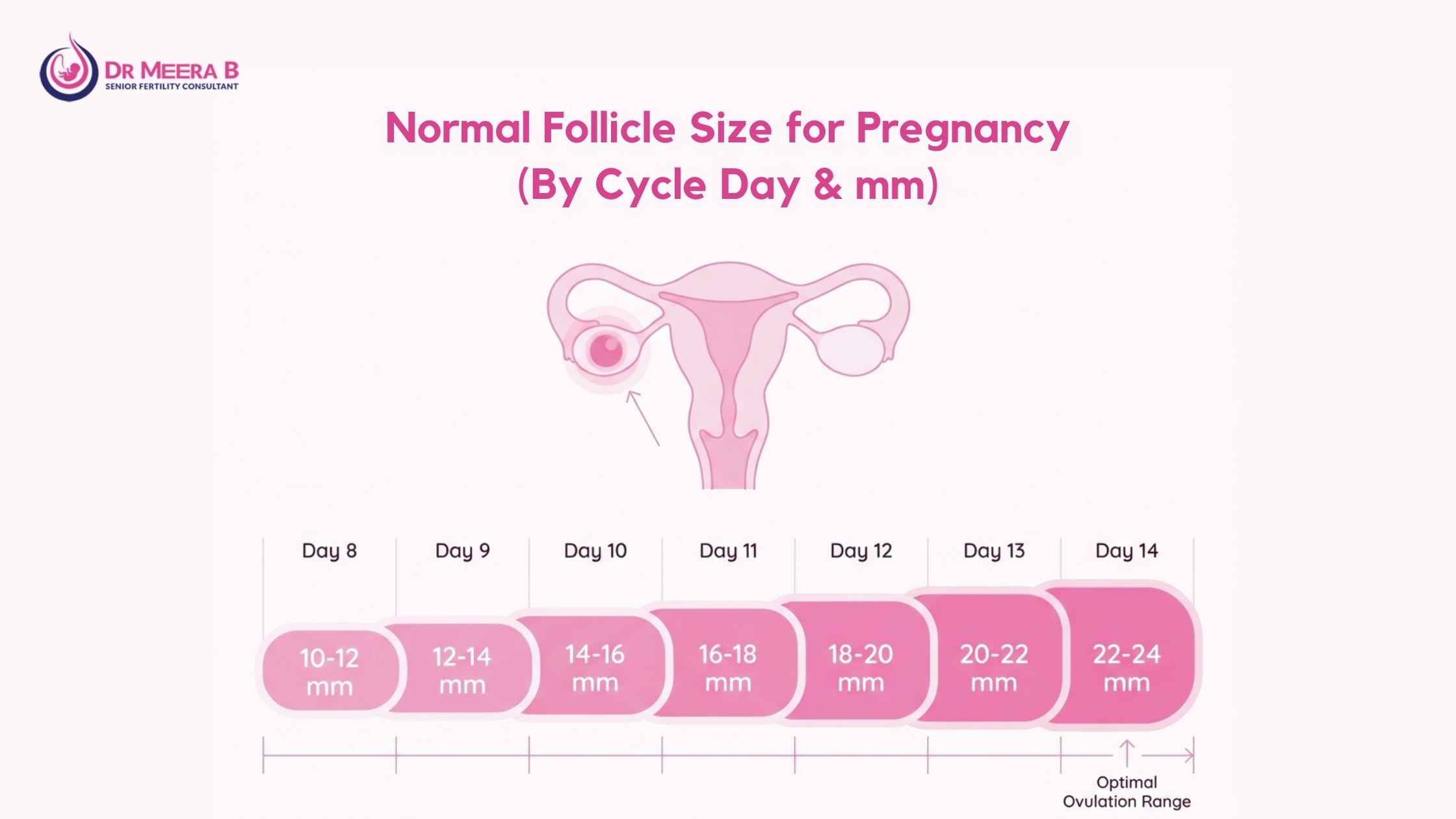
Normal follicle size for pregnancy (By cycle day & mm)

For most women, the best follicle size for pregnancy is typically when the dominant follicle reaches 18–22 mm on ultrasound, because this range often correlates with ovulation readiness and good egg maturation. In fact, studies and clinical IVF/ovulation tracking data

Read More