
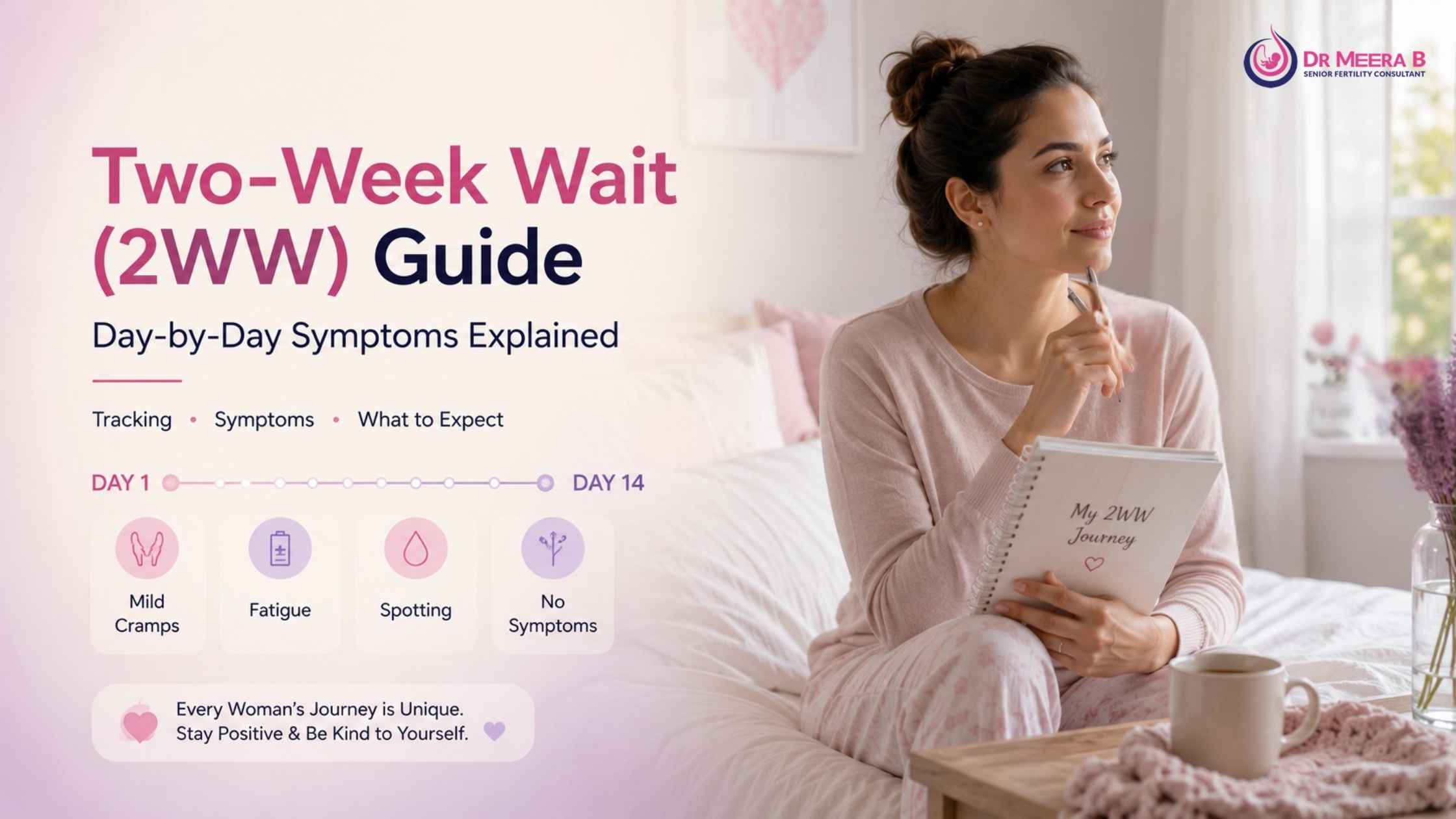
Two-Week Wait (2WW) Guide: Day-by-Day Symptoms
The Two-Week Wait (2WW) is often described as the most emotionally intense phase of fertility treatment. Studies suggest that nearly 60–70% of IVF patients experience significant stress during this period, commonly referred to as 2WW anxiety. This makes understanding symptoms after embryo transfer day by day not just helpful—but essential for emotional and medical clarity.
What is the two-week wait and why is it important?
The Two-Week Wait is the period between embryo transfer and the pregnancy test after IVF frozen transfer. During this time, the embryo may implant into the uterine lining, and early hormonal changes begin. However, symptoms can vary widely, making it difficult to distinguish between medication effects and actual pregnancy signs.
Symptoms after embryo transfer day by day explained
Day 1 to Day 3: Immediate post-transfer phase
During the first three days, most women do not experience noticeable symptoms. The embryo is still floating within the uterus before implantation begins.
- Mild cramping due to the procedure
- Light spotting (rare but possible)
- Hormonal side effects such as fatigue
At this stage, it is too early to identify positive signs during two week wait, and overanalysis may increase stress.
Day 4 to Day 6: Potential implantation window
This is when implantation may begin. Some individuals report subtle symptoms:
- Light spotting (implantation bleeding)
- Mild uterine cramping
- Increased tiredness
However, these symptoms are not definitive indicators. Dr Meera B emphasizes that absence of symptoms does not indicate failure.
Day 7 to Day 9: Hormonal activity increases
During this phase, hCG hormone may start rising if implantation has occurred.
- Breast tenderness
- Bloating
- Heightened sense of smell or nausea (less common)
These may be considered possible positive signs during two week wait, but they overlap with progesterone medication effects.
Day 10 to Day 12: Early detection phase
Some individuals may begin testing early, but results can be misleading.
- Fatigue and mood swings
- Mild nausea
- Frequent urination
Dr Meera B strongly advises waiting for the correct pregnancy test after IVF frozen transfer timeline to avoid false results.
Day 13 to Day 14: Testing window
This is the most reliable time for testing.
- Clearer hormonal symptoms
- Possible missed period
- More definitive pregnancy indicators
A blood test conducted at Dr Meera B’s place of practice provides the most accurate confirmation.
Positive signs during two week wait: What actually matters?
While many search for positive signs during two week wait, it is crucial to understand that:
- Symptoms vary significantly between individuals
- No symptom guarantees pregnancy
- Successful pregnancies can occur without noticeable signs
Evidence-based indicators include rising hCG levels and confirmed implantation through medical testing—not subjective symptoms alone.
Understanding and managing 2WW anxiety
2WW anxiety is a real and medically acknowledged challenge. The uncertainty, combined with emotional investment, can feel overwhelming.
Common triggers include:
- Symptom spotting and overanalysis
- Fear of negative results
- Previous unsuccessful cycles
Dr Meera B recommends proven strategies:
- Maintain a structured daily routine
- Avoid excessive online symptom comparisons
- Engage in light physical activity like walking
- Practice mindfulness or guided relaxation
These approaches are clinically supported and help reduce stress hormones that may indirectly affect overall well-being.
When should you take a pregnancy test after IVF frozen transfer?
The ideal time for a pregnancy test after IVF frozen transfer is typically 12–14 days post-transfer. Testing earlier can result in:
- False positives (due to trigger injections)
- False negatives (due to low hCG levels)
Testing protocols are carefully timed at Dr Meera B’s place of practice, including her recent consultations at Aster PMF Hospital, Sasthamkotta, to ensure accuracy and reduce emotional distress.
Why expert guidance during 2WW makes a difference
The Two-Week Wait is not just a biological process—it is an emotional journey. Having the right expert guidance can significantly improve both experience and outcomes.
Dr Meera B brings over three decades of experience in reproductive medicine. Her approach combines:
- Evidence-based treatment protocols
- Personalized patient care
- Global expertise from institutions like Bourn Hall Clinic, UK
Her consultations are available at multiple locations, including Aster PMF Hospital, Sasthamkotta, where advanced reproductive technologies are accessible.
What makes this guidance different?
Unlike generic online advice, this guide reflects real clinical experience. It avoids myths and focuses only on medically validated information. This ensures that patients are not misled during a sensitive phase of treatment.
The difference lies in clarity, accuracy, and personalized support—something that significantly reduces confusion and builds confidence.
Take the next step with confidence
If you are currently in your Two-Week Wait or preparing for IVF, timely guidance can make all the difference. Delaying expert consultation often leads to unnecessary stress and missed opportunities for optimized care.
- Fill out the form at https://drmeerab.com/contact/
- Call +91 9447145101 to request an appointment
- Send a WhatsApp message via the website interface
Dr Meera’s team will schedule your appointment and keep you informed every step of the way.
About Dr Meera B
Dr Meera B is a highly experienced gynecologist and fertility specialist based in Kollam, Kerala. With qualifications including MBBS, DGO, DNB (O&G), MRCOG (UK), and FRCOG (UK), she has over 30 years of expertise in helping couples overcome fertility challenges.
Her training at the renowned Bourn Hall Clinic in Cambridge—where the world’s first IVF baby was born—adds global depth to her practice. Today, she continues to guide patients with a blend of compassion, scientific precision, and ethical medical care at her place of practice.
Frequently Asked Questions
What are the common symptoms after embryo transfer day by day?
Many women closely track symptoms after embryo transfer day by day, but it’s important to understand that experiences can vary widely. In the first few days, you may notice mild cramping or no symptoms at all. Around days 5–7, implantation may occur, sometimes accompanied by light spotting or fatigue. By the second week, breast tenderness, bloating, or subtle nausea may develop.
Dr. Meera B emphasizes that the absence of symptoms does not indicate failure, and consistent monitoring along with proper guidance is more reliable than symptom interpretation alone.
What are considered positive signs during two week wait?
Some commonly reported positive signs during two week wait include mild cramping, light spotting (implantation bleeding), increased fatigue, and heightened sense of smell. However, these signs are not definitive indicators of pregnancy.
Under Dr. Meera B’s care, patients are guided to focus less on symptom spotting and more on following post-transfer protocols, maintaining emotional balance, and waiting for clinical confirmation.
When should I take a pregnancy test after IVF frozen transfer?
The recommended time for a pregnancy test after IVF frozen transfer is typically 10–14 days post-transfer. Testing too early can result in false negatives due to insufficient hCG levels.
Dr. Meera B advises patients to follow the exact testing schedule provided by their clinic, often involving a blood test (beta hCG) for accurate results instead of relying solely on home pregnancy kits.
How can I manage 2WW anxiety effectively?
2WW anxiety is one of the most challenging aspects of fertility treatment. It stems from uncertainty, anticipation, and emotional investment in the outcome.
Dr. Meera B recommends mindfulness practices, light physical activity, staying engaged in routine tasks, and limiting excessive online research. Emotional counseling and support groups can also help manage stress during this period.
Is it normal to have no symptoms during the two-week wait?
Yes, it is completely normal to have no noticeable symptoms during the two-week wait. Many successful pregnancies occur without any early signs.
Dr. Meera B reassures patients that hormone medications can mask or mimic symptoms, making it unreliable to draw conclusions based solely on physical sensations.
Can lifestyle choices impact implantation success during 2WW?
Yes, maintaining a balanced lifestyle during the two-week wait can support overall well-being. Adequate rest, hydration, and avoiding strenuous activity are generally advised.
Dr. Meera B provides personalized post-transfer care plans, including dietary guidance and activity recommendations, to optimize conditions for implantation without unnecessary restrictions.
What role does medical support play during the two-week wait?
Continuous medical support during the two-week wait is essential for both physical and emotional reassurance. Regular follow-ups, medication adherence, and access to expert advice can make a significant difference.
Dr. Meera B and her team ensure that patients receive comprehensive support, addressing concerns promptly and helping them navigate this sensitive phase with confidence.
Comments are closed