
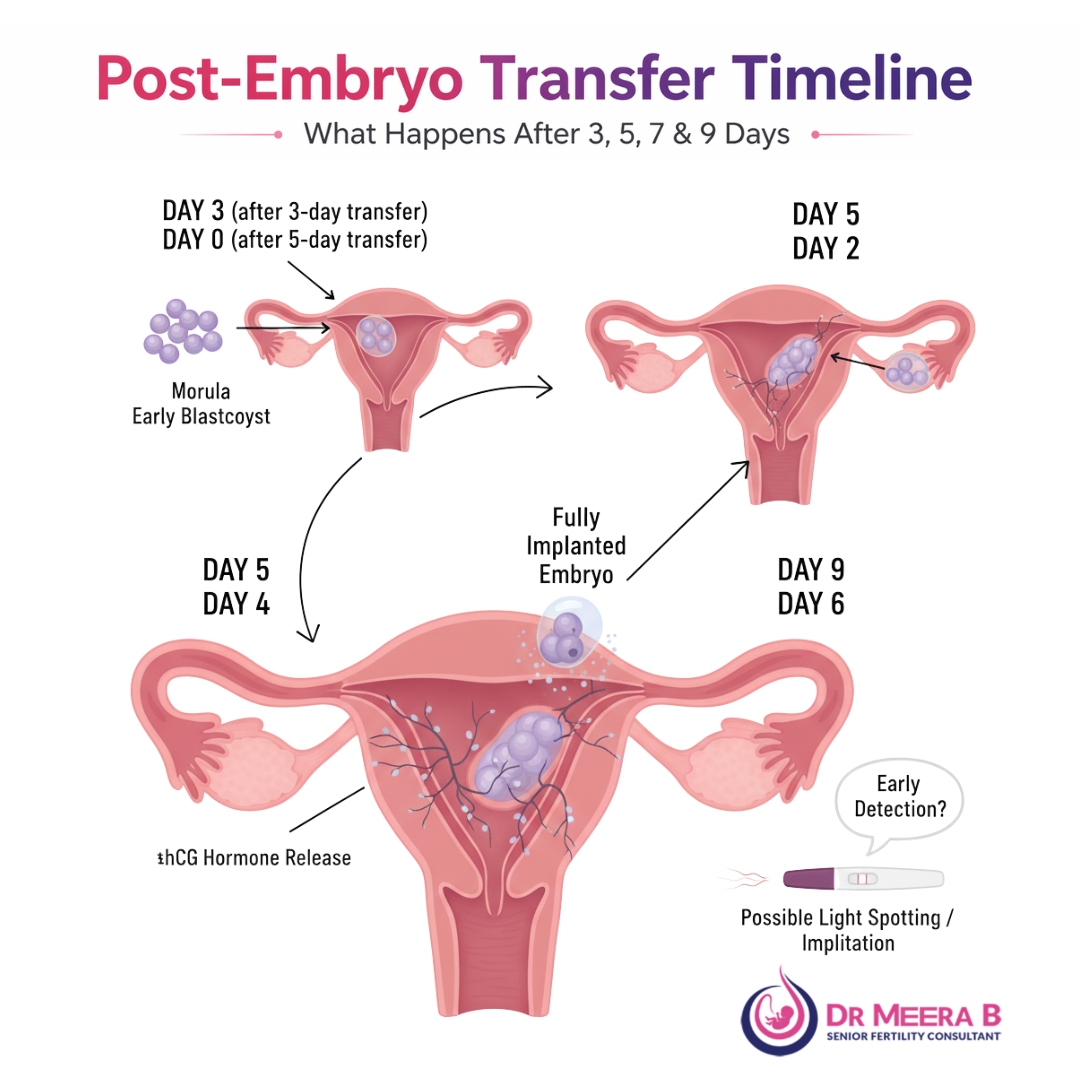
Post-Embryo Transfer Timeline: What Happens After 3, 5, 7 & 9 Days
Studies suggest that nearly 60–70% of successful IVF pregnancies depend on proper implantation within the first 7–10 days, making the post embryo transfer timeline one of the most crucial phases in fertility treatment. For many couples, this waiting period can feel overwhelming, filled with hope, anxiety, and countless questions. Understanding what happens inside the body during each stage can bring clarity, reassurance, and confidence in the process.
Under the expert guidance of Dr Meera B—an internationally trained fertility specialist with over 30 years of experience—patients receive evidence-based care designed to optimize outcomes at every stage. Practicing at Aster PMF Hospital, Sasthamkotta, Dr Meera B combines global expertise with personalized treatment plans to support couples through this delicate journey.
What is the embryo transfer day by day process?
The embryo transfer day by day process refers to the biological changes that occur after an embryo is placed into the uterus during IVF. These changes include embryo development, movement within the uterus, attachment to the uterine lining, and eventual implantation.
- Day 1–2: Embryo begins to adapt to the uterine environment
- Day 3–5: Early attachment and cellular expansion
- Day 6–7: Implantation begins
- Day 8–9: Hormonal signals increase
Each stage is critical, and even minor variations can influence outcomes. This is why expert monitoring and guidance from specialists like Dr Meera B can make a significant difference.
What happens on day 3 after embryo transfer?
day 3 after embryo transfer marks an early but important phase where the embryo continues to divide and prepares for attachment to the uterine lining.
At this stage:
- The embryo is still floating within the uterine cavity
- Cell division continues rapidly
- The uterine lining begins interacting with the embryo
While no visible symptoms may be present, internal processes are actively progressing. Dr Meera B emphasizes maintaining a calm lifestyle, avoiding unnecessary stress, and adhering strictly to prescribed medications during this time.
What happens on day 5 after embryo transfer?
By day 5 after embryo transfer, the embryo often reaches the blastocyst stage and begins the initial stages of attachment to the uterine lining.
Key developments include:
- Expansion of the blastocyst
- Beginning of adhesion to the endometrium
- Early communication between embryo and maternal tissue
Some individuals may notice mild cramping or spotting, although these are not definitive signs of implantation. According to Dr Meera B, these symptoms vary widely and should not be used as confirmation of success or failure.
What happens at 7 days after embryo transfer?
7 days after embryo transfer is often considered a pivotal milestone in the implantation process. By this point, implantation may either be underway or nearing completion.
During day 7 after embryo transfer, the following may occur:
- The embryo embeds deeper into the uterine lining
- Production of hCG hormone may begin
- Blood supply starts developing around the embryo
This stage is commonly referred to as 7 days post embryo transfer, and it is when many patients begin to feel hopeful yet anxious. However, Dr Meera B strongly advises against early pregnancy testing, as hormone levels may still be too low for accurate detection.
What happens on day 9 after embryo transfer?
By day 9 after embryo transfer, implantation is usually complete if the cycle is successful. Hormone production increases, and early pregnancy signals begin to strengthen.
Key signs at this stage may include:
- Rising hCG levels
- Subtle fatigue or mild symptoms
- Further stabilization of the embryo within the uterus
However, it is important to note that symptoms can vary greatly. Many successful pregnancies show no noticeable symptoms at this stage. Clinical confirmation through a blood test remains the only reliable method.
Why is the post embryo transfer timeline so important?
The post embryo transfer timeline is critical because it determines whether implantation occurs successfully. Even with advanced IVF techniques, implantation remains one of the most complex and delicate processes.
Challenges during this phase include:
- Embryo quality and viability
- Uterine receptivity
- Hormonal balance
Dr Meera B’s approach focuses on optimizing each of these factors using proven medical protocols, ensuring patients receive the highest standard of care at her place of practice.
How to support implantation during this period?
Supporting implantation is not about drastic measures but about consistency and adherence to medical advice.
- Take prescribed medications exactly as directed
- Maintain a balanced diet and hydration
- Avoid strenuous activities
- Manage stress through relaxation techniques
Dr Meera B emphasizes that there are no shortcuts or guaranteed tricks—only scientifically validated methods should be followed.
Common myths vs medical facts
| Myth | Medical fact |
|---|---|
| Bed rest improves implantation | Normal light activity is safe and recommended |
| Symptoms confirm pregnancy | Only blood tests can confirm pregnancy |
| Early testing is reliable | Testing too early may give false results |
Why choose Dr Meera B for fertility guidance?
Dr Meera B is a highly respected gynecologist and fertility specialist based in Kollam, known for her ethical, patient-focused approach. With qualifications including MBBS, DGO, DNB(O&G), MRCOG(UK), and FRCOG(UK), she brings global expertise to every case.
Her training at Bourn Hall Clinic in Cambridge—the birthplace of IVF—combined with decades of clinical experience, ensures that patients receive advanced, evidence-based care tailored to their unique needs.
At her place of practice, including Aster PMF Hospital, Sasthamkotta, patients benefit from access to modern reproductive technologies and a compassionate support system that prioritizes both medical success and emotional well-being.
How to book an appointment with Dr Meera B
Taking the next step in your fertility journey can be life-changing. To consult with Dr Meera B:
- Visit: https://drmeerab.com/contact/ and submit the appointment form
- Call: +91 9447145101 to schedule directly
- Use the WhatsApp interface on the website for quick assistance
Her team will coordinate and confirm your appointment, ensuring a smooth and supportive experience from the very first interaction.
About Dr Meera B
Dr Meera B is a leading fertility specialist and gynecologist in Kollam, dedicated to helping couples overcome infertility challenges. With over three decades of experience and international recognition, she specializes in reproductive medicine and IVF, offering personalized care backed by scientific excellence.
Frequently Asked Questions
What is the post embryo transfer timeline and why is it important?
The post embryo transfer timeline refers to the series of biological events that occur after an embryo is placed in the uterus during IVF. Understanding this timeline helps patients manage expectations, recognize early signs, and follow proper care instructions.
Dr. Meera B provides personalized monitoring and guidance so you can better understand your embryo transfer day by day, reducing anxiety and ensuring optimal support throughout this critical phase.
What happens on day 3 after embryo transfer?
On day 3 after embryo transfer, the embryo is typically continuing to divide and preparing for implantation. At this stage, most women will not feel significant symptoms, although mild cramping or fatigue can occur.
Dr. Meera B advises maintaining a calm routine, following medication schedules strictly, and avoiding unnecessary stress while closely tracking your embryo transfer day by day progress.
What should I expect on day 5 after embryo transfer?
By day 5 after embryo transfer, implantation may begin or already be underway. Some women report light spotting or mild cramps, often referred to as implantation symptoms.
With Dr. Meera B’s care, patients receive clear instructions on what is normal and when to seek advice, ensuring that any concerns during this stage are addressed promptly and accurately.
What does 7 days after embryo transfer indicate?
At 7 days after embryo transfer, the embryo is usually implanted, and the body may start producing measurable levels of hCG. Some early pregnancy symptoms like fatigue, breast tenderness, or slight nausea may appear.
Dr. Meera B ensures that patients understand the significance of this phase and helps interpret any signs experienced during 7 days post embryo transfer.
Is day 7 after embryo transfer the right time to test?
While day 7 after embryo transfer may show early results in some cases, testing too soon can lead to inaccurate outcomes. It is generally recommended to wait until advised by your fertility specialist.
Dr. Meera B guides patients on the best time to test and helps avoid confusion caused by premature testing during this sensitive period.
What happens during day 7 post embryo transfer?
During day 7 post embryo transfer, hormonal changes become more evident as implantation stabilizes. The body begins adjusting to support early pregnancy development.
With Dr. Meera B’s expert care, patients receive continuous support, helping them understand physical changes and emotional responses during this stage of the post embryo transfer timeline.
What should I expect on day 9 after embryo transfer?
By day 9 after embryo transfer, hCG levels are typically high enough to be detected in blood tests. This is often when pregnancy confirmation is possible.
Dr. Meera B offers precise diagnostic testing and counseling, ensuring accurate results and guiding patients on the next steps with confidence and clarity.
How does Dr. Meera B support patients through the embryo transfer day by day process?
Dr. Meera B provides comprehensive support throughout the embryo transfer day by day journey, including personalized medication plans, lifestyle guidance, symptom monitoring, and emotional support.
Her approach ensures that every stage—from day 3 after embryo transfer to day 9 after embryo transfer—is carefully managed, giving patients the best possible chance for a successful outcome.
Comments are closed