
IVF Embryo Transfer Procedure: Step-by-Step Process Explained
Did you know that globally, success rates for ivf embryo transfer can range between 40% to 60% depending on age and medical conditions? This crucial stage in IVF is where hope truly transforms into possibility. Understanding the process not only reduces anxiety but empowers couples to make informed decisions about their fertility journey.
What is ivf embryo transfer and why is it important?
The ivf embryo transfer is the final and one of the most critical steps in an IVF cycle. It involves placing a healthy embryo into the uterus with the goal of achieving pregnancy. This step determines whether all the previous efforts—from ovarian stimulation to fertilization—culminate in success.
At Dr Meera B’s place of practice, including Aster PMF Hospital, Sasthamkotta, advanced reproductive technologies and precise clinical protocols ensure that each transfer is handled with utmost care and accuracy.
How embryo transfer works in IVF treatment
Understanding how embryo transfer works helps eliminate fear and confusion. The process is minimally invasive and typically painless.
- A fertilized embryo is selected based on quality.
- The uterus is prepared hormonally for implantation.
- A thin catheter is used to insert the embryo.
- Ultrasound guidance ensures accurate placement.
This carefully orchestrated method ensures optimal embryo placement in uterus, increasing the chances of successful implantation.
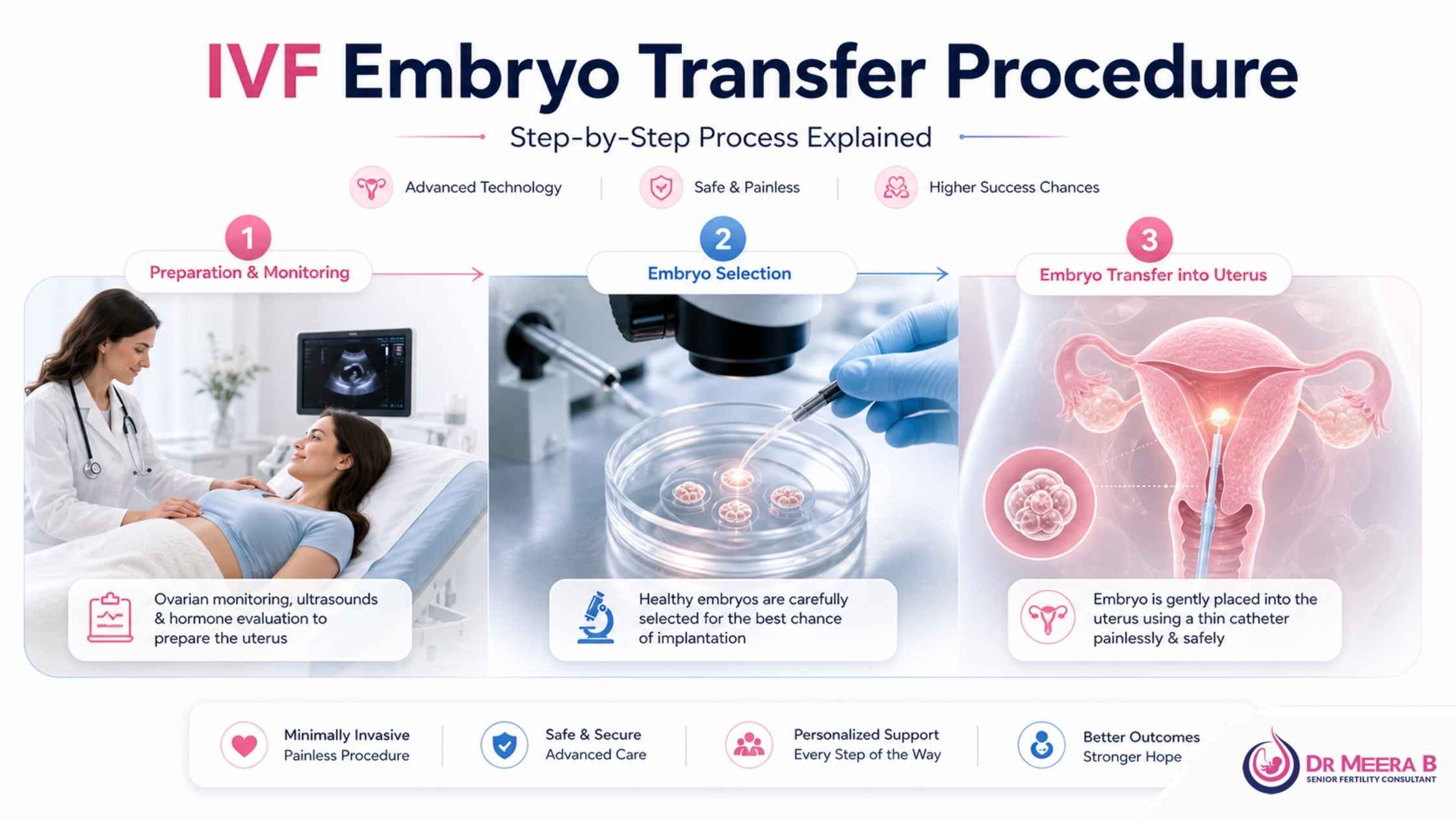
Embryo transfer procedure ivf: Step-by-step process
The embryo transfer procedure ivf follows a structured and scientifically validated approach:
- Preparation of the uterus: Hormonal medications prepare the uterine lining.
- Embryo selection: High-quality embryos are chosen for transfer.
- Transfer procedure: A catheter gently places the embryo inside the uterus.
- Post-transfer rest: Brief rest is advised before resuming normal activities.
This ivf transfer process explained ensures clarity for patients and highlights the precision involved at every stage.
Embryo transfer day process: What to expect
The embryo transfer day process is often filled with anticipation. However, the procedure itself is simple and quick.
- No anesthesia is usually required.
- The procedure takes about 10–15 minutes.
- Patients can go home the same day.
- Emotional support and reassurance are provided.
At Dr Meera B’s place of practice, patients are guided through each step, ensuring comfort and confidence throughout the experience.
Egg transfer process ivf vs embryo transfer
Many people mistakenly refer to the procedure as egg transfer process ivf. However, in IVF, it is the embryo—not the egg—that is transferred into the uterus after fertilization in the lab.
Clarifying this distinction helps patients better understand the science behind IVF and the importance of embryo development before transfer.
Embryo placement in uterus: Why precision matters
Accurate embryo placement in uterus is critical for implantation success. The embryo must be placed at an optimal location within the uterine cavity.
Dr Meera B uses ultrasound-guided techniques to ensure:
- Precise positioning
- Minimal trauma to the uterus
- Higher chances of implantation
What happens after embryo transfer?
One of the most common concerns is what happens after embryo transfer. This phase is known as the “two-week wait,” during which implantation may occur.
- Hormonal support continues
- Light daily activities are allowed
- A pregnancy test is scheduled after 10–14 days
It is important to note that outcomes vary, and no guarantees can be made. However, following medical advice and maintaining a healthy lifestyle can support the process.
Why choosing the right specialist makes all the difference
Fertility treatment is not just about technology—it is about expertise, experience, and trust. Dr Meera B is a highly respected fertility specialist with over three decades of experience in obstetrics and gynecology.
Her training at the renowned Bourn Hall Clinic in Cambridge, UK—where the world’s first IVF baby was born—adds immense credibility to her approach. Patients benefit from her evidence-based methods and compassionate care.
Advanced IVF care at Dr Meera B’s place of practice
At Aster PMF Hospital, Sasthamkotta, and other locations where she consults, patients have access to:
- State-of-the-art IVF technology
- Personalized fertility treatment plans
- Ethical, transparent medical guidance
- Comprehensive reproductive care
This ensures that every couple receives the best possible chance of success without unrealistic promises.
When should you consider IVF embryo transfer?
You may consider IVF if:
- You have been trying to conceive for over a year
- There are known fertility issues
- Other treatments have not worked
- Age-related fertility decline is a concern
Early consultation with an expert like Dr Meera B can significantly improve outcomes.
Take the next step towards parenthood
Every day you delay could be a missed opportunity to take control of your fertility journey. With proven techniques, global expertise, and compassionate care, Dr Meera B offers a pathway that many couples have trusted.
To book an appointment, visit: https://drmeerab.com/contact/ or call +91 9447145101. You can also send a WhatsApp message through the website interface to request an appointment.
About Dr Meera B
Dr Meera B is a distinguished gynecologist and fertility specialist based in Kollam. She holds MBBS, DGO, DNB (O&G), MRCOG (UK), and FRCOG (UK) qualifications. With over 30 years of experience, she has helped countless couples overcome fertility challenges both in India and internationally.
Her advanced training in reproductive medicine, including at Bourn Hall Clinic, positions her as a trusted authority in IVF treatments. Patients consulting her at Aster PMF Hospital, Sasthamkotta, benefit from world-class expertise delivered with empathy and integrity.
Frequently Asked Questions
What is ivf embryo transfer and why is it important?
The ivf embryo transfer is a crucial step in fertility treatment where a developed embryo is placed into the uterus to achieve pregnancy. At Dr. Meera B’s clinic, this step is performed with precision and care, ensuring optimal conditions for implantation and success.
Can you explain the embryo transfer procedure ivf in simple terms?
The embryo transfer procedure ivf involves selecting the best-quality embryo and gently placing it inside the uterus using a thin catheter. The process is usually painless and guided by ultrasound for accuracy, ensuring the embryo placement in uterus is done correctly.
How embryo transfer works during IVF treatment?
Understanding how embryo transfer works is key to reducing anxiety. The embryo is transferred into the uterine lining where it can implant and grow. Dr. Meera B uses advanced techniques to improve implantation chances and ensure a smooth experience.
What happens during the embryo transfer day process?
The embryo transfer day process includes preparation of the patient, embryo selection, and the transfer itself. The procedure is quick, typically taking 10–15 minutes, and does not require anesthesia. Patients can usually resume light activities afterward.
What happens after embryo transfer and what should I expect?
Many patients wonder what happens after embryo transfer. You may experience mild cramping or spotting, which is normal. Dr. Meera B provides personalized guidance on rest, medication, and lifestyle to support implantation and early pregnancy.
Can you provide an ivf transfer process explained step-by-step?
The ivf transfer process explained includes embryo culture, selection, preparation of the uterus, and the final transfer. Each step is carefully monitored to maximize success rates and ensure patient comfort throughout the journey.
Is the egg transfer process ivf the same as embryo transfer?
The egg transfer process ivf is often confused with embryo transfer, but they differ. Eggs are retrieved and fertilized in the lab, and only after fertilization does the embryo get transferred into the uterus. Dr. Meera B ensures clarity at every stage of treatment.
How is embryo placement in uterus performed safely?
The embryo placement in uterus is done using a soft catheter under ultrasound guidance. This ensures precise positioning without discomfort. Dr. Meera B’s expertise and advanced technology help improve implantation success while minimizing risks.
Comments are closed