
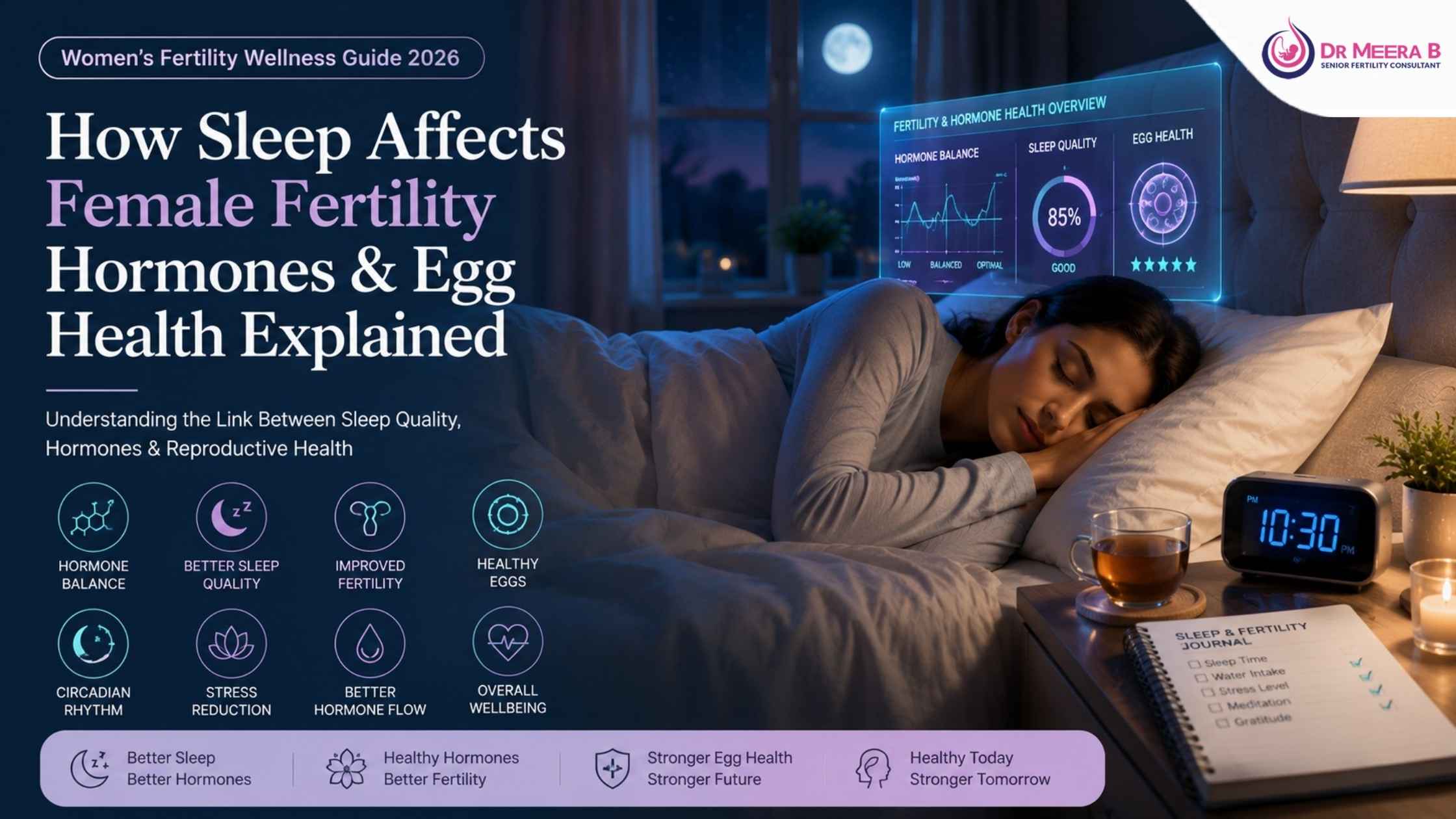
How Sleep Affects Female Fertility: Hormones & Egg Health Explained
Studies published in reproductive medicine journals have shown that women who consistently sleep less than six hours a night may experience disruptions in ovulation, hormone balance, and menstrual regularity. This growing body of evidence has made specialists worldwide pay closer attention to how sleep affects female fertility. For women trying to conceive, sleep is no longer viewed as just a lifestyle factor. It is increasingly recognized as a biological process that directly influences reproductive hormones, egg quality, implantation potential, and even pregnancy outcomes.
At Dr Meera B’s place of practice, including Aster PMF Hospital, Sasthamkotta, couples are guided through evidence-based fertility evaluations that examine not only medical conditions but also overlooked factors such as stress, circadian rhythm disruption, metabolic imbalance, and sleep quality. Many women spend years focusing only on medications and scans while unknowingly ignoring the silent impact of poor sleep on fertility health.
Dr Meera B, with more than three decades of experience in Obstetrics, Gynaecology, Reproductive Medicine, and IVF, combines internationally trained expertise with compassionate patient-centered care. Her advanced training at the renowned Bourn Hall Clinic in Cambridge, UK, gives patients access to globally informed fertility guidance while receiving care close to home in Kerala.
Why does sleep matter for female fertility?
Sleep is deeply connected to the endocrine system, which controls reproductive hormones. During healthy sleep cycles, the brain regulates the release of hormones that influence ovulation, egg maturation, menstrual cycles, and implantation. When sleep becomes irregular or insufficient, these hormonal pathways can become disrupted.
The reproductive system depends on synchronized communication between the hypothalamus, pituitary gland, ovaries, adrenal glands, and thyroid. Sleep deprivation may interfere with this communication network and contribute to:
- Irregular ovulation
- Delayed or absent menstrual cycles
- Reduced egg quality
- Increased cortisol levels
- Insulin resistance
- Hormonal imbalance
- Poor implantation environment
Women working night shifts, rotating schedules, or experiencing chronic stress often report fertility struggles linked to disrupted sleep patterns. Dr Meera B carefully evaluates these lifestyle and hormonal interactions before recommending fertility treatments or assisted reproductive procedures.
How does poor sleep affect reproductive hormones?
Sleep directly affects the production and regulation of reproductive hormones including melatonin, estrogen, progesterone, follicle-stimulating hormone (FSH), and luteinizing hormone (LH). Even subtle disruptions in these hormones can alter fertility outcomes.
Melatonin and egg protection
Melatonin is widely known as the sleep hormone, but it also functions as a powerful antioxidant that may protect developing eggs from oxidative stress. Research suggests that healthy melatonin levels support better egg maturation and ovarian function.
Women with chronically poor sleep may have lower melatonin regulation, potentially increasing oxidative stress within ovarian follicles. This may affect egg health over time, especially in women already experiencing age-related fertility decline.
Cortisol and stress-related fertility disruption
Sleep deprivation raises cortisol levels. Persistently elevated cortisol can suppress reproductive hormone signaling and interfere with ovulation. Women under prolonged stress may notice delayed periods, anovulation, or worsening symptoms of hormonal conditions such as PCOS.
Insulin resistance and ovulatory dysfunction
Insufficient sleep is also associated with insulin resistance. This becomes particularly important in women with PCOS or metabolic imbalance. At Dr Meera B’s place of practice, fertility evaluations often include metabolic assessments because insulin resistance can affect ovulation quality and pregnancy success.
Can sleep influence egg quality?
Yes. Egg quality depends on hormonal stability, mitochondrial health, oxidative balance, and proper follicular development. Sleep supports several of these processes simultaneously.
As women age, oxidative stress naturally increases within the ovaries. Healthy sleep helps regulate antioxidant pathways that may protect eggs from damage. Chronic sleep deprivation, however, may worsen inflammation and cellular stress, potentially reducing reproductive potential.
This becomes especially important for women considering fertility preservation, IVF, or diminished ovarian reserve treatment Kollam. Early evaluation can help identify ovarian reserve concerns before fertility declines further.
How does sleep affect women with PCOS?
Women with PCOS frequently experience sleep disturbances, insulin resistance, hormonal imbalance, and chronic inflammation. These factors often reinforce one another, making fertility challenges more complex.
Women seeking lean PCOS treatment Kerala often assume that PCOS only affects overweight individuals. However, lean PCOS can also disrupt ovulation, hormone regulation, and fertility despite normal body weight. Sleep quality plays an important role in managing these hormonal patterns.
At Dr Meera B’s place of practice, fertility management for PCOS is individualized and may include:
- Ovulation monitoring
- Hormonal assessment
- Lifestyle optimization
- Nutritional guidance
- Metabolic evaluation
- Sleep pattern correction
- Evidence-based fertility treatments
Rather than offering unrealistic promises, Dr Meera B focuses on medically proven approaches that support sustainable reproductive health outcomes.
Can better sleep improve IVF success?
Healthy sleep may positively support IVF preparation by improving hormonal regulation, stress management, and metabolic balance. While sleep alone cannot guarantee pregnancy, reproductive specialists increasingly recognize its importance during fertility treatment cycles.
Patients exploring advanced IVF technology Kerala are often surprised to learn that lifestyle and circadian rhythm stability can influence treatment readiness. Fertility care today goes beyond laboratory procedures. Successful reproductive care involves optimizing the body’s internal environment before embryo transfer.
At Aster PMF Hospital, Sasthamkotta and other places where Dr Meera B consults, fertility planning may include guidance on:
- Sleep optimization
- Stress reduction
- Nutrition
- Weight management
- Hormonal correction
- Male fertility evaluation
- Cycle synchronization
How many hours of sleep are ideal for fertility?
Most reproductive health specialists recommend approximately seven to eight hours of consistent nighttime sleep for optimal hormonal function. Both inadequate sleep and excessive sleep may affect reproductive balance.
Helpful sleep practices include:
- Maintaining a regular sleep schedule
- Avoiding screens before bedtime
- Reducing caffeine late in the day
- Managing stress levels
- Avoiding overnight work shifts where possible
- Creating a dark, quiet sleeping environment
These may seem like simple changes, but many couples underestimate how significantly daily habits influence fertility outcomes.
What other hidden factors affect fertility alongside sleep?
Fertility rarely depends on one factor alone. Sleep interacts with metabolic health, immune balance, male fertility, age, and reproductive conditions. This is why comprehensive fertility evaluation remains critical.
Male fertility and recovery after illness
Male reproductive health can also decline temporarily after infections and high fever. Couples frequently seek advice regarding sperm count recovery after viral fever because viral illnesses may temporarily reduce sperm production and motility for several weeks or months.
At Dr Meera B’s place of practice, both partners are evaluated together whenever possible because infertility is often a shared reproductive challenge rather than solely a female issue.
Weight management and fertility medications
Modern fertility care also includes discussions about obesity, insulin resistance, and hormonal health. Patients increasingly inquire about weight loss injections and pregnancy safety. While some medications may assist metabolic improvement under medical supervision, pregnancy planning should always be coordinated carefully with fertility specialists to avoid inappropriate medication exposure during conception attempts.
Pregnancy loss evaluation
Women experiencing repeated miscarriages may require detailed investigation. Recurrent pregnancy loss testing Kerala can help identify hormonal, genetic, anatomical, autoimmune, or clotting-related factors contributing to pregnancy loss.
Dr Meera B emphasizes evidence-based testing rather than unnecessary investigations. This balanced approach helps couples receive focused, medically justified fertility care.
What is the role of fertility counseling before treatment?
One of the most overlooked aspects of fertility care is education. Many couples rush into treatments without fully understanding ovulation timing, reproductive aging, sleep-health interactions, or realistic treatment expectations.
During consultations, Dr Meera B carefully explains:
- Natural fertility timelines
- Ovulation tracking
- Hormonal testing
- Ovarian reserve assessment
- Lifestyle influences on conception
- Treatment pathways including IUI and IVF
- Age-related fertility decline
Patients often arrive overwhelmed after reading conflicting information online. Clear guidance from an experienced fertility specialist can reduce anxiety while helping couples make informed decisions.
Understanding treatment pathways for couples in Kerala
Couples commonly compare procedures, timelines, and expenses before beginning fertility care. Questions regarding IUI vs IVF cost in Kollam are extremely common because treatment planning depends on age, diagnosis, ovarian reserve, sperm quality, and duration of infertility.
Not every patient requires IVF immediately. Some couples may conceive through ovulation induction, timed intercourse, or IUI. Others with severe male factor infertility, advanced age, low ovarian reserve, or tubal disease may benefit more from IVF-based approaches.
Dr Meera B provides individualized recommendations rather than generalized treatment packages. This patient-specific approach helps avoid unnecessary emotional and financial burden.
Why experience matters in fertility treatment
Fertility treatment is not simply about technology. Clinical judgment, timing, patient selection, and individualized planning are equally important. Dr Meera B’s decades of experience in reproductive medicine enable her to identify subtle fertility patterns that may otherwise go unnoticed.
Her international exposure, combined with years of treating couples across Kerala and beyond, allows patients to access globally informed fertility care without compromising personalized attention.
Couples often delay consultations because they assume fertility problems will resolve naturally with time. Unfortunately, reproductive aging continues silently. Conditions such as low ovarian reserve, hormonal imbalance, endometriosis, and sperm decline may worsen gradually if left unaddressed.
Early assessment can provide clarity, direction, and timely intervention when needed.
About Dr Meera B
Dr Meera B is a highly experienced gynecologist and fertility specialist practicing in Kerala, with consultations including Aster PMF Hospital, Sasthamkotta. She holds MBBS, DGO, DNB(O&G), MRCOG(UK), and FRCOG(UK) qualifications and has more than thirty years of experience in Obstetrics, Gynaecology, Reproductive Medicine, and IVF.
After graduating from Govt Medical College, Trivandrum and completing post-graduation at Govt Medical College, Kottayam, Dr Meera B further advanced her expertise through international training at Bourn Hall Clinic, Cambridge, UK — globally recognized as the birthplace of IVF treatment.
Her approach combines scientific rigor, ethical fertility care, evidence-based treatment planning, and compassionate patient support. Couples from Kerala and abroad seek her guidance for fertility evaluation, reproductive counseling, IVF planning, hormonal concerns, and pregnancy-related care.
Book a consultation with Dr Meera B
Couples concerned about fertility, hormonal imbalance, recurrent pregnancy loss, irregular cycles, or reproductive health can schedule a consultation with Dr Meera B through the contact form available at:
Appointments can also be requested by calling +91 9447145101. Patients may additionally send a WhatsApp message through the website interface requesting an appointment. Dr Meera’s team will coordinate scheduling and provide further guidance regarding consultation availability and locations of practice.
Frequently Asked Questions
How does sleep influence female fertility and hormone balance?
Understanding how sleep affects female fertility is important because sleep directly supports hormonal regulation, egg maturation, ovulation, and reproductive health. Poor sleep patterns can disrupt melatonin, cortisol, estrogen, and progesterone levels, which may interfere with menstrual cycles and reduce the chances of conception.
Dr. Meera B evaluates sleep habits along with reproductive health markers to identify hidden factors affecting fertility. Women experiencing irregular cycles, fatigue, stress, or unexplained infertility often benefit from lifestyle guidance combined with fertility-focused medical care.
Can poor sleep quality affect egg health and ovarian reserve?
Yes. Consistently poor sleep may increase oxidative stress in the body, which can negatively impact egg quality over time. Sleep deprivation may also influence hormone production that supports follicle development and healthy ovulation.
Women who are considering fertility treatment often ask whether lifestyle changes can improve reproductive outcomes. Dr. Meera B combines personalized fertility evaluation with options such as diminished ovarian reserve treatment Kollam for women who show reduced egg reserve or age-related fertility decline.
Is there a connection between sleep disorders and PCOS?
Sleep disturbances are commonly seen in women with PCOS. Hormonal imbalance, insulin resistance, stress, and weight fluctuations can contribute to poor sleep quality, which may further worsen ovulation problems.
Dr. Meera B provides comprehensive fertility support for women dealing with PCOS-related infertility and metabolic concerns. Many patients also explore lean PCOS treatment Kerala when they experience PCOS symptoms despite having a normal body weight. Proper sleep management, nutrition, exercise, and reproductive care often work together to improve fertility outcomes.
Are weight management treatments safe while planning pregnancy?
Weight management may help improve ovulation and fertility in some women, especially when obesity contributes to hormonal imbalance. However, every treatment should be medically supervised before conception attempts begin.
Patients frequently ask about weight loss injections and pregnancy safety because some medications may need to be stopped before fertility treatment or pregnancy. Dr. Meera B carefully reviews medical history, fertility goals, and medication timing to help patients make informed and safe reproductive decisions.
Can advanced fertility technology improve success rates for couples with infertility?
Modern fertility care combines detailed diagnostics, embryo monitoring, hormonal assessment, and individualized treatment planning. Advanced laboratory systems can help improve embryo selection and treatment precision in suitable cases.
Couples seeking advanced IVF technology Kerala often consult Dr. Meera B for evidence-based fertility care tailored to their medical condition, age, and reproductive history. Treatment recommendations may include ovulation induction, IUI, IVF, fertility preservation, or advanced embryo assessment techniques depending on the patient’s needs.
What tests are recommended after repeated miscarriages?
Recurrent miscarriages can occur due to genetic factors, hormonal imbalance, uterine abnormalities, immune conditions, clotting disorders, thyroid dysfunction, or sperm-related concerns. A detailed fertility workup is often necessary to identify the underlying cause.
Many couples seek recurrent pregnancy loss testing Kerala to better understand repeated pregnancy loss and improve future pregnancy outcomes. Dr. Meera B offers structured evaluation and individualized treatment planning to support couples emotionally and medically during this challenging phase.
Can viral fever temporarily affect male fertility and sperm health?
Yes. High fever and viral infections can temporarily affect sperm production, sperm motility, and overall semen quality. In many cases, sperm parameters gradually improve within a few months after recovery because sperm production cycles take time.
Couples often ask about sperm count recovery after viral fever when fertility attempts are delayed after illness. Dr. Meera B may recommend semen analysis, timing guidance, nutritional support, and follow-up evaluation to monitor recovery and fertility readiness.
How do couples decide between IUI and IVF treatment?
The choice between IUI and IVF depends on age, egg reserve, sperm quality, duration of infertility, previous treatment history, and underlying reproductive conditions. IUI is often considered for mild infertility factors, while IVF may be recommended for severe male factor infertility, blocked tubes, low ovarian reserve, or repeated treatment failure.
During consultation, many couples discuss IUI vs IVF cost in Kollam along with success rates and treatment suitability. Dr. Meera B provides transparent guidance regarding treatment options so couples can choose a path that aligns with their medical needs and family goals.
Comments are closed