
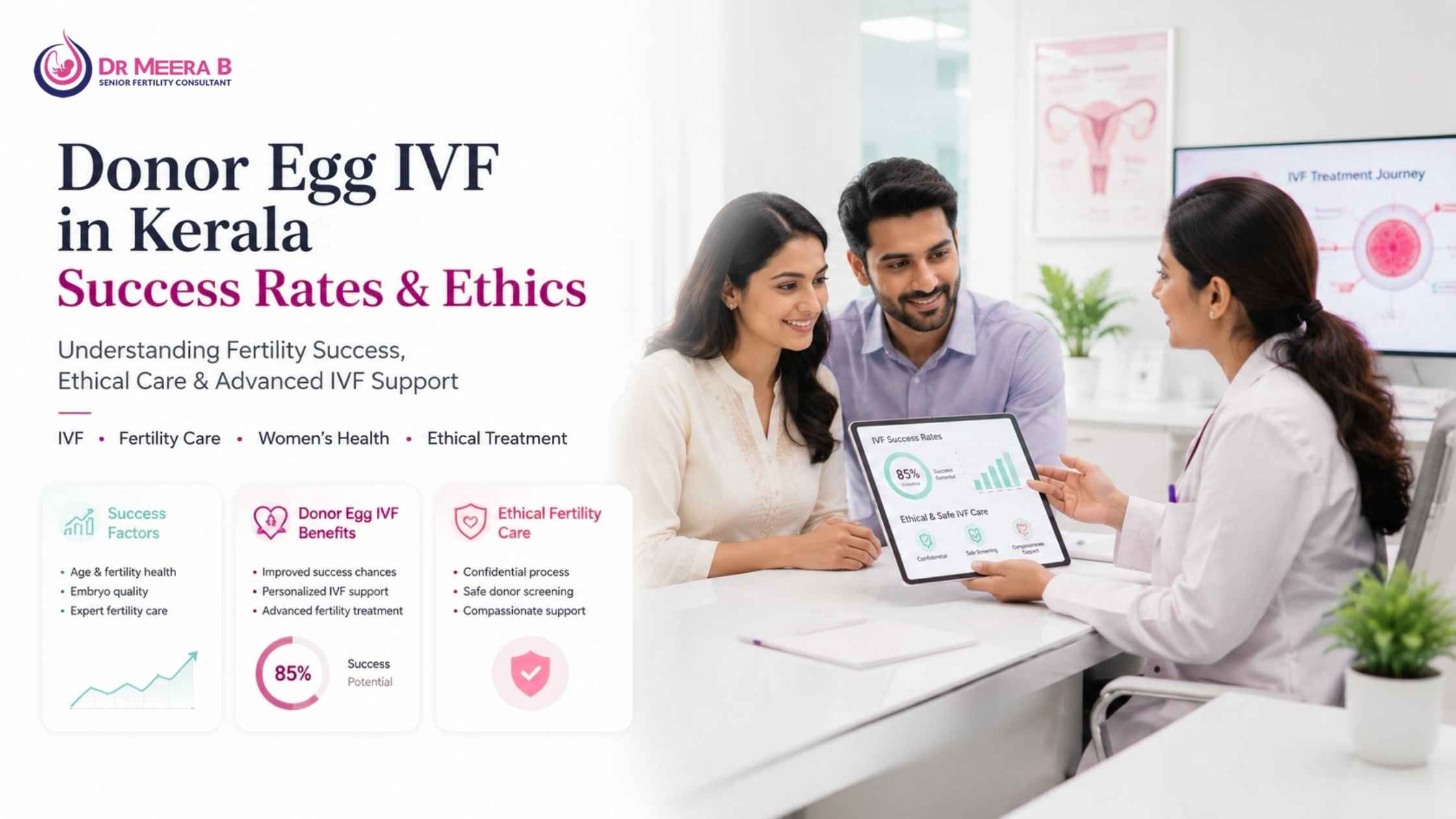
Donor Egg IVF in Kerala: Success Rates & Ethics
Donor egg IVF in Kerala has become a transformative solution for couples struggling with infertility, with studies in India showing that donor egg IVF cycles can achieve success rates of up to 50–65% per cycle in suitable candidates. This remarkable statistic highlights why more couples are exploring advanced fertility treatments guided by experienced specialists like Dr Meera B, whose decades of expertise continue to shape hopeful outcomes for patients across Kerala.
For many couples, the journey to parenthood can feel overwhelming, especially when conventional treatments fail. The emotional strain, combined with medical uncertainty, often leads to frustration. However, with the evolution of assisted reproductive technologies and ethical medical practices, donor egg IVF offers a scientifically proven and ethically guided pathway to parenthood.
What is donor egg IVF and how does it work?
The donor egg IVF process Kerala involves fertilizing an egg from a healthy donor with the intended father’s sperm (or donor sperm), followed by transferring the embryo into the recipient’s uterus. This process is particularly beneficial for women with diminished ovarian reserve, genetic concerns, or age-related fertility decline.
- Selection of a medically screened egg donor
- Synchronization of donor and recipient cycles
- Egg retrieval from donor
- Fertilization in a controlled lab environment
- Embryo transfer into the recipient’s uterus
At Dr Meera B’s place of practice, advanced IVF laboratories and protocols ensure that every step of the process is handled with precision and care, enhancing the chances of a successful pregnancy.
Why are success rates higher with donor eggs?
The IVF success rate with donor eggs India 2026 is expected to remain significantly higher than traditional IVF because donor eggs are typically sourced from young, healthy women. This reduces the risk of chromosomal abnormalities and improves embryo quality.
Several factors contribute to improved outcomes:
- Higher quality eggs from younger donors
- Better embryo development rates
- Reduced risk of genetic disorders
- Improved implantation success
Dr Meera B carefully evaluates each case to ensure that patients are guided toward the most appropriate treatment plan, prioritizing safety and realistic expectations.
Who should consider donor egg IVF?
Donor egg IVF is recommended for women who:
- Have poor ovarian reserve or premature ovarian failure
- Have experienced repeated IVF failures
- Carry genetic disorders that may be passed to offspring
- Are of advanced maternal age
Additionally, post-menopausal IVF has emerged as a viable option for women who wish to conceive later in life, provided they meet specific health criteria. This approach requires careful medical evaluation to ensure maternal and fetal safety.
Ethical considerations in donor egg IVF
Ethics play a crucial role in donor egg IVF treatments. Transparency, informed consent, and patient welfare remain at the core of ethical fertility care.
Key ethical aspects include:
- Ensuring anonymity and confidentiality of donors
- Proper screening and counseling of donors and recipients
- Avoiding exploitation or commercialization of donors
- Adhering to Indian Council of Medical Research (ICMR) guidelines
Dr Meera B’s approach emphasizes ethical integrity, ensuring that all treatments align with established medical guidelines and respect the dignity of all individuals involved.
Understanding the donor egg womb connection
A common concern among patients is the donor egg womb connection and whether the recipient mother shares a biological bond with the child. Scientific research has shown that while the genetic material comes from the donor, the uterine environment plays a significant role in gene expression through epigenetics.
This means that:
- The mother carrying the pregnancy influences the baby’s development
- Environmental factors within the womb affect gene activation
- A strong biological and emotional connection is naturally established
This understanding provides reassurance to many women considering donor egg IVF, reinforcing the meaningful bond between mother and child.
What makes Kerala a preferred destination for donor egg IVF?
Kerala has become a sought-after destination for fertility treatments due to its advanced healthcare infrastructure, experienced specialists, and patient-centric approach.
Key advantages include:
- Access to modern IVF technology
- Highly qualified fertility experts
- Affordable treatment compared to global standards
- Supportive and holistic care environment
At Aster PMF Hospital, Sasthamkotta, where Dr Meera B practices, patients benefit from cutting-edge facilities combined with compassionate care.
How Dr Meera B enhances success outcomes
With over three decades of experience in obstetrics, gynecology, and reproductive medicine, Dr Meera B brings unparalleled expertise to fertility care. Her training at the renowned Bourn Hall Clinic in Cambridge, UK, adds global credibility to her practice.
Her approach focuses on:
- Individualized treatment plans
- Evidence-based medical protocols
- Comprehensive patient counseling
- Ethical and transparent practices
Patients consulting Dr Meera B often find clarity and confidence in their treatment journey, knowing they are guided by a specialist with both international exposure and local understanding.
Emotional and psychological aspects of donor egg IVF
The decision to opt for donor egg IVF can be emotionally complex. Couples may experience concerns related to genetics, societal perceptions, and personal expectations.
Dr Meera B emphasizes the importance of:
- Pre-treatment counseling
- Open communication between partners
- Professional psychological support if needed
This holistic approach ensures that patients are mentally and emotionally prepared for the journey ahead.
Costs and accessibility
While donor egg IVF involves additional procedures compared to conventional IVF, it remains cost-effective in India relative to many international destinations.
Factors influencing cost include:
- Donor screening and compensation
- Laboratory procedures
- Medication and hormonal therapy
- Number of IVF cycles required
At Dr Meera B’s place of practice, transparency in cost and treatment planning ensures that patients can make informed decisions without unexpected financial stress.
How to begin your fertility journey
Taking the first step toward fertility treatment can feel daunting, but timely consultation can significantly improve outcomes. Early evaluation allows for better planning and access to the most suitable treatment options.
To book an appointment for consultation with Dr Meera B, patients can fill out the form at https://drmeerab.com/contact/ or call +91 9447145101. They may also use the WhatsApp interface on the website to request an appointment. Dr Meera’s team will coordinate and schedule the consultation accordingly.
About Dr Meera B
Dr Meera B is a highly respected gynecologist and fertility specialist based in Kollam, Kerala, with qualifications including MBBS, DGO, DNB (O&G), MRCOG (UK), and FRCOG (UK). With more than 30 years of experience, she has helped countless couples overcome fertility challenges through evidence-based and ethical treatments.
Her association with leading medical institutions and her training at Bourn Hall Clinic position her as a trusted authority in reproductive medicine. Currently practicing at Aster PMF Hospital, Sasthamkotta, she continues to guide patients with compassion, expertise, and a commitment to excellence.
Frequently Asked Questions
What is the donor egg IVF process Kerala and how does Dr. Meera B approach it?
The donor egg IVF process Kerala typically involves selecting a healthy donor, fertilizing the donor egg with sperm in a lab, and transferring the resulting embryo into the recipient’s uterus. Dr. Meera B follows a highly personalized and ethical protocol, ensuring detailed screening, counseling, and medical preparation for both donor and recipient. Her approach emphasizes transparency, safety, and emotional readiness throughout the journey.
What is the IVF success rate with donor eggs India 2026, especially in Kerala clinics?
The IVF success rate with donor eggs India 2026 is generally higher than conventional IVF, often ranging between 55% to 75% depending on individual factors. Clinics in Kerala, including those led by Dr. Meera B, focus on optimizing uterine health, embryo quality, and lab standards, which contributes to improved outcomes. However, success still depends on age, health conditions, and adherence to treatment protocols.
Is post-menopausal IVF safe and ethically accepted?
Post-menopausal IVF is medically possible using donor eggs, but it requires careful evaluation. Dr. Meera B emphasizes thorough health screening to ensure the patient can safely carry a pregnancy. Ethically, it is accepted when performed under strict guidelines, with proper counseling about risks, responsibilities, and long-term considerations for both the parent and child.
What does donor egg womb connection mean for expecting mothers?
The concept of donor egg womb connection refers to the biological and emotional bond formed during pregnancy. Even though the egg is from a donor, the recipient’s body nurtures the embryo, influencing gene expression through epigenetics. Dr. Meera B reassures patients that this connection plays a meaningful role in the baby’s development and strengthens maternal bonding.
How does Dr. Meera B ensure ethical practices in donor egg IVF?
Ethical care is central to Dr. Meera B’s practice. She ensures informed consent, anonymity where required, fair donor compensation, and strict compliance with Indian reproductive guidelines. Patients receive counseling sessions to understand legal, emotional, and medical aspects before proceeding.
Who is an ideal candidate for donor egg IVF treatment?
Women with diminished ovarian reserve, genetic concerns, repeated IVF failures, or advanced age are typically good candidates. Dr. Meera B evaluates each case individually, ensuring that donor egg IVF is recommended only when it offers the best chance of success and aligns with the patient’s goals.
What support services are available during the treatment journey?
Patients working with Dr. Meera B receive comprehensive support, including fertility counseling, nutritional guidance, hormonal monitoring, and emotional care. The goal is to provide a holistic experience that reduces stress and improves treatment outcomes.
How long does the donor egg IVF process typically take?
The entire process usually takes 4 to 8 weeks, depending on synchronization between donor and recipient cycles. Dr. Meera B carefully plans each phase to ensure optimal timing for embryo transfer and implantation success.
Comments are closed