
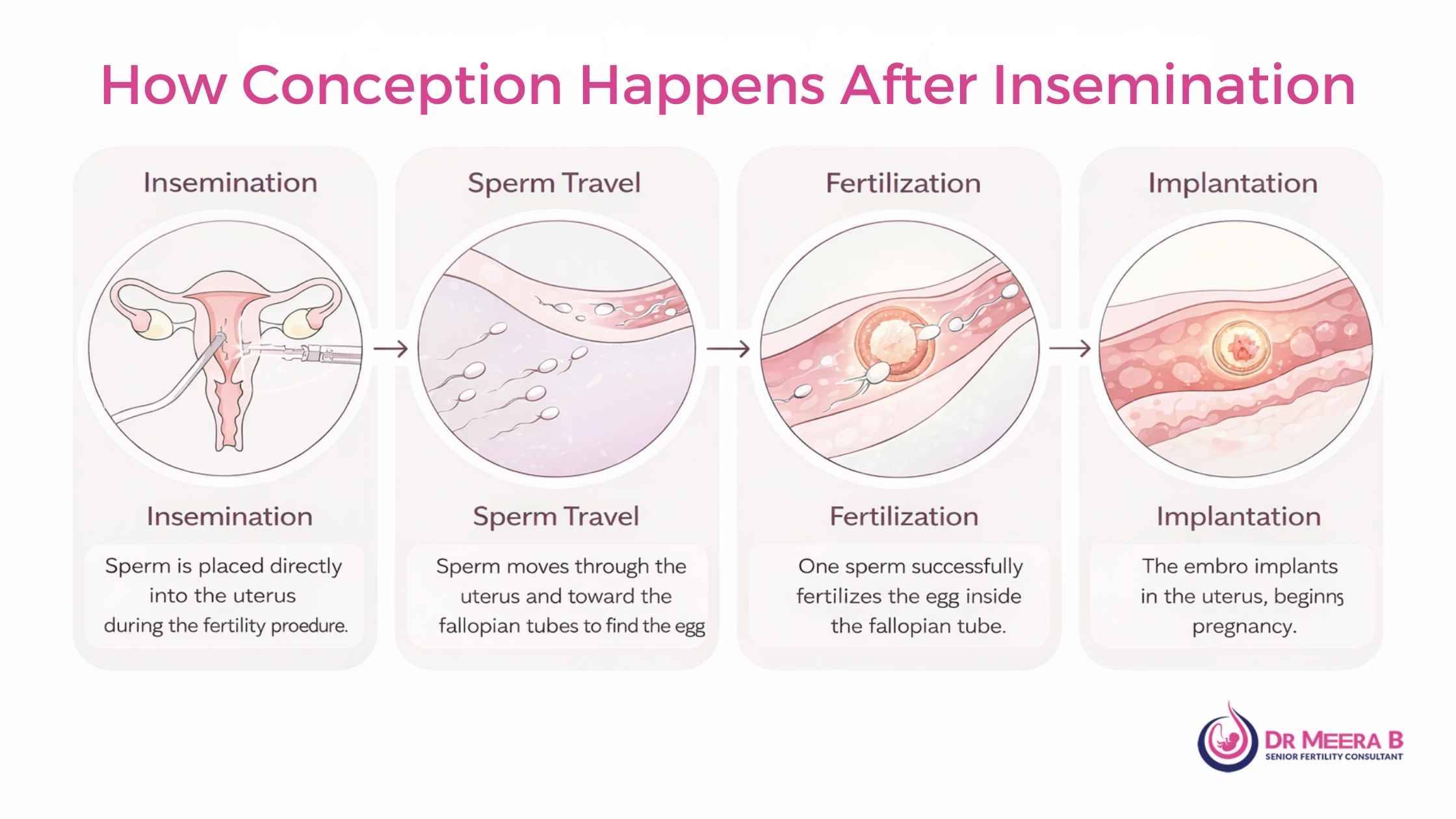
How Conception Happens After Insemination
Up to 85% of healthy couples conceive naturally within one year of regular unprotected intercourse, according to globally published reproductive health statistics. Yet for many couples, the journey from insemination to confirmed pregnancy feels uncertain, confusing, and emotionally overwhelming. Understanding How Conception Happens After Insemination can transform anxiety into clarity — and clarity into confident action under expert guidance.
At Dr Meera B’s place of practice, including Aster PMF Hospital, Sasthamkotta, couples receive evidence-based reproductive care rooted in more than three decades of experience. If you are wondering when does insemination occur, what the true conception meaning is, or even asking yourself what is pregnancy conception, this comprehensive guide will walk you through the science — step by step — with precision and care.
What is pregnancy conception and how does it begin?
What is pregnancy conception? Pregnancy conception is the biological process in which a sperm fertilizes an egg, forming a zygote that implants in the uterus and develops into an embryo. Conception marks the beginning of pregnancy, but implantation is what confirms it.
The conception meaning goes beyond fertilization alone. While fertilization happens in the fallopian tube, pregnancy begins only after the fertilized egg successfully implants into the uterine lining. This distinction is crucial when discussing insemination and pregnancy outcomes.
Dr Meera B explains that understanding this timeline helps couples manage expectations and avoid premature testing or unnecessary stress.
When does insemination occur in a natural cycle?
When does insemination occur? In natural conception, insemination occurs during intercourse when sperm is deposited into the female reproductive tract, typically around the time of ovulation.
Ovulation usually happens around the middle of a menstrual cycle, often between days 12–16 in a 28-day cycle. The fertile window includes:
- Five days before ovulation
- The day of ovulation
- Possibly one day after ovulation
Sperm can survive up to five days in optimal cervical mucus conditions, while the egg remains viable for approximately 12–24 hours. This brief overlap is why timing matters significantly in insemination and pregnancy planning.
At Dr Meera B’s place of practice, ovulation tracking is done using:
- Ultrasound follicular monitoring
- Hormonal blood tests
- Ovulation prediction methods
These are proven, medically approved techniques — not guesswork.
How conception happens after insemination: Step-by-step explanation
To fully understand How Conception Happens After Insemination, let us break it into scientifically validated stages.
1. Sperm transport
After insemination, millions of sperm begin their journey from the vagina through the cervix into the uterus and fallopian tubes. Only a few hundred reach the egg.
2. Fertilization
Fertilization typically occurs in the ampulla of the fallopian tube. A single sperm penetrates the egg, forming a zygote with combined genetic material.
3. Cell division
The fertilized egg divides repeatedly while traveling toward the uterus. Within 3–5 days, it becomes a blastocyst.
4. Implantation
Around 6–10 days after fertilization, the blastocyst implants into the uterine lining. This is when pregnancy officially begins.
5. Hormonal signaling
Once implantation occurs, the body produces hCG (human chorionic gonadotropin), the hormone detected in pregnancy tests.
Each of these steps must occur successfully for insemination and pregnancy to result in a confirmed gestation.
How long does it take to conceive after insemination?
From insemination to implantation, the process generally takes 6–10 days. However, pregnancy detection through testing may require 12–14 days post-ovulation for accurate results.
Dr Meera B advises patients to wait for the appropriate time before testing to avoid emotional distress caused by false negatives.
What factors influence successful conception?
Even when insemination occurs at the correct time, several factors influence whether conception happens:
- Egg quality and ovarian reserve
- Sperm count, motility, and morphology
- Uterine lining thickness
- Tubal patency
- Hormonal balance
At Aster PMF Hospital, Sasthamkotta, advanced reproductive diagnostics are available to evaluate these factors scientifically. This includes ultrasound imaging, hormonal assays, and fertility assessments aligned with international guidelines.
Understanding insemination and pregnancy in assisted reproductive treatments
For couples facing fertility challenges, insemination and pregnancy may involve assisted techniques such as Intrauterine Insemination (IUI) or IVF.
Dr Meera B has extensive training in Reproductive Medicine, including advanced IVF training at the renowned Bourn Hall Clinic in Cambridge, UK — historically significant for the birth of the world’s first IVF baby in 1978.
Under her guidance, treatments may include:
- Ovulation induction
- Timed IUI procedures
- IVF where medically indicated
These are established, evidence-based treatments practiced worldwide and tailored carefully to each couple’s needs at Dr Meera B’s place of practice.
Why some couples struggle even when insemination occurs correctly
It can be deeply frustrating when insemination is well-timed yet pregnancy does not occur. The reasons may include:
- Unexplained infertility
- Mild male factor infertility
- Subtle ovulatory dysfunction
- Endometriosis
- Age-related decline in egg quality
This is where expert evaluation becomes critical. With over 30 years of experience and qualifications including MBBS, DGO, DNB(O&G), MRCOG(UK), and FRCOG(UK), Dr Meera B offers thorough diagnostic pathways without making unrealistic promises.
Emotional impact of delayed conception
When couples repeatedly question the conception meaning in their own lives, the emotional toll can be immense. Stress itself may indirectly affect hormonal balance. Seeking timely medical guidance prevents unnecessary months — sometimes years — of uncertainty.
At Aster PMF Hospital, Sasthamkotta, consultations are conducted with sensitivity, confidentiality, and evidence-based recommendations.
When should you consult a fertility specialist?
- If under 35 and trying for more than 12 months
- If over 35 and trying for more than 6 months
- If cycles are irregular
- If there is known male factor concern
- If there is history of miscarriage
Delaying expert advice may reduce valuable reproductive time. Early evaluation increases options and improves planning.
About Dr Meera B
Dr Meera B is a senior gynecologist and reproductive medicine specialist practicing in Kollam, Kerala. She currently consults at Aster PMF Hospital, Sasthamkotta. With qualifications including MBBS, DGO, DNB(O&G), MRCOG(UK), and FRCOG(UK), she brings global expertise to local care.
Her training at Bourn Hall Clinic, Cambridge, and decades of experience have enabled countless couples to understand how conception happens after insemination through scientifically validated methods.
She offers consultations at Dr Meera B’s place of practice, where modern reproductive technologies and diagnostic facilities are accessible to patients in Kerala and beyond.
Book your consultation
If you are seeking clarity about when does insemination occur, understanding insemination and pregnancy, or exploring treatment options, you can:
- Fill out the appointment form at https://drmeerab.com/contact/
- Call +91 9447145101 to request scheduling
- Send a WhatsApp message through the website interface
Dr Meera’s team will schedule your appointment and guide you through the next steps.
Your journey toward understanding what is pregnancy conception and achieving parenthood deserves expert guidance. Choosing experienced care today could make all the difference tomorrow.
Frequently Asked Questions – How Conception Happens After Insemination
Many couples ask, when does insemination occur during a typical menstrual cycle. In most women, it takes place around ovulation, which usually happens 12–16 days before the next period. This is when the ovary releases an egg and the body is most fertile.
Dr. Meera B carefully tracks ovulation through scans and hormone monitoring to ensure the timing is optimal. Accurate timing significantly improves the likelihood of successful insemination and pregnancy.
The conception meaning refers to the moment a sperm successfully fertilizes an egg. This fusion forms a single cell called a zygote, which begins dividing and developing into an embryo.
At Dr. Meera B’s clinic, patients receive clear explanations about every stage after fertilization so they understand what is happening biologically and emotionally during the early days of trying to conceive.
When people ask what is pregnancy conception, they are usually referring to the complete process starting from fertilization and ending with implantation in the uterus. Fertilization occurs in the fallopian tube, but pregnancy officially begins once the embryo implants into the uterine lining.
Dr. Meera B evaluates uterine health and hormone levels to ensure the environment is supportive for implantation, which is a crucial step for a healthy pregnancy.
Fertilization generally occurs within 12–24 hours after ovulation if sperm are present. Since sperm can survive inside the reproductive tract for up to five days, conception may occur shortly after ovulation even if insemination happened earlier.
Implantation typically happens 6–10 days after fertilization. Dr. Meera B guides couples through this waiting phase with medical clarity and emotional reassurance.
After insemination, millions of sperm travel through the cervix into the uterus and toward the fallopian tubes. Only one sperm typically penetrates the egg. The fertilized egg then divides repeatedly while moving toward the uterus.
If implantation occurs successfully, hormonal changes begin that support pregnancy. Dr. Meera B monitors these hormonal shifts to confirm early pregnancy development.
Yes, insemination and pregnancy can occur on the first attempt if ovulation timing, sperm quality, and uterine health are optimal. However, it is also normal for healthy couples to take several cycles.
Dr. Meera B offers personalized fertility planning, cycle monitoring, and lifestyle recommendations to improve success rates and reduce uncertainty during the journey.
If you are under 35 and have been trying for over a year, or over 35 and trying for more than six months without success, it is advisable to seek professional guidance.
Dr. Meera B provides comprehensive fertility assessments, ovulation tracking, hormonal evaluations, and individualized treatment plans to support safe and successful conception.
Comments are closed