
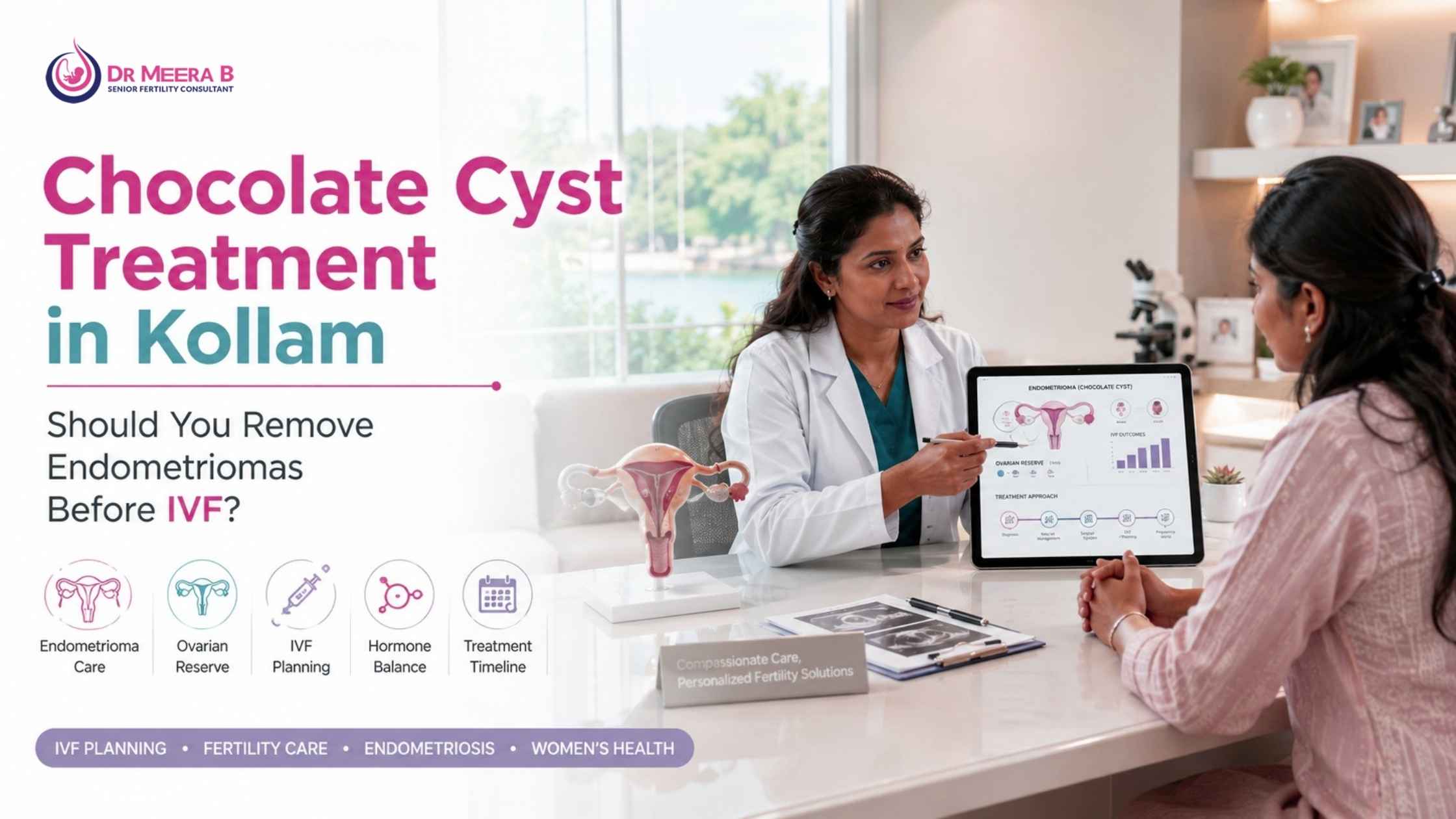
Chocolate Cyst Treatment in Kollam – Should You Remove Endometriomas Before IVF?
Studies published in reproductive medicine journals estimate that nearly 20% to 40% of women with endometriosis may experience infertility challenges, and ovarian endometriomas — commonly called chocolate cysts — are among the most complex fertility conditions seen in gynecology today. For many women trying to conceive, the question is emotionally overwhelming: should the cyst be removed before IVF, or can treatment proceed safely without surgery? This is where expert evaluation becomes critical. When couples seek chocolate cyst treatment Kollam, they are often looking not only for symptom relief but also for a carefully balanced fertility strategy that protects ovarian reserve while maximizing the chances of pregnancy.
Dr Meera B, one of the most respected gynecologists and fertility experts in Kerala, brings more than three decades of experience in reproductive medicine and infertility care. Having trained at the world-renowned Bourn Hall Clinic in Cambridge, UK, Dr Meera B combines international fertility expertise with evidence-based reproductive care suited to Indian patients. At Dr Meera B’s place of practice, including Aster PMF Hospital, Sasthamkotta, women receive individualized treatment plans designed around their fertility goals, ovarian reserve status, age, pain symptoms, and IVF readiness.
What is a chocolate cyst and why does it affect fertility?
A chocolate cyst, medically known as an ovarian endometrioma, develops when endometrial tissue grows inside the ovaries and repeatedly bleeds over time. The trapped old blood becomes thick and dark brown, giving rise to the term “chocolate cyst.” These cysts are strongly associated with endometriosis and can interfere with fertility in multiple ways.
- They may reduce healthy ovarian tissue.
- They can affect egg quality.
- Inflammation around the ovaries may impair fertilization.
- Pelvic adhesions can distort reproductive anatomy.
- They may cause severe pelvic pain during periods.
- In some women, they interfere with ovarian stimulation during IVF.
Many women ignore symptoms for years because they assume painful periods are normal. Unfortunately, delayed diagnosis may reduce reproductive potential over time. Early assessment by a specialist like Dr Meera B helps identify whether conservative management, medication, IVF planning, or surgery is appropriate.
Should endometriomas always be removed before IVF?
The short answer is no. Not every woman with an endometrioma requires surgery before IVF. Current fertility guidelines emphasize individualized decision-making because unnecessary surgery can sometimes reduce ovarian reserve and impact future egg production.
This is one of the most important discussions during fertility consultations. Many patients assume that surgery is mandatory before IVF, but modern reproductive medicine has evolved significantly. Dr Meera B carefully evaluates multiple clinical factors before recommending endometrioma surgery IVF planning.
Factors that determine whether surgery is needed
- Size of the endometrioma
- Level of pelvic pain
- Previous surgeries on the ovary
- Age of the patient
- AMH levels and ovarian reserve
- Accessibility of follicles during IVF egg retrieval
- Suspicion of malignancy
- Presence of infection or rapidly enlarging cysts
If the cyst is small and not obstructing egg retrieval, IVF may proceed without surgery. However, larger cysts causing pain, repeated inflammation, or compromised ovarian access may need intervention before fertility treatment.
How does ovarian reserve influence treatment decisions?
Ovarian reserve refers to the number and quality of eggs remaining in the ovaries. Every surgical procedure involving ovarian tissue carries a small risk of reducing egg reserve. This is why fertility specialists must weigh benefits against risks before recommending surgery.
At Dr Meera B’s place of practice, ovarian reserve evaluation is treated as a central part of fertility planning. Women may undergo:
- AMH testing
- Antral follicle count scans
- Hormonal evaluation
- Ultrasound mapping of endometriosis
- IVF readiness assessment
In women with already diminished ovarian reserve, immediate IVF may sometimes be safer than surgery. In others, carefully performed endometriosis cyst removal may improve pelvic anatomy and enhance fertility outcomes.
Can IVF succeed without removing a chocolate cyst?
Yes, IVF can absolutely succeed even if a chocolate cyst remains in place. Many women conceive successfully without undergoing surgery first. This is why individualized fertility planning matters more than a one-size-fits-all treatment approach.
Research suggests that removing every endometrioma does not automatically improve IVF success rates. Instead, the focus is on identifying which patients truly benefit from surgery and which patients benefit more from proceeding directly to assisted reproduction.
This nuanced approach is one reason why couples across Kerala seek consultation with Dr Meera B. Her expertise in reproductive medicine allows her to create fertility pathways that minimize unnecessary procedures while protecting reproductive potential.
What are the symptoms that should never be ignored?
Women frequently tolerate severe symptoms for years before seeking help. However, untreated endometriosis may gradually worsen and affect fertility outcomes.
Warning signs that require evaluation
- Severe menstrual pain
- Pain during intercourse
- Chronic pelvic pain
- Painful bowel movements during periods
- Infertility lasting more than 12 months
- Heavy menstrual bleeding
- Bloating and fatigue during cycles
- Repeated IVF failure
Early diagnosis allows more fertility-preserving options. Women searching for ovarian cyst fertility treatment often arrive after years of discomfort and unsuccessful attempts at conception. Timely consultation can prevent progression and improve reproductive outcomes.
How is chocolate cyst treatment planned in Kollam?
Effective treatment begins with accurate diagnosis. Dr Meera B focuses on evidence-based fertility care and individualized reproductive planning rather than generalized treatment protocols.
At Dr Meera B’s place of practice, including Aster PMF Hospital, Sasthamkotta, evaluation may include:
- Detailed reproductive history
- Pelvic ultrasound scanning
- Hormonal testing
- Fertility assessment
- Evaluation for associated endometriosis
- Assessment of IVF suitability
- Pain management planning
Depending on findings, treatment options may include:
- Observation and monitoring
- Hormonal suppression therapy
- Laparoscopic surgery
- Fertility preservation planning
- IVF treatment
- Combined medical and surgical management
Why does expertise matter in endometrioma surgery?
Surgery involving the ovaries requires exceptional precision because the goal is not simply cyst removal — it is preservation of future fertility. Poorly performed surgery may unintentionally remove healthy ovarian tissue along with the cyst wall.
This is why specialist-guided management becomes critical. Dr Meera B’s extensive experience in gynecology and reproductive medicine allows her to evaluate whether surgery is genuinely beneficial or whether conservative fertility-focused management is safer.
Her international reproductive medicine exposure, including training at Bourn Hall Clinic in Cambridge, UK, adds an advanced layer of IVF understanding that many patients specifically seek when facing complicated fertility decisions.
What makes fertility-focused treatment different?
Women with endometriosis are often emotionally exhausted by the time they seek fertility care. Many have already undergone years of pain, delayed diagnosis, failed treatments, or anxiety surrounding IVF.
Fertility-focused care addresses both medical and emotional aspects of the journey. Instead of focusing only on cyst removal, Dr Meera B prioritizes:
- Future pregnancy goals
- Preservation of ovarian function
- Long-term reproductive health
- Reducing repeat surgeries
- Improving IVF preparedness
- Evidence-based fertility timelines
This patient-centered strategy helps women make informed decisions instead of rushing into procedures driven by fear or misinformation.
Can delaying treatment affect IVF outcomes?
In some women, yes. Progressive endometriosis may gradually affect ovarian reserve, pelvic anatomy, and reproductive function. Delaying fertility evaluation for too long can sometimes reduce available treatment options.
This does not mean every woman requires immediate surgery or IVF. Instead, it highlights the importance of timely assessment. Women experiencing persistent symptoms or fertility delays should seek evaluation early rather than waiting for symptoms to worsen.
For many couples, understanding their fertility status alone brings enormous emotional relief because it replaces uncertainty with a structured treatment roadmap.
Why are more couples in Kerala seeking advanced fertility consultations?
Awareness regarding reproductive medicine has improved dramatically across Kerala in recent years. Couples increasingly understand that conditions like endometriosis require specialized fertility planning rather than temporary symptom suppression alone.
Facilities available at Dr Meera B’s place of practice support advanced fertility assessment and reproductive care pathways, helping couples access modern fertility management closer to home. This includes IVF planning support, fertility preservation discussions, advanced imaging evaluation, and individualized reproductive strategies.
The combination of internationally informed expertise, ethical patient counseling, and evidence-based fertility care has made Dr Meera B a trusted name among women seeking clarity regarding complex reproductive conditions.
About Dr Meera B
Dr Meera B is a highly experienced gynecologist and fertility specialist with qualifications including MBBS, DGO, DNB (O&G), MRCOG (UK), and FRCOG (UK). With more than thirty years of clinical expertise, she has helped numerous couples navigate infertility challenges through scientifically proven and ethically guided fertility care.
After graduating from Govt Medical College, Trivandrum, and completing post-graduation at Govt Medical College, Kottayam, Dr Meera B further advanced her expertise through international training in reproductive medicine at Bourn Hall Clinic, Cambridge, UK — the globally recognized center associated with the birth of the world’s first IVF baby.
Her consultations at Dr Meera B’s place of practice, including Aster PMF Hospital, Sasthamkotta, focus on compassionate fertility care tailored to each woman’s reproductive goals, medical history, and long-term wellbeing.
Book an appointment with Dr Meera B
Women experiencing pelvic pain, infertility concerns, recurrent IVF failure, or suspected endometriosis should not delay specialized evaluation. Early assessment can make a meaningful difference in fertility planning and long-term reproductive health.
To book an appointment for consultation with Dr Meera B, patients may fill and submit the consultation form available at:
Patients may also contact the team directly on +91 9447145101 for appointment scheduling. Those who prefer WhatsApp communication can use the WhatsApp interface available on the website to request a consultation. Dr Meera B’s team will coordinate the appointment and provide further guidance regarding consultation scheduling and treatment planning.
Frequently Asked Questions
What is a chocolate cyst and how can it affect IVF success?
A chocolate cyst, also called an endometrioma, is a cyst formed due to endometriosis inside the ovary. These cysts contain old blood and may interfere with ovarian function, egg quality, and fertility outcomes in some women. During IVF planning, Dr. Meera B carefully evaluates the size of the cyst, ovarian reserve, symptoms, and previous fertility history before recommending treatment.
Women searching for chocolate cyst treatment Kollam often want to know whether surgery is necessary before IVF. The answer depends on individual fertility goals, pain symptoms, cyst size, and whether the cyst affects access to follicles during egg retrieval.
Should endometriomas always be removed before IVF?
No, endometriomas do not always need surgical removal before IVF. In many cases, smaller cysts without severe pain can be monitored while proceeding directly with fertility treatment. However, surgery may be recommended if the cyst is large, painful, suspicious, or likely to interfere with egg retrieval.
Dr. Meera B provides a personalized assessment instead of using a one-size-fits-all approach. The decision regarding endometrioma surgery IVF depends on balancing fertility preservation with symptom relief and improving reproductive outcomes.
Can ovarian cysts reduce egg quality or ovarian reserve?
Some endometriomas may negatively impact ovarian reserve and the surrounding ovarian tissue over time. Inflammation caused by endometriosis can also affect egg quality in certain patients. This is why early fertility evaluation is important for women planning pregnancy.
Dr. Meera B uses ultrasound scans, AMH testing, and fertility history to determine the most suitable ovarian cyst fertility treatment strategy. The aim is to protect ovarian function while maximizing the chances of successful conception through natural methods or assisted reproduction.
When is surgery recommended for endometriosis-related cysts?
Surgery may be recommended when the cyst causes severe pelvic pain, rapid enlargement, repeated IVF failure, or difficulty accessing eggs during IVF retrieval. In some cases, surgery is also advised if there is uncertainty regarding the diagnosis.
Dr. Meera B carefully plans endometriosis cyst removal using minimally invasive techniques whenever possible. The goal is to reduce symptoms while preserving healthy ovarian tissue and future fertility potential.
How does Dr. Meera B approach fertility treatment for women with endometriosis?
Dr. Meera B focuses on individualized fertility care based on age, ovarian reserve, severity of endometriosis, pain symptoms, and reproductive goals. Treatment plans may include medication, fertility monitoring, IVF planning, or minimally invasive surgery depending on the patient’s condition.
Her approach emphasizes preserving fertility while minimizing unnecessary procedures. Patients receive clear guidance about timelines, IVF readiness, and long-term reproductive health.
Is laparoscopic surgery safe before IVF treatment?
Laparoscopic surgery is generally considered safe when performed by experienced specialists. It can help relieve pain, remove problematic cysts, and improve pelvic anatomy in selected patients. However, surgery must be carefully planned because aggressive removal can sometimes reduce ovarian reserve.
Dr. Meera B evaluates whether the benefits of surgery outweigh the risks before recommending any intervention. This balanced approach helps patients make informed decisions before proceeding with IVF.
Can pregnancy happen naturally after treatment for chocolate cysts?
Yes, many women are able to conceive naturally after appropriate treatment and monitoring. The chances depend on factors such as age, ovarian reserve, severity of endometriosis, and the presence of other fertility concerns.
Dr. Meera B helps patients understand whether natural conception, IUI, or IVF would provide the best chance of pregnancy. Early diagnosis and timely management can significantly improve reproductive outcomes.
Why should women seek early evaluation for endometriosis and infertility?
Delaying treatment may allow endometriosis to progress and affect ovarian function, pelvic anatomy, and fertility potential. Women experiencing pelvic pain, irregular periods, painful intercourse, or difficulty conceiving should seek timely medical evaluation.
Dr. Meera B offers comprehensive fertility assessment and compassionate counseling to help patients understand all available treatment options. Early intervention often provides better opportunities for successful pregnancy outcomes and improved quality of life.
Comments are closed