
C-Section vs. Normal Delivery: A Medical Perspective
Globally, the rate of cesarean deliveries has risen significantly, with the World Health Organization noting that nearly 1 in 5 births now occur via C-section. This growing trend raises an important question for expectant parents—what is the safest and most appropriate mode of delivery? Understanding the medical nuances behind both options is essential, especially when guided by Dr Meera B, a trusted name in maternal care.
What is the difference between C-section and normal delivery?
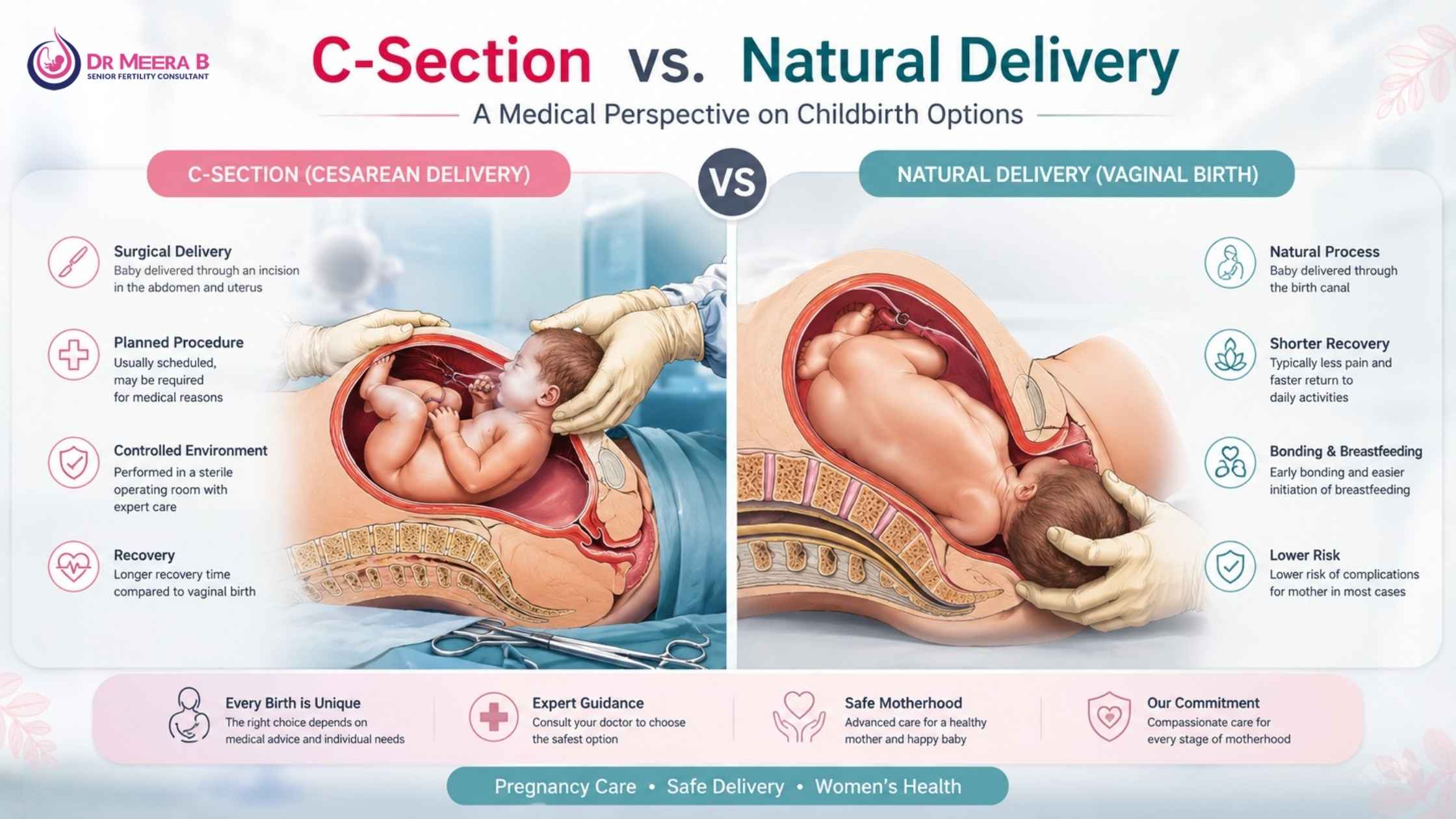
Normal delivery, also known as vaginal birth, is the natural process where the baby is delivered through the birth canal. A C-section, or cesarean delivery, is a surgical procedure where the baby is delivered through incisions in the abdomen and uterus. Both methods have specific indications, benefits, and risks, and the decision is always based on the safety of both mother and baby.
Why do doctors recommend C-section?
A cesarean section is typically recommended when vaginal delivery may pose risks. Situations such as fetal distress, placenta previa, obstructed labor, or multiple pregnancies often require surgical intervention. In such cases, the emphasis is on C-section for high risk pregnancy safety, ensuring that complications are minimized and outcomes are optimized.
At Dr Meera B’s place of practice, including Aster PMF Hospital, Sasthamkotta, advanced monitoring systems and surgical expertise ensure that high-risk pregnancies are handled with precision and care.
What are the benefits of normal delivery?
Normal delivery offers several advantages when medically feasible:
- Shorter hospital stay and quicker recovery
- Lower risk of surgical complications
- Immediate skin-to-skin bonding
- Reduced risk of respiratory issues in newborns
However, it is important to understand that normal delivery is not always possible or safe in every situation.
Can you have a normal delivery after a C-section?
Yes, many women can attempt a vaginal birth after cesarean (VBAC), depending on their medical history. The concept of normal delivery after c-section Kollam is gaining awareness as more women seek natural birthing options after a prior cesarean.
Achieving a successful VBAC depends on factors such as:
- Type of previous uterine incision
- Overall maternal health
- Absence of complications in the current pregnancy
Under expert supervision, VBAC success rates can be encouraging, offering women a safe opportunity to experience vaginal delivery.
How does Dr Meera B ensure safe delivery outcomes?
Dr Meera B is a highly experienced obstetrician with over three decades of expertise. She is widely recognized as a safe delivery specialist Kerala, known for her patient-centric approach and evidence-based practices.
Her approach includes:
- Comprehensive prenatal assessments
- Risk stratification for individualized care
- Continuous fetal monitoring during labor
- Emergency readiness for surgical intervention
Her international training, including experience at Bourn Hall Clinic in the UK, ensures that patients receive globally benchmarked care standards.
Which delivery method is safer?
There is no one-size-fits-all answer. The safest method depends on medical indications, pregnancy progression, and maternal health. While normal delivery is preferred when conditions are favorable, a C-section can be life-saving when complications arise.
| Factor | Normal Delivery | C-Section |
|---|---|---|
| Recovery Time | Faster | Longer |
| Hospital Stay | Short | Extended |
| Risk Level | Lower (if uncomplicated) | Higher (surgical risks) |
| Use Case | Low-risk pregnancies | High-risk or emergency cases |
What should expectant mothers consider?
Choosing between delivery methods involves emotional, physical, and medical considerations. Many mothers feel anxious about making the “right” choice, but the reality is that the right decision is always guided by medical expertise.
- Previous pregnancy history
- Current pregnancy complications
- Baby’s position and health
- Maternal health conditions
The importance of expert guidance
Delaying expert consultation or relying on misinformation can increase risks during childbirth. Without proper evaluation, mothers may face unnecessary complications, prolonged labor, or emergency interventions.
Dr Meera B addresses these concerns by offering:
- Accurate diagnosis and timely decisions
- Transparent counseling on risks and benefits
- Personalized birthing plans
About Dr Meera B
Dr Meera B is a distinguished obstetrician and gynecologist based in Kollam with qualifications including MBBS, DGO, DNB(O&G), MRCOG(UK), and FRCOG(UK). With over 30 years of experience, she specializes in high-risk pregnancies, reproductive medicine, and IVF.
She trained at prestigious institutions and further honed her skills internationally. Her association with advanced medical facilities at her place of practice ensures access to cutting-edge maternal care technologies.
Take the next step toward a safe delivery
Every pregnancy is unique, and every decision matters. Choosing the right doctor can make the difference between uncertainty and confidence.
- Visit: https://drmeerab.com/contact/
- Call: +91 9447145101
- Use the WhatsApp interface on the website for quick assistance
Dr Meera’s team will schedule your consultation and guide you through every step of your journey toward a safe and healthy delivery.
Frequently Asked Questions
What is the key difference between a C-section and normal delivery?
A normal delivery (vaginal birth) involves the baby being delivered through the birth canal, while a C-section (cesarean section) is a surgical procedure where the baby is delivered through an incision in the abdomen and uterus. Dr. Meera B carefully evaluates each patient’s condition, medical history, and pregnancy progress to recommend the safest option.
When is a C-section medically necessary?
A C-section may be necessary in cases such as fetal distress, placenta previa, multiple pregnancies, or previous uterine surgery. In such cases, ensuring C-section for high risk pregnancy safety becomes a priority, and Dr. Meera B follows evidence-based protocols to minimize risks for both mother and baby.
Is normal delivery always the preferred option?
Normal delivery is generally preferred due to faster recovery and fewer surgical risks. However, it is not always suitable for every pregnancy. A safe delivery specialist Kerala like Dr. Meera B ensures that the delivery method is chosen based on individual medical needs rather than a one-size-fits-all approach.
Can I have a normal delivery after a previous C-section?
Yes, many women are eligible for vaginal birth after cesarean (VBAC), depending on factors like uterine scar type and overall pregnancy health. For those exploring normal delivery after c-section Kollam, Dr. Meera B provides thorough evaluation and monitoring to ensure safety.
What determines VBAC success?
VBAC success depends on several factors including prior vaginal births, the reason for the previous C-section, and maternal health. Dr. Meera B focuses on maximizing VBAC success through careful case selection, continuous monitoring, and patient education.
How does Dr. Meera B ensure safe delivery outcomes?
Dr. Meera B combines advanced diagnostics, fetal monitoring, and personalized care plans to ensure optimal outcomes. Her approach as a safe delivery specialist Kerala emphasizes both maternal and fetal well-being throughout pregnancy and childbirth.
What are the recovery differences between C-section and normal delivery?
Recovery after a normal delivery is typically faster, with shorter hospital stays and less postoperative discomfort. C-section recovery may take longer due to surgical healing, but with proper care and guidance from Dr. Meera B, patients can achieve smooth recovery.
How do I decide which delivery method is right for me?
The choice depends on your medical history, pregnancy progression, and risk factors. A consultation with Dr. Meera B helps you understand all options, including benefits and risks, so you can make an informed decision aligned with your health and preferences.
Comments are closed