
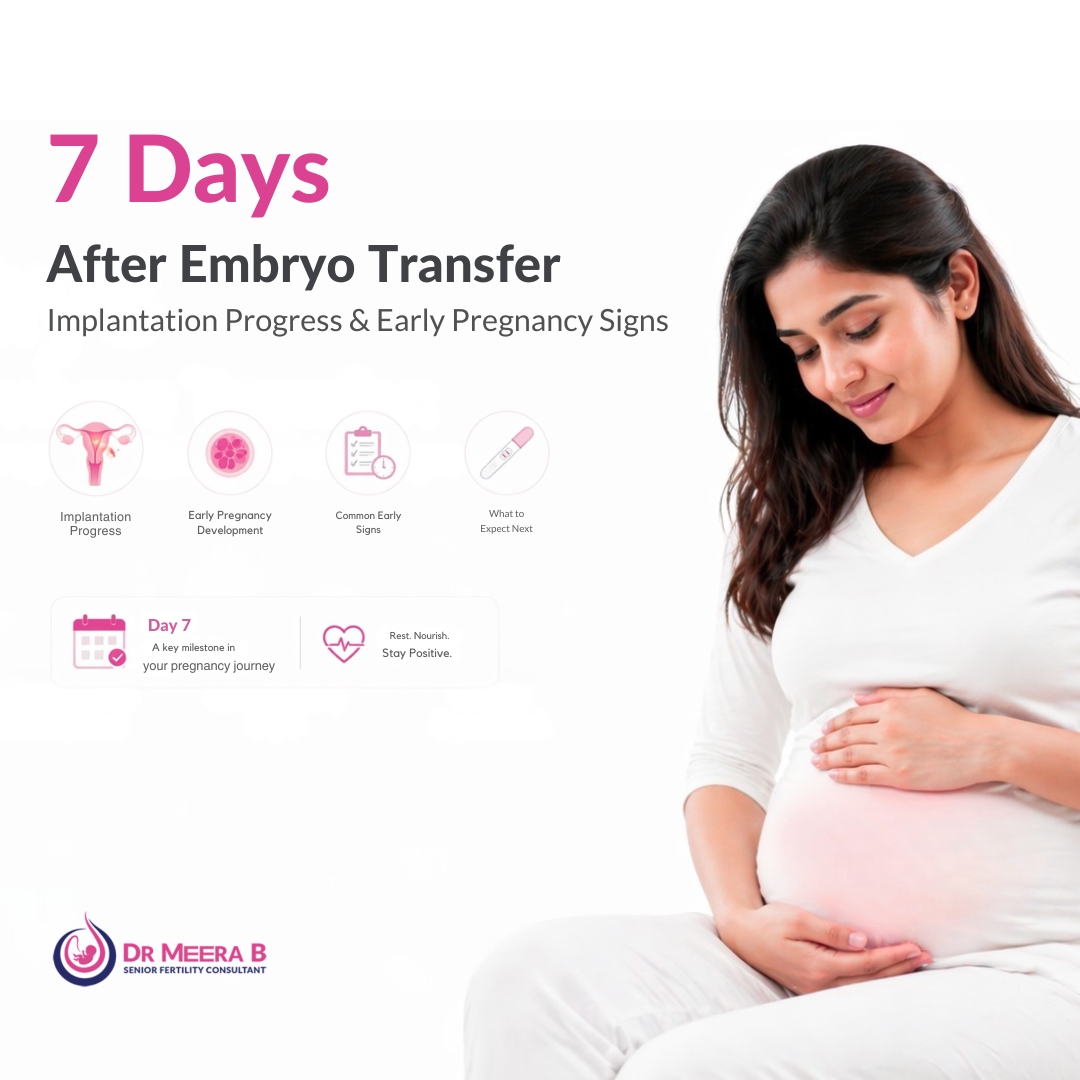
7 Days After Embryo Transfer: Implantation Progress & Early Pregnancy Signs
Did you know that nearly 60–70% of successful IVF pregnancies begin implantation within the first week after transfer? This makes 7 days after embryo transfer one of the most crucial milestones in the IVF journey. At this stage, the body is actively undergoing microscopic yet powerful changes that can determine the success of the cycle. Understanding what happens during this time can help reduce anxiety and empower hopeful parents with clarity and confidence.
What happens 7 days after embryo transfer?
At day 7 post embryo transfer, implantation is either underway or nearing completion. The embryo, if viable, has attached to the uterine lining and begins producing human chorionic gonadotropin (hCG), the hormone detected in pregnancy tests.
This phase is critical because:
- The embryo embeds deeper into the endometrium
- Blood supply to the embryo begins forming
- Hormonal changes intensify
- Early pregnancy signals may begin subtly appearing
For patients under the care of Dr Meera B at her place of practice, including Aster PMF Hospital, Sasthamkotta, this stage is closely monitored with evidence-based protocols to ensure optimal outcomes.
Understanding embryo implantation progress ivf
The embryo implantation progress ivf follows a well-defined biological timeline. By the seventh day, the embryo—typically a blastocyst—has already hatched and adhered to the uterine wall.
Key stages leading to day 7:
- Day 1–2: Embryo begins interaction with uterine lining
- Day 3–4: Initial attachment begins
- Day 5–6: Deeper embedding occurs
- Day 7: Hormonal signaling and implantation stabilization
At day 7 after blastocyst transfer, the chances of detecting biochemical signs of pregnancy increase, although confirmation still requires medical testing.
What are the symptoms 7 days post embryo transfer?
Experiencing symptoms 7 days post embryo transfer can vary widely among individuals. Some may notice subtle changes, while others may feel nothing at all—which is completely normal.
Common ivf implantation symptoms day 7 include:
- Mild cramping similar to menstrual pain
- Light spotting or implantation bleeding
- Breast tenderness
- Fatigue or unusual tiredness
- Bloating or mild abdominal discomfort
- Increased sensitivity to smells
It is important to note that these ivf implantation symptoms day 7 are not definitive indicators of pregnancy. Hormonal medications used during IVF can mimic similar sensations.
Is it normal to feel nothing after 7 days of embryo transfer?
Yes, absolutely. Many patients report no symptoms at all after 7 days of embryo transfer and still go on to have successful pregnancies. The absence of symptoms does not indicate failure.
This is where expert reassurance from a specialist like Dr Meera B becomes invaluable. With over three decades of experience, she emphasizes evidence-based assessment over symptom speculation.
Seven days after embryo transfer: Emotional and physical changes
The period of seven days after embryo transfer is often emotionally intense. Patients may feel a mix of hope, anxiety, and anticipation.
Common emotional experiences:
- Heightened anxiety while waiting for results
- Overanalyzing every physical sensation
- Hopefulness combined with fear of disappointment
Dr Meera B and her team provide structured guidance and counseling during this phase, helping patients stay grounded and informed rather than overwhelmed.
Can you take a pregnancy test on day 7?
While it may be tempting, testing too early at day 7 post embryo transfer can lead to inaccurate results. hCG levels may not yet be high enough to detect.
Medical recommendation:
- Wait until 10–14 days post transfer
- Follow your doctor’s advised timeline
- Avoid repeated early testing to reduce stress
At Dr Meera B’s place of practice, patients are guided with precise timelines for testing to ensure accuracy and emotional well-being.
What precautions should be taken during this stage?
The days following embryo transfer require mindful care, but not extreme restrictions. Evidence-based recommendations include:
- Continue prescribed medications without interruption
- Avoid strenuous physical activity
- Maintain a balanced, nutritious diet
- Stay hydrated and well-rested
- Avoid smoking, alcohol, and excessive caffeine
Contrary to myths, complete bed rest is not required unless specifically advised.
Why expert guidance matters at this stage
The journey of 7 days after embryo transfer is not just biological—it is deeply personal. Without proper guidance, misinformation can lead to unnecessary stress or false expectations.
Dr Meera B, with her extensive training at Bourn Hall Clinic in Cambridge—the birthplace of IVF—brings globally recognized expertise to patients in Kerala and beyond. Her approach is rooted in:
- Scientific accuracy
- Personalized treatment planning
- Ethical and transparent care
- Advanced reproductive techniques
Patients consulting her at Aster PMF Hospital, Sasthamkotta, benefit from advanced fertility infrastructure combined with compassionate care.
What makes Dr Meera B the preferred choice?
Choosing the right fertility specialist can significantly impact outcomes. Dr Meera B stands out due to:
- 30+ years of clinical experience
- International qualifications (MRCOG, FRCOG)
- Training at world-renowned IVF centers
- Proven track record in complex fertility cases
Her patients often express that timely intervention and precise monitoring during stages like after 7 days of embryo transfer made a meaningful difference in their journey.
Take the next step toward your parenthood journey
If you are navigating the uncertainty of day 7 after blastocyst transfer, you don’t have to do it alone. Expert care can transform confusion into clarity and anxiety into confidence.
To book an appointment for consultation with Dr Meera B:
- Fill out the form at https://drmeerab.com/contact/
- Call or WhatsApp: +91 9447145101
Her team will coordinate your consultation and guide you through every step of your fertility journey.
About Dr Meera B
Dr Meera B is a highly respected gynecologist and fertility specialist based in Kerala, with decades of experience in reproductive medicine and IVF. She holds MBBS, DGO, DNB (O&G), MRCOG (UK), and FRCOG (UK) qualifications. Trained at the prestigious Bourn Hall Clinic in Cambridge, she combines global expertise with compassionate patient care.
She consults at multiple leading hospitals, including Aster PMF Hospital, Sasthamkotta, where advanced fertility treatments and technologies are accessible to patients seeking evidence-based solutions.
Frequently Asked Questions
What happens 7 days after embryo transfer in IVF?
Around 7 days after embryo transfer, the embryo is usually completing implantation or has already attached to the uterine lining. This stage is crucial for embryo implantation progress ivf, as the embryo begins interacting with maternal blood supply. Dr. Meera B emphasizes that this is a sensitive window where rest, emotional stability, and adherence to medication are essential for optimal outcomes.
What are the common symptoms 7 days post embryo transfer?
The symptoms 7 days post embryo transfer can vary widely. Some women may notice mild cramping, light spotting, fatigue, or breast tenderness, while others may not experience any noticeable changes. According to Dr. Meera B, both scenarios are completely normal and do not definitively indicate success or failure.
What does day 7 after blastocyst transfer indicate?
Day 7 after blastocyst transfer is typically when implantation is nearing completion. The embryo may begin secreting hCG hormone, which is essential for sustaining early pregnancy. Dr. Meera B often advises patients to avoid early testing at this stage, as hormone levels may still be too low for detection.
Are ivf implantation symptoms day 7 reliable indicators of pregnancy?
While ivf implantation symptoms day 7 can include subtle signs like fatigue or mild uterine sensations, they are not always reliable indicators of pregnancy. Dr. Meera B highlights that many of these symptoms overlap with medication side effects, making it important to wait for a confirmed blood test.
What should I expect day 7 post embryo transfer in terms of implantation?
By day 7 post embryo transfer, the embryo is typically embedding deeper into the uterine lining. This phase supports nutrient exchange and hormonal signaling. Dr. Meera B recommends maintaining a calm lifestyle, avoiding strenuous activity, and continuing prescribed progesterone support.
Is it normal to feel nothing seven days after embryo transfer?
Yes, it is completely normal to feel no symptoms seven days after embryo transfer. Many successful IVF pregnancies occur without noticeable signs at this stage. Dr. Meera B reassures patients that absence of symptoms does not indicate a failed cycle.
What precautions should I take after 7 days of embryo transfer?
After 7 days of embryo transfer, it is important to continue medications, avoid heavy lifting, and maintain a balanced diet. Dr. Meera B also encourages stress management techniques such as light meditation and adequate sleep to support implantation.
When should I take a pregnancy test after 7 days after embryo transfer?
Although curiosity is natural 7 days after embryo transfer, most clinics, including Dr. Meera B’s, recommend waiting until at least 10–14 days post transfer for accurate results. Testing too early may lead to false negatives due to low hCG levels.
How does embryo implantation progress ivf differ from natural conception?
Embryo implantation progress ivf is closely monitored and supported with medications, unlike natural conception. The timing is more predictable, especially around day 7 after blastocyst transfer, allowing specialists like Dr. Meera B to guide patients with precision and personalized care.
Comments are closed