
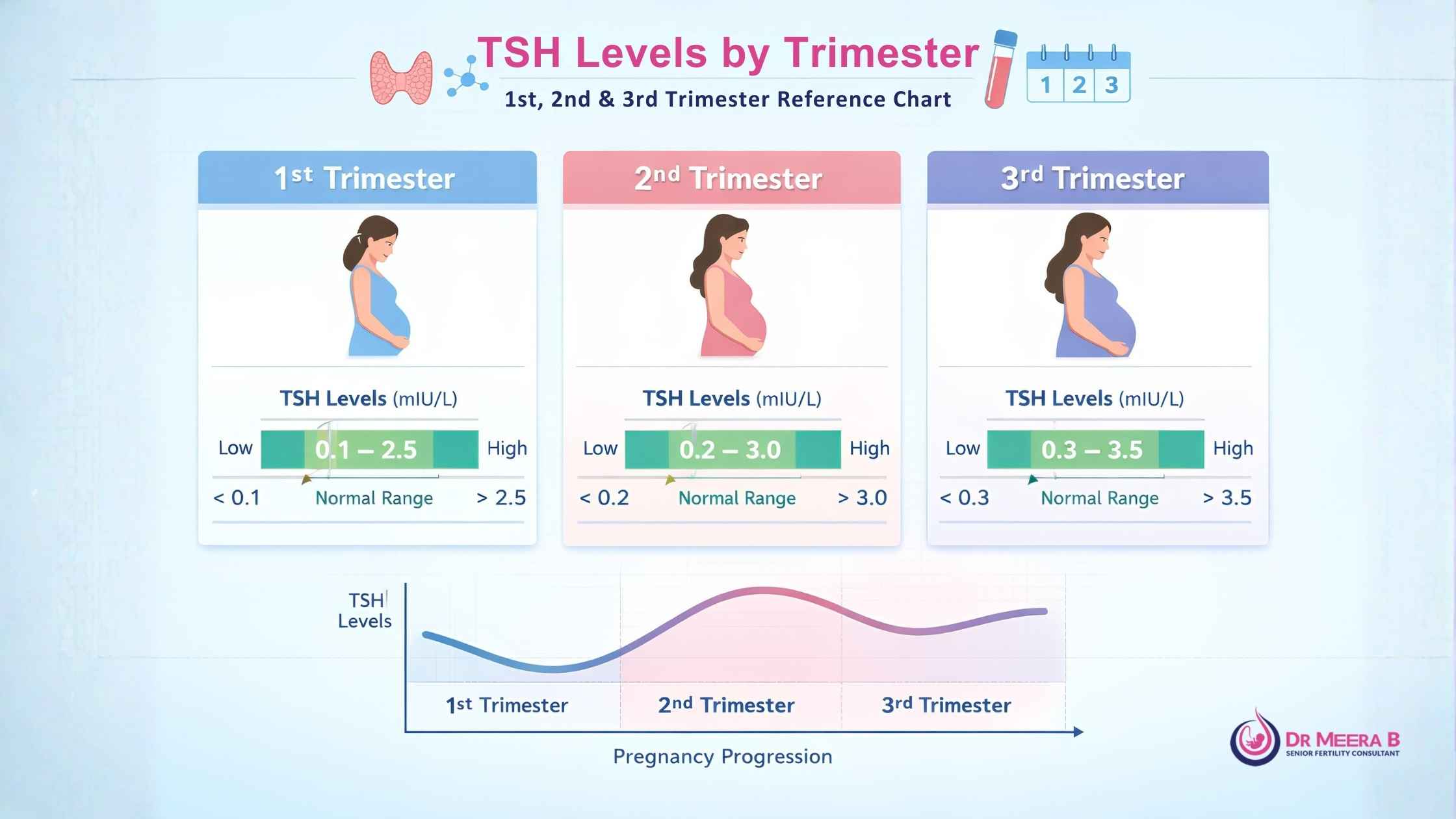
TSH Levels By Trimester: 1st, 2nd & 3rd Trimester Chart
Did you know that thyroid dysfunction affects approximately 2–3% of all pregnancies worldwide, with subclinical hypothyroidism being even more common? Monitoring tsh levels in pregnancy by trimester is not just a routine blood test—it is a critical step in protecting both mother and baby during one of life’s most delicate phases.
Pregnancy transforms the body in extraordinary ways. Hormones fluctuate rapidly, and the thyroid gland works harder than ever before. Understanding how TSH behaves across pregnancy—and what constitutes normal tsh in pregnancy by trimester—can make the difference between preventable complications and a smooth journey to motherhood.
What Are TSH Levels In Pregnancy By Trimester?
tsh levels in pregnancy by trimester refer to the measurement of Thyroid Stimulating Hormone (TSH) during each phase of pregnancy, as the normal reference range changes due to hormonal shifts. Pregnancy-specific ranges are lower in early pregnancy and gradually rise as gestation progresses.
TSH is produced by the pituitary gland and regulates thyroid hormone production (T3 and T4). These hormones are vital for:
- Fetal brain development
- Placental function
- Maternal metabolism
- Cardiovascular stability
Because early fetal brain development depends almost entirely on maternal thyroid hormones, especially in the first trimester, accurate monitoring becomes essential.
Why Is Trimester Specific TSH Important?
trimester specific tsh ranges are necessary because pregnancy hormones—particularly hCG—directly influence thyroid function. hCG can mildly suppress TSH in early pregnancy, making non-pregnancy reference values unreliable.
Using general adult TSH ranges during pregnancy may:
- Miss mild hypothyroidism
- Lead to delayed treatment
- Increase risk of miscarriage or preterm birth
At Dr Meera B’s place of practice, including Aster PMF Hospital, Sasthamkotta, thyroid screening is approached with clinical precision, especially in women with infertility, recurrent pregnancy loss, or high-risk pregnancies.
1st Trimester TSH Level: What Is Normal?
The 1st trimester tsh level is typically lower than non-pregnant values due to the stimulating effect of hCG. Most guidelines recommend a TSH range of approximately 0.1–2.5 mIU/L during the first trimester.
This stage is critical because:
- The fetal thyroid gland is not yet functional
- The baby depends entirely on maternal thyroid hormone
- Brain and neural development begin rapidly
Even mild hypothyroidism in this phase can be associated with miscarriage, anemia, and impaired fetal neurodevelopment. Dr Meera B emphasizes early antenatal registration and thyroid testing—particularly for women with:
- Family history of thyroid disorders
- Previous infertility treatments
- PCOS
- Recurrent pregnancy loss
2nd Trimester TSH Levels: What Changes?
2nd trimester tsh levels generally range between 0.2–3.0 mIU/L. By this stage, the fetal thyroid begins functioning, but maternal thyroid support remains essential.
Common concerns in the second trimester include:
- Undiagnosed subclinical hypothyroidism
- Medication dose adjustments
- Monitoring high-risk pregnancies
Women already on levothyroxine often require dose adjustments during pregnancy. Under the guidance of Dr Meera B, medication titration is performed cautiously and based on laboratory evidence, never guesswork.
3rd Trimester TSH Levels: Final Monitoring Phase
3rd trimester tsh levels may rise slightly compared to earlier phases, with typical reference values ranging from 0.3–3.5 mIU/L. This period focuses on ensuring maternal stability before delivery.
Uncontrolled thyroid dysfunction at this stage can increase risks such as:
- Preterm labor
- Preeclampsia
- Low birth weight
- Postpartum thyroid imbalance
Careful follow-up ensures that both delivery and postpartum recovery proceed smoothly.
Normal TSH In Pregnancy By Trimester: Quick Reference Chart
| Trimester | Approximate TSH Range (mIU/L) |
|---|---|
| First Trimester | 0.1 – 2.5 |
| Second Trimester | 0.2 – 3.0 |
| Third Trimester | 0.3 – 3.5 |
This table represents commonly accepted values; however, laboratories may vary slightly. Interpretation must always be clinical—not just numerical.
How Are Abnormal TSH Levels Managed During Pregnancy?
Management depends on whether TSH is elevated (hypothyroidism) or suppressed (hyperthyroidism).
For Hypothyroidism
- Levothyroxine therapy
- Regular monitoring every 4–6 weeks
- Dose adjustments based on trimester
For Hyperthyroidism
- Careful use of antithyroid medications
- Monitoring fetal growth
- Close obstetric supervision
All treatment decisions at Dr Meera B’s place of practice follow international guidelines, ensuring patient safety remains paramount.
Who Should Be Screened For Thyroid Dysfunction?
Universal screening remains debated globally, but targeted screening is strongly recommended for women with:
- Infertility
- History of miscarriage
- Autoimmune disorders
- Obesity
- Family history of thyroid disease
Given Kerala’s higher awareness and healthcare access, early antenatal thyroid screening is increasingly encouraged.
About Dr Meera B
Dr Meera B MBBS, DGO, DNB(O&G), MRCOG(UK), FRCOG(UK) is a senior gynecologist in Kollam with over 30 years of experience in obstetrics and reproductive medicine. A graduate of Govt Medical College, Trivandrum, and post-graduate from Govt Medical College, Kottayam, she achieved MRCOG in 2008 and FRCOG in 2022.
Her training in Reproductive Medicine and IVF at Bourn Hall Clinic, Cambridge—where the world’s first IVF baby was born—adds international depth to her clinical expertise.
Currently consulting at Aster PMF Hospital, Sasthamkotta, Dr Meera B offers evidence-based antenatal care, infertility management, and high-risk pregnancy supervision.
Why Timely Thyroid Monitoring Matters
Ignoring subtle thyroid imbalances may seem harmless initially. However, the cost of delay can be significant. When detected early, most thyroid disorders in pregnancy are easily manageable with safe, proven treatments.
Choosing expert supervision ensures:
- Accurate interpretation of trimester-specific reports
- Appropriate medication dosing
- Reduced pregnancy complications
- Peace of mind
Pregnancy is not a time for uncertainty. It is a time for clarity, reassurance, and experienced medical oversight.
Book Your Consultation
If you are planning pregnancy, currently pregnant, or undergoing fertility treatment, do not leave thyroid health to chance.
To book an appointment with Dr Meera B:
- Fill out the form at https://drmeerab.com/contact/
- Call +91 9447145101 to schedule a consultation
- Send a WhatsApp message through the website interface
Her team will coordinate your appointment at Dr Meera B’s place of practice and guide you through the next steps.
Your pregnancy deserves precision. Your baby deserves optimal care. And you deserve the confidence that comes from being guided by a clinician whose expertise spans decades and continents.
TSH Levels by Trimester – Frequently Asked Questions
TSH levels by trimester refer to the recommended thyroid-stimulating hormone ranges during each stage of pregnancy. Because hormonal demands change as pregnancy progresses, doctors evaluate tsh levels in pregnancy by trimester rather than using a single standard value.
Proper monitoring ensures healthy brain development in the baby and reduces risks such as miscarriage, preterm birth, and growth concerns. Dr. Meera B emphasizes trimester specific tsh evaluation to provide personalized thyroid care tailored to each phase of pregnancy.
The 1st trimester tsh level is usually lower compared to later stages due to rising hCG hormone levels. In most cases, doctors consider approximately 0.1–2.5 mIU/L as acceptable, though laboratory references may slightly vary.
Dr. Meera B reviews early pregnancy thyroid reports carefully and correlates them with symptoms, antibody status, and prior thyroid history to determine what qualifies as normal tsh in pregnancy by trimester for each individual patient.
2nd trimester tsh levels typically rise slightly compared to the first trimester as hCG levels stabilize. A common reference range is around 0.2–3.0 mIU/L.
During this phase, Dr. Meera B adjusts medication dosages when required and ensures stable thyroid function to support fetal growth and maternal well-being.
3rd trimester tsh levels may increase slightly again, with many labs suggesting a range of approximately 0.3–3.5 mIU/L. However, interpretation must always consider trimester specific tsh values rather than non-pregnant ranges.
Close monitoring in the final trimester helps prevent complications during delivery and supports optimal neonatal thyroid health.
Elevated TSH may indicate hypothyroidism. If not managed appropriately according to tsh levels in pregnancy by trimester, it may increase risks such as anemia, preeclampsia, or developmental concerns in the baby.
Dr. Meera B provides structured thyroid management plans including medication adjustments, dietary advice, and repeat testing intervals to maintain normal tsh in pregnancy by trimester.
Women with known thyroid conditions are usually advised to test every 4–6 weeks. Even in low-risk pregnancies, periodic checks may be recommended, especially when values approach the upper or lower limits of trimester specific tsh ranges.
Dr. Meera B customizes testing frequency based on previous thyroid history, medication usage, and response to treatment.
Yes. As pregnancy progresses, thyroid hormone requirements often increase. Adjustments may be necessary to maintain appropriate 1st trimester tsh level, 2nd trimester tsh levels, and 3rd trimester tsh levels within recommended targets.
Dr. Meera B closely tracks lab trends and clinical symptoms to make timely dosage changes, ensuring both mother and baby remain healthy throughout pregnancy.
Pregnancy causes natural hormonal shifts that influence thyroid levels. Using a single non-pregnant reference range may lead to over-treatment or under-treatment.
By following a structured chart for normal tsh in pregnancy by trimester, Dr. Meera B ensures evidence-based care aligned with international endocrine guidelines and personalized maternal health goals.
Comments are closed