
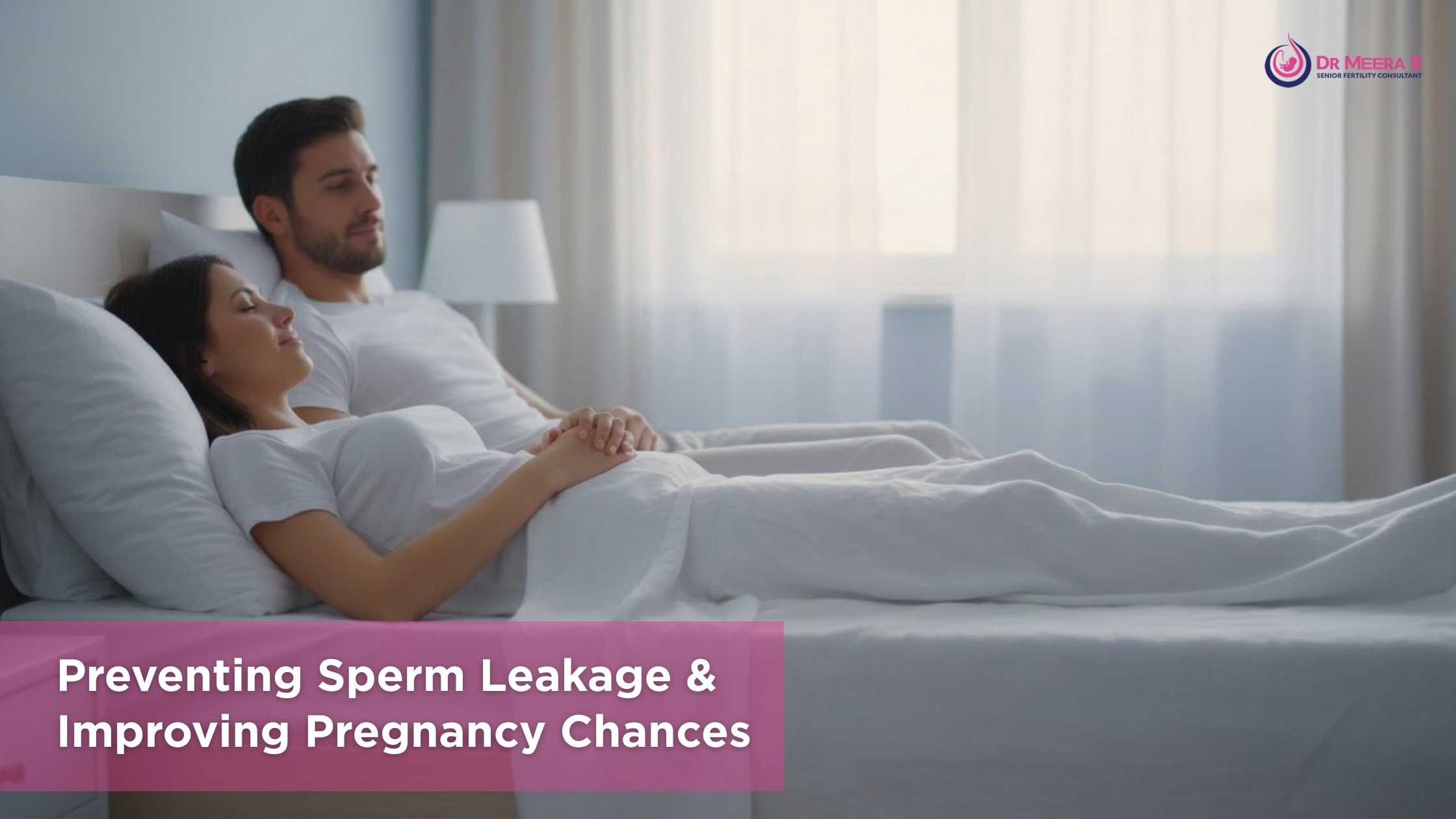
Preventing Sperm Leakage & Improving Pregnancy Chances
Did you know that nearly 1 in 6 couples globally experience difficulty conceiving at some point in their reproductive journey? Concerns about semen leakage after intercourse are among the most common yet misunderstood fears affecting couples trying to conceive. Questions like how to prevent sperm leakage to get pregnant often arise from anxiety rather than medical evidence. Understanding what is normal—and what truly impacts conception—can dramatically improve pregnancy outcomes.
Dr Meera B, a highly respected gynecologist and fertility specialist practicing at Aster PMF Hospital, Sasthamkotta, has spent over three decades helping couples overcome fertility challenges. With advanced qualifications including MBBS, DGO, DNB (O&G), MRCOG (UK), and FRCOG (UK), and specialized training in Reproductive Medicine and IVF at the historic Bourn Hall Clinic in Cambridge, UK, Dr Meera brings international expertise to families in Kollam and beyond.
How to prevent sperm leakage to get pregnant?
Semen leakage after intercourse is usually normal and does not significantly reduce pregnancy chances because millions of sperm begin moving toward the cervix within minutes of ejaculation. What truly matters is sperm quality, ovulation timing, and reproductive health—not the visible semen that exits later.
Many couples assume that preventing semen from flowing out guarantees pregnancy. This belief often leads to unnecessary stress, awkward positioning, or reliance on myths. Dr Meera B emphasizes that once ejaculation occurs inside the vagina, sperm rapidly swim through cervical mucus toward the fallopian tubes. The fluid portion that leaks later contains fewer active sperm.
Evidence-based tips to support conception
- Have intercourse during the fertile window (2 days before ovulation and the day of ovulation).
- Allow the woman to lie comfortably for 10–15 minutes after intercourse.
- Avoid immediate vaginal washing or douching.
- Maintain optimal sperm health through lifestyle measures.
- Address underlying gynecological or male factor issues promptly.
There is no scientifically proven method that completely stops semen from flowing out—and none is required for natural conception. Instead, targeted fertility evaluation offers better results than focusing on leakage alone.
Why does sperm come out hours later?
The question why does sperm come out hours later is common and medically simple to explain. The liquid part of semen naturally drains due to gravity, especially when standing or walking after intercourse. This is normal physiology.
Semen is composed of sperm cells and seminal fluid. The fluid acts as a transport medium. Once ejaculation occurs, sperm separate quickly and move upward through the cervix. The remaining fluid has no reproductive function and exits the body gradually.
Dr Meera B reassures couples that delayed leakage does not mean sperm have “failed” to enter the uterus. In fact:
- Sperm can reach the fallopian tubes within minutes.
- Healthy sperm can survive inside the female reproductive tract for up to 5 days.
- Visible leakage does not reflect how many sperm reached the cervix.
Understanding this reduces anxiety—because stress itself can indirectly affect fertility hormones.
Can a small amount of sperm cause pregnancy?
Yes, can a small amount of sperm cause pregnancy is medically answered with a clear yes—if even one healthy sperm fertilizes an egg, pregnancy can occur.
Although millions of sperm are released during ejaculation, only one is needed to fertilize the ovum. Even minimal semen exposure inside the vagina during fertile days may result in conception.
However, sperm concentration, motility, and morphology matter. If semen analysis reveals:
- Low sperm count (oligospermia)
- Poor motility (asthenospermia)
- Abnormal morphology
then pregnancy chances may be reduced—but not impossible. At Dr Meera B’s place of practice, comprehensive fertility evaluation includes semen analysis, hormonal testing, ultrasound follicular monitoring, and advanced reproductive techniques where needed.
Without sperm pregnancy is possible?
The statement without sperm pregnancy is possible is biologically incorrect in natural conception. Fertilization requires sperm to unite with an egg. However, assisted reproductive technologies allow conception even in severe male factor infertility using medical sperm retrieval techniques.
If sperm are absent in ejaculation (azoospermia), options include:
- Testicular sperm extraction (TESE)
- Microsurgical sperm retrieval
- Donor sperm in selected cases
These evidence-based interventions are discussed ethically and individually with couples. Dr Meera B ensures transparent counseling, respecting both medical science and personal values.
What truly improves pregnancy chances?
Focusing only on leakage distracts from the real determinants of fertility. Pregnancy success depends on:
1. Correct timing
Ovulation tracking using ultrasound monitoring significantly increases conception probability compared to guesswork.
2. Healthy reproductive organs
Conditions such as PCOS, endometriosis, thyroid imbalance, or fibroids can affect fertility. Early diagnosis is critical.
3. Sperm quality optimization
Improving lifestyle factors can enhance sperm parameters:
- Quit smoking
- Limit alcohol
- Maintain ideal BMI
- Avoid excessive heat exposure
- Manage diabetes or hypertension
4. Advanced reproductive support when required
At Dr Meera B’s place of practice, couples may access:
- Ovulation induction
- Intrauterine insemination (IUI)
- IVF (In Vitro Fertilization)
- ICSI (Intracytoplasmic Sperm Injection)
Dr Meera’s training at Bourn Hall Clinic, where the world’s first IVF baby was born, gives her global insight into assisted reproduction techniques.
Emotional impact of fertility myths
The fear of leakage often causes couples to:
- Feel guilt after intercourse
- Adopt uncomfortable positions unnecessarily
- Delay proper fertility testing
- Experience avoidable stress
Stress can disrupt ovulation cycles and sperm health. By addressing myths early, Dr Meera empowers couples with clarity and confidence.
Why choose Dr Meera B in Kollam?
Dr Meera B is a senior gynecologist and fertility expert based in Kollam with over 30 years of experience in Obstetrics & Gynaecology and Reproductive Medicine. Practicing at Aster PMF Hospital, Sasthamkotta, she combines international qualifications with personalized care for couples across Kerala and beyond.
Her credentials include:
- MBBS – Govt Medical College, Trivandrum
- DGO & DNB (O&G) – Govt Medical College, Kottayam
- MRCOG (UK) – 2008
- FRCOG (UK) – 2022
- Advanced training in IVF at Bourn Hall Clinic, Cambridge, UK
Couples who delay expert consultation often lose valuable reproductive time. Fertility declines with age—particularly after 35 in women. Early evaluation provides clarity, options, and reassurance.
Take the next step toward parenthood
If you have been searching online for answers about how to prevent sperm leakage to get pregnant or worrying about why does sperm come out hours later, it is time to replace uncertainty with medical clarity.
Book a consultation with Dr Meera B by:
- Filling the appointment form at https://drmeerab.com/contact/
- Calling +91 9447145101
- Sending a WhatsApp message through the website interface
Dr Meera’s team will schedule your consultation and guide you through the next steps at her place of practice. The sooner you act, the sooner you understand your fertility potential.
About Dr Meera B
Dr Meera B MBBS, DGO, DNB(O&G), MRCOG(UK), FRCOG(UK) is a distinguished gynecologist in Kollam specializing in fertility management, high-risk obstetrics, and reproductive medicine. With international fellowship recognition and decades of clinical expertise, she is trusted by families locally and globally. Her patient-centered approach combines scientific precision with compassionate counseling, ensuring every couple receives individualized fertility care.
Frequently Asked Questions – Preventing Sperm Leakage & Improving Pregnancy Chances
Many couples worry about how to prevent sperm leakage to get pregnant, especially when they notice semen flowing out after intercourse. In reality, some amount of fluid coming out is completely normal and does not mean conception cannot happen.
Dr. Meera B explains that sperm cells are microscopic and move quickly through cervical mucus toward the uterus within minutes. What leaks out later is usually seminal fluid, not the majority of active sperm.
Instead of focusing only on leakage, she advises timing intercourse during ovulation, lying down for 10–15 minutes afterward if comfortable, managing stress, correcting hormonal imbalances, and ensuring both partners undergo fertility evaluation when needed. Her treatment plans are personalized, combining cycle tracking, hormonal support, and lifestyle guidance to improve pregnancy chances safely and naturally.
If you are wondering why does sperm come out hours later, it is important to understand how the body works. After ejaculation, semen collects in the vaginal canal. The motile sperm begin their journey almost immediately, while excess seminal fluid may gradually leak out over time.
This delayed leakage does not usually affect fertilization. Dr. Meera B reassures patients that this is a common and healthy physiological response. However, if there are concerns about recurrent infections, very low cervical mucus, or discomfort, she evaluates for vaginal health issues or hormonal imbalance that may interfere with sperm survival.
Yes, can a small amount of sperm cause pregnancy is a very common concern. Even a small quantity of healthy, motile sperm can potentially fertilize an egg if intercourse occurs during the fertile window.
It takes only one sperm to fertilize an egg. The key factor is sperm quality and timing, not necessarily visible volume. Dr. Meera B often evaluates semen parameters such as count, motility, and morphology to determine whether male factor issues are present and guides couples accordingly.
The question without sperm pregnancy is possible comes up frequently. In natural conception, pregnancy is not possible without sperm reaching and fertilizing the egg.
However, in assisted reproductive techniques such as IVF or ICSI, sperm may be medically retrieved and used for fertilization under controlled laboratory conditions. Dr. Meera B counsels couples on appropriate fertility treatments if there is very low sperm count or absence of sperm in semen, ensuring evidence-based and ethical care.
There is no strong scientific evidence that specific positions guarantee pregnancy. However, lying down for 10–15 minutes after intercourse may help reduce immediate fluid leakage and provide reassurance.
Dr. Meera B emphasizes that correct ovulation timing, healthy cervical mucus, balanced hormones, and overall reproductive health are much more important factors in improving conception rates.
If you have been trying to conceive for 12 months (or 6 months if the woman is above 35), it is advisable to seek professional evaluation.
Dr. Meera B provides comprehensive fertility assessments including ovulation tracking, hormonal testing, thyroid screening, ultrasound monitoring, and semen analysis. Early guidance helps identify treatable causes and improves pregnancy chances without unnecessary delays.
Comments are closed