
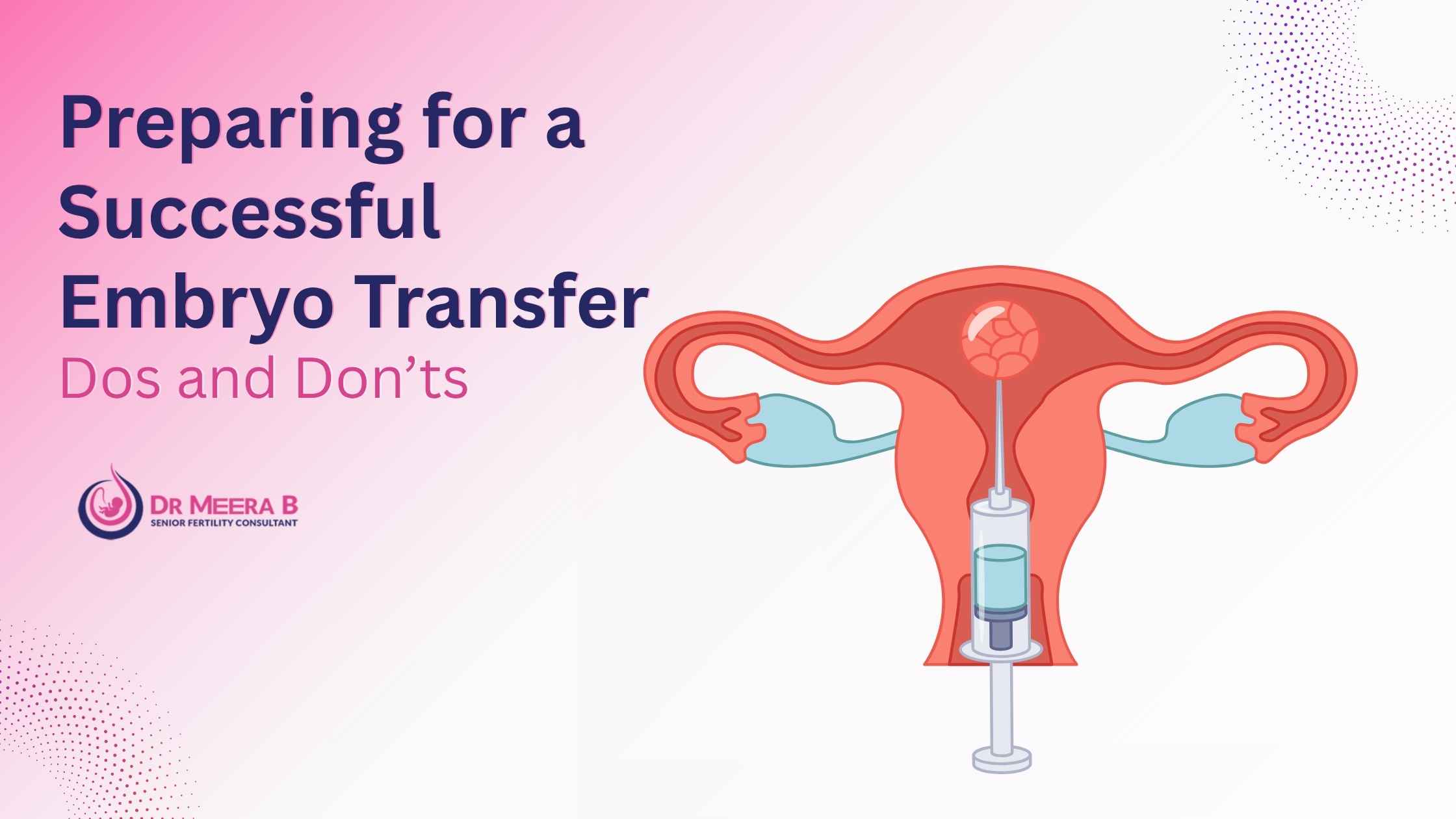
Preparing For A Successful Embryo Transfer: Dos And Dont’s
Did you know that the success rate of preparing for embryo transfer can increase up to 65% in women under the age of 35 when they follow tailored pre-transfer protocols under expert guidance? That’s why this stage of the IVF journey is not just a procedural milestone—it is a gateway to hope, resilience, and future parenthood. With Dr. Meera B, a globally trained fertility expert with over 30 years of experience in reproductive medicine, you get more than advice—you get a personalized action plan backed by science and compassion.
Let’s delve deep into the ultimate dos and don’ts for preparing for embryo transfer, ensuring your body and mind are fully primed for implantation success.
Meet Your Expert Guide: Dr. Meera B
Dr. Meera B MBBS, DGO, DNB (O&G), MRCOG (UK), FRCOG (UK) is not just any gynecologist—she is one of India’s most trusted voices in fertility care. Trained at the prestigious Bourn Hall Clinic in Cambridge—where the first IVF baby was born—Dr. Meera combines scientific rigor with human empathy. Her experience spans more than three decades, and she currently consults at several leading hospitals and clinics in Kollam and beyond, offering individualized care for couples around the world.1. The Science Behind Embryo Transfer Success
Before diving into the dos and don’ts, it’s vital to understand why the IVF checklist exists in the first place. The embryo transfer is arguably the most delicate phase in an IVF cycle. Even if high-quality embryos are ready, uterine receptivity, hormonal balance, and your overall lifestyle significantly affect implantation. That’s where the need for a step-by-step IVF checklist becomes non-negotiable.2. What To DO When Preparing For Embryo Transfer
A. Follow A Fertility-Focused Diet
Think of your body as soil and the embryo as a seed. To ensure the best growth, your soil needs nutrients. Your pre-transfer diet should include foods rich in folate, zinc, Omega-3 fatty acids, and antioxidants. Leafy greens, fatty fish like salmon, eggs, berries, and whole grains should become dietary staples. Dr. Meera B emphasizes that what you eat in the two weeks before your transfer can positively influence endometrial receptivity.B. Prioritize Proper Hydration
We often underestimate the power of water. Staying optimally hydration supports blood flow to the uterus, stabilizes hormone levels, and helps in maintaining a healthy uterine lining. Dr. Meera recommends aiming for at least 2.5 to 3 liters of water per day unless advised otherwise due to specific medical concerns.C. Adjust Your Lifestyle Before Transfer
This phase is not the time for stress, overexertion, or experimentation. Key elements of a healthy lifestyle before transfer include:- Maintaining a consistent sleep schedule
- Practicing gentle exercises like prenatal yoga or walking
- Eliminating caffeine, alcohol, and tobacco
- Reducing screen time and focusing on mindfulness
D. Adhere To The IVF Checklist Without Fail
Dr. Meera provides all her patients with a customized IVF checklist, which includes medication timing, lifestyle modifications, and emotional wellness practices. Skipping even one point can create stress for the uterus or reduce hormonal efficiency during the implantation window.E. Attend All Appointments At Dr. Meera B’s Place Of Practice
These appointments are more than just formality. Each visit allows Dr. Meera to fine-tune your protocol, assess your uterine environment, and track hormone levels to optimize the transfer date. A well-timed embryo transfer is one of the most critical success factors.3. What NOT To Do When Preparing For Embryo Transfer
A. Don’t Overexercise Or Introduce New Fitness Routines
Too much physical strain can negatively impact uterine blood flow. Stick to gentle activities that support circulation and mental peace, like walks or restorative yoga.B. Don’t Disregard The Importance Of Emotional Balance
Anxiety triggers cortisol and adrenaline—two hormones that interfere with reproductive success. Incorporate meditation, counseling, or journaling as part of your lifestyle before transfer. Dr. Meera also recommends talking to fertility support groups for emotional grounding.C. Don’t Skip Or Self-Modify Medications
Hormonal medications regulate your endometrial thickness and prepare your body for embryo reception. Modifying dosages without expert consultation can be detrimental. Follow the instructions provided during your visit to Dr. Meera B’s place of practice strictly.D. Don’t Engage In Intercourse Unless Cleared By Your Doctor
Though intimacy is natural, intercourse during this phase may trigger uterine contractions, especially when progesterone is in play. Always seek explicit clearance from Dr. Meera before engaging in sexual activity during the waiting period.4. Bonus Tips From Dr. Meera B’s 30+ Years Of Experience
- Mind Your Gut Health: Gut bacteria influence estrogen metabolism. Add probiotic-rich foods like yogurt and fermented vegetables.
- Check Your Vitamin D: Low vitamin D levels have been linked with decreased IVF success. Get your levels checked and supplemented if needed.
- Avoid Hot Baths & Saunas: High temperatures can negatively affect uterine receptivity.
5. After Embryo Transfer: What Comes Next?
The two-week wait post-transfer can be emotionally draining. During this time, continue your IVF checklist, follow a supportive diet, maintain hydration, and stick to your balanced lifestyle before transfer. Avoid taking pregnancy tests too early—trust the process and wait for your scheduled beta hCG test advised by Dr. Meera B.6. Book A Consultation With Dr. Meera B
Whether you’re just beginning your IVF journey or are about to embark on your embryo transfer phase, having a seasoned expert like Dr. Meera B by your side can make all the difference. She consults at multiple reputed centers and customizes every plan based on your unique needs and body physiology. To schedule your consultation, simply fill out the form at https://drmeerab.com/contact/, or call +91 9447145101. You can also send a WhatsApp message through the interface on the website to request an appointment. Dr. Meera’s team will promptly assist you in confirming your visit.To Summarize
Preparing for embryo transfer is not just about following medical protocols—it’s about nurturing your body, mind, and hope for the miracle ahead. With the right IVF checklist, personalized diet, optimum hydration, and an intentional lifestyle before transfer, you maximize your chances of success. And when you have a globally acclaimed expert like Dr. Meera B guiding your journey, you’re already one step closer to parenthood. Don’t leave your dream to chance. Let science, experience, and personalized care lead the way—because every embryo deserves a hopeful beginning, and every hopeful couple deserves expert care.Frequently Asked Questions About Preparing For A Successful Embryo Transfer
What should I focus on when preparing for embryo transfer?
Preparing for embryo transfer involves physical, emotional, and lifestyle readiness. Dr. Meera B recommends following medical instructions closely, maintaining a healthy and balanced routine, managing stress, and staying hydrated. These steps create an optimal environment for successful implantation.
Why is an IVF checklist important before embryo transfer?
An IVF checklist acts as a personalized roadmap to ensure every detail—from medication schedules to lifestyle modifications—is properly addressed. Under Dr. Meera B’s care, this checklist helps reduce stress, maintain hormonal balance, and improve your overall readiness for embryo transfer.
What kind of diet is recommended before embryo transfer?
A fertility-supportive diet rich in folate, antioxidants, Omega-3 fatty acids, and whole foods is highly recommended. Dr. Meera B advises incorporating leafy greens, berries, nuts, eggs, and fatty fish to support uterine receptivity and overall reproductive health.
How much hydration is ideal before and after the transfer?
Proper hydration supports uterine blood flow and hormonal function. Dr. Meera B suggests drinking 2.5 to 3 liters of water daily unless medical advice indicates otherwise. This helps maintain a healthy environment for embryo implantation.
What changes should I make in my lifestyle before transfer?
Lifestyle before transfer should be calm, consistent, and nurturing. Avoid overexertion, late nights, alcohol, smoking, and stress. Focus on sleep, light activity, and mindfulness techniques. Dr. Meera B customizes lifestyle guidance based on your individual health and needs.
Can I consult Dr. Meera B online before scheduling a visit?
Yes, you can begin by filling out the appointment form at drmeerab.com/contact, calling +91 9447145101, or using the WhatsApp chat option on the website. Her team will assist in scheduling a consultation at one of her places of practice.
Comments are closed