
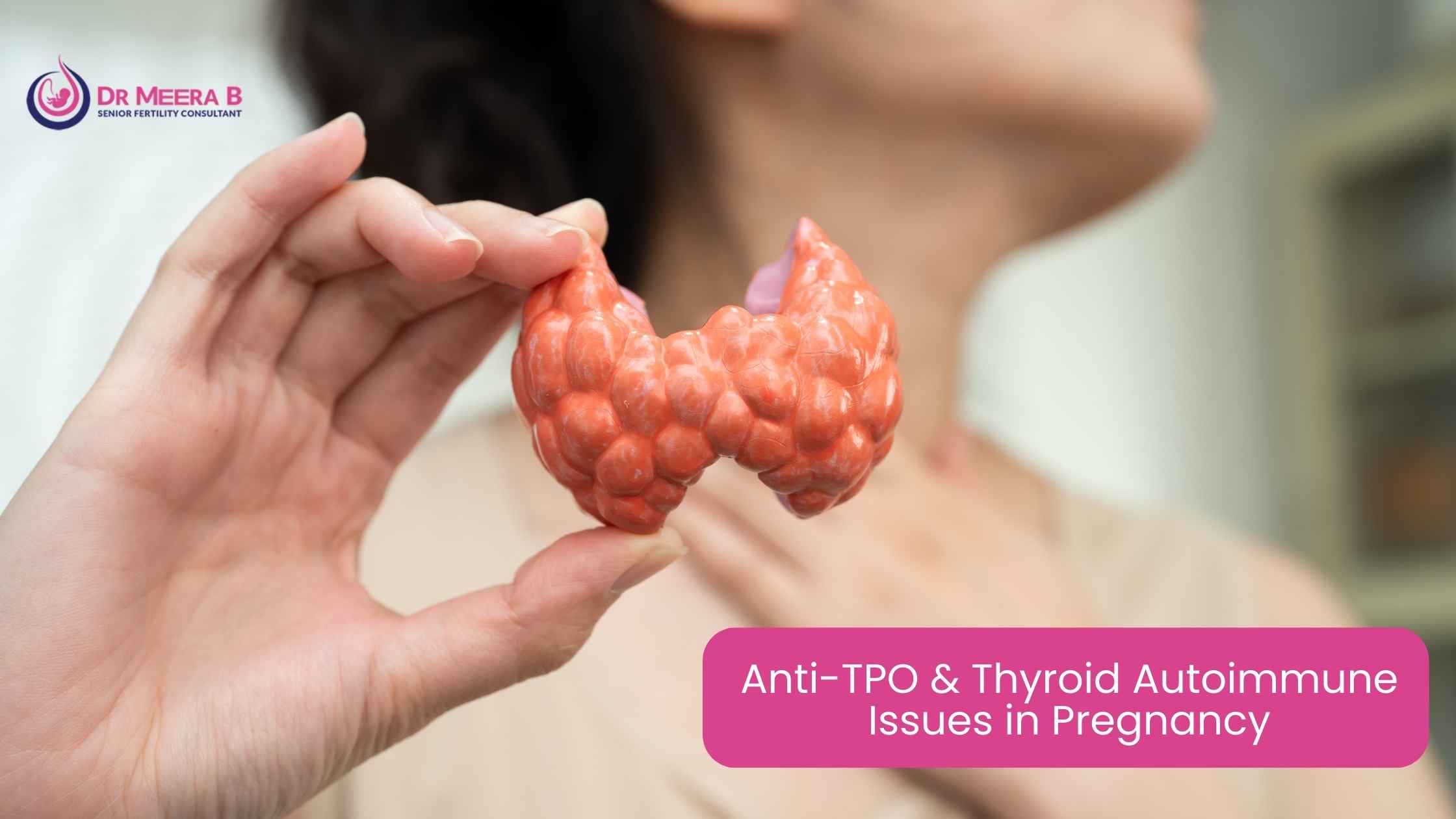
Anti-TPO & Thyroid autoimmune issues in pregnancy
What is anti TPO in pregnancy?
Anti TPO refers to antibodies against thyroid peroxidase, an enzyme essential for thyroid hormone production. When detected during pregnancy, these antibodies suggest autoimmune thyroid disease, most commonly Hashimoto’s thyroiditis. Even if thyroid hormone levels are normal, the presence of antibodies may increase obstetric risks and requires close monitoring. Thyroid peroxidase helps convert iodine into active thyroid hormones (T3 and T4). When the immune system mistakenly attacks this enzyme, inflammation and gradual thyroid dysfunction can occur. During pregnancy, when thyroid demand increases by nearly 30–50%, the impact can become more pronounced.Why is thyroid function crucial during pregnancy?
Thyroid hormones regulate metabolism, fetal brain development, and placental function. In the first trimester, the fetus relies entirely on the mother’s thyroid hormones. Any imbalance, even subtle, can affect:- Early embryonic development
- Placental growth
- Neurocognitive development
- Pregnancy viability
What if t3 t4 tsh normal but anti tpo high in pregnancy?
It is possible to have t3 t4 tsh normal but anti tpo high in pregnancy. This condition is termed euthyroid autoimmune thyroiditis. Although thyroid hormone levels are currently normal, the presence of antibodies indicates increased risk for future hypothyroidism and certain pregnancy complications. Scientific evidence suggests that women who have t3 t4 tsh normal but anti tpo high in pregnancy may face:- Higher risk of miscarriage
- Increased likelihood of preterm birth
- Greater chance of developing hypothyroidism later in pregnancy
- Postpartum thyroiditis
What is the normal range of anti tpo in pregnancy?
The normal range of anti tpo in pregnancy may vary slightly depending on laboratory standards, but generally values below 35 IU/mL are considered negative. However, reference ranges differ across labs, and interpretation must always consider clinical context. Dr Meera B does not rely on isolated lab numbers. Instead, she integrates:- TSH trimester-specific reference ranges
- Free T4 levels
- Clinical symptoms
- Ultrasound findings if required
- Obstetric history
How are thyroid autoimmune issues diagnosed in pregnancy?
Diagnosis involves a combination of blood tests and clinical evaluation. At Dr Meera B’s place of practice, patients undergo structured assessment including:- Serum TSH (trimester-specific)
- Free T4
- Anti-TPO antibodies
- Anti-thyroglobulin antibodies when indicated
- Ultrasound of thyroid in selected cases
What are the risks of untreated thyroid autoimmunity?
Untreated or poorly monitored thyroid dysfunction can lead to:- Recurrent miscarriage
- Gestational hypertension
- Placental abruption
- Low birth weight
- Impaired fetal brain development
How does Dr Meera B manage anti tpo in pregnancy?
Management is evidence-based and individualized. There is no blanket treatment for antibodies alone. Dr Meera B adheres strictly to global obstetric and endocrine guidelines.1. Monitoring strategy
- TSH every 4–6 weeks in early pregnancy
- Adjustment of levothyroxine when TSH exceeds trimester-specific range
- Postpartum reassessment
2. Medication when required
If hypothyroidism develops, levothyroxine is prescribed. It is safe, well-studied, and essential for fetal brain development. Dosing is carefully titrated based on body weight and TSH levels.3. Nutritional guidance
- Adequate iodine intake (through iodized salt)
- Balanced selenium levels through diet
- Avoidance of unnecessary supplements unless clinically indicated
4. Fertility and preconception counseling
For women planning pregnancy, optimization of TSH before conception significantly reduces risks. Dr Meera B’s expertise in reproductive medicine, including training at Bourn Hall Clinic, Cambridge, ensures comprehensive fertility-focused endocrine care.Why early consultation makes a difference
Many women discover thyroid antibodies only after experiencing repeated pregnancy loss. By then, anxiety is already high. The AIDA approach begins with awareness, builds interest through education, creates desire for healthy pregnancy outcomes, and leads to decisive action — early consultation. At Dr Meera B’s place of practice, advanced monitoring systems, multidisciplinary coordination, and structured antenatal care ensure that thyroid autoimmune issues are identified and managed proactively rather than reactively.Care at Aster PMF Hospital, Sasthamkotta
Dr Meera B currently consults at Aster PMF Hospital, Sasthamkotta. The facility offers:- Modern laboratory services
- Advanced fetal monitoring
- High-risk pregnancy support
- Multidisciplinary coordination
About Dr Meera B
Dr Meera B MBBS, DGO, DNB(O&G), MRCOG(UK), FRCOG(UK) is a senior obstetrician and gynaecologist based in Kollam, Kerala. She graduated from Govt Medical College, Trivandrum, and completed post-graduation at Govt Medical College, Kottayam. She became a Member of the Royal College of Obstetricians and Gynaecologists in 2008 and was awarded Fellowship in 2022. With over 30 years of experience, her expertise spans high-risk pregnancy, reproductive medicine, infertility management, and IVF. Her training at the renowned Bourn Hall Clinic in Cambridge — the birthplace of the world’s first IVF baby — strengthens her evidence-based approach to complex reproductive challenges.Book your consultation
If you have concerns about anti tpo in pregnancy, or if previous reports show t3 t4 tsh normal but anti tpo high in pregnancy, do not wait for symptoms to appear. Early expert evaluation can prevent complications and provide peace of mind. To schedule an appointment with Dr Meera B:- Fill out the consultation form at https://drmeerab.com/contact/
- Call +91 9447145101 to request scheduling
- Send a WhatsApp message via the website interface
Frequently Asked Questions – Anti-TPO & Thyroid Autoimmune Issues in Pregnancy
Anti TPO refers to anti-thyroid peroxidase antibodies, which indicate an autoimmune response against the thyroid gland. When we detect anti tpo in pregnancy, it suggests that the immune system may be attacking thyroid tissue, even if routine thyroid levels appear normal.
Dr. Meera B evaluates these antibodies carefully because thyroid autoimmunity can increase the risk of miscarriage, preterm delivery, and postpartum thyroiditis. Early identification allows close monitoring and timely treatment to support both mother and baby.
It is common to see cases where t3 t4 tsh normal but anti tpo high in pregnancy. This means your thyroid hormone levels are currently within range, but there is an underlying autoimmune tendency.
While this does not always require medication, it does require closer observation. Dr. Meera B typically recommends periodic thyroid function testing throughout pregnancy and may initiate low-dose levothyroxine in selected high-risk cases to reduce complications.
The normal range of anti tpo in pregnancy can vary slightly depending on the laboratory, but most labs consider values below 35 IU/mL as negative. However, interpretation must always be done in the clinical context.
Dr. Meera B reviews your antibody levels alongside TSH, trimester stage, symptoms, and obstetric history before deciding whether treatment or monitoring is needed.
Uncontrolled thyroid dysfunction can affect fetal brain development and growth. Even when hormone levels are normal, autoimmune thyroid disease may increase the risk of pregnancy loss or preterm birth.
Through structured monitoring plans, trimester-wise thyroid profiling, and individualized medication adjustments, Dr. Meera B ensures optimal thyroid balance throughout pregnancy.
No. Treatment depends on TSH levels, antibody titers, past pregnancy history, and associated risk factors. Some women only need monitoring, while others benefit from early thyroid hormone supplementation.
Dr. Meera B follows evidence-based international guidelines and tailors therapy to minimize unnecessary medication while ensuring maternal and fetal safety.
In women with thyroid autoimmunity, thyroid function tests are typically checked every 4–6 weeks during pregnancy. The frequency may increase if dosage adjustments are required.
Dr. Meera B provides a trimester-specific follow-up schedule, ensuring timely adjustments and coordinated obstetric care.
Women with thyroid autoimmunity are at higher risk for postpartum thyroiditis. This can cause temporary hyperthyroid or hypothyroid phases after childbirth.
Dr. Meera B recommends postpartum thyroid testing at regular intervals and offers continued care to stabilize thyroid function during the recovery period.
Comments are closed