
T3 & T4 Levels During Pregnancy Explained
Did you know that thyroid disorders affect nearly 2–5% of all pregnancies worldwide? When it comes to healthy fetal brain development and maternal well-being, understanding t3 and t4 levels in pregnancy is not optional—it is essential. Even mild thyroid imbalance, if left unrecognized, can impact pregnancy outcomes. That is why early testing, monitoring, and expert interpretation are critical.
At Dr Meera B’s place of practice, including Aster PMF Hospital, Sasthamkotta, advanced diagnostic facilities and evidence-based care ensure that thyroid health is carefully monitored throughout pregnancy. With more than 30 years of clinical experience in Obstetrics and Gynaecology, Dr Meera B brings global expertise and local accessibility together for expectant mothers across Kollam and Kerala.
What are T3 and T4 hormones during pregnancy?
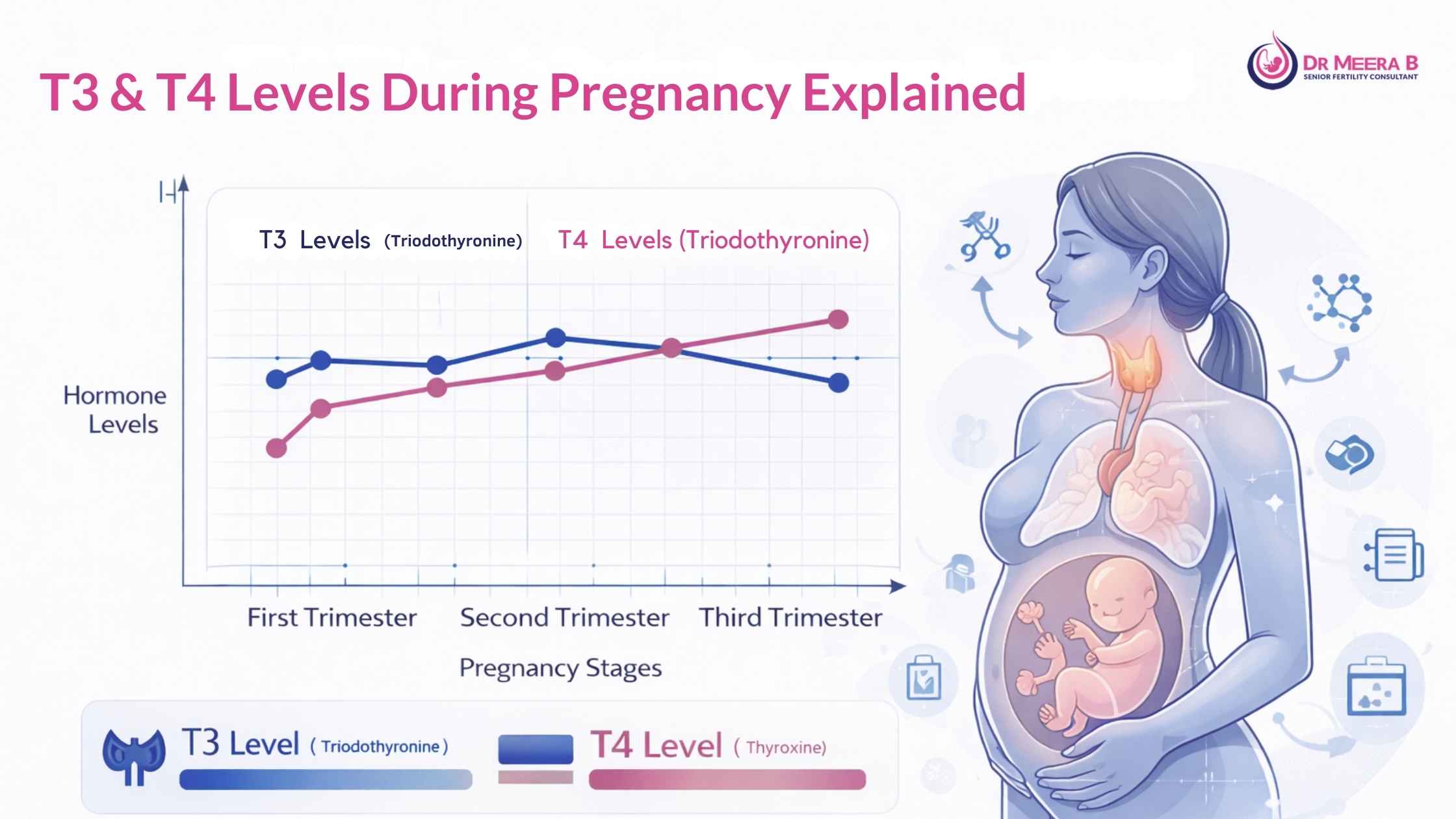
T3 (Triiodothyronine) and T4 (Thyroxine) are thyroid hormones responsible for regulating metabolism, energy balance, and fetal neurological development. During pregnancy, thyroid hormone production naturally increases to meet both maternal and fetal demands.
The t4 level in pregnancy plays a particularly important role in the first trimester when the fetus is entirely dependent on the mother’s thyroid hormones. Proper levels support:
- Fetal brain and nervous system development
- Placental function
- Maternal energy balance
- Healthy birth weight
Pregnancy causes physiological changes such as increased thyroid-binding globulin and altered hormone metabolism, which means thyroid test interpretation must be trimester-specific and guided by an experienced obstetrician.
Why are t3 and t4 levels in pregnancy different from non-pregnant levels?
During pregnancy, estrogen levels rise significantly. This increases thyroid-binding proteins in the blood, which can alter measured hormone levels. As a result:
- Total T4 may appear elevated.
- Free hormone levels require careful interpretation.
- TSH reference ranges shift, especially in the first trimester.
Because of these dynamic changes, simply comparing lab values to non-pregnant reference ranges can be misleading. At Dr Meera B’s place of practice, trimester-specific evaluation is prioritized to avoid misdiagnosis or unnecessary medication.
What is the normal t4 level in pregnancy?
The normal t4 level in pregnancy varies depending on the trimester and the laboratory reference range. Typically:
- First trimester: Slight increase in total T4
- Second trimester: Stabilization phase
- Third trimester: Gradual normalization
Free T4 is often monitored when there is suspicion of thyroid dysfunction. However, interpretation must always consider TSH levels and clinical symptoms.
How to read a free t3 levels during pregnancy chart?
A free t3 levels during pregnancy chart provides trimester-specific reference ranges for accurate comparison. However, numbers alone do not tell the full story. Clinical symptoms, TSH values, and obstetric history are equally important.
Generally:
- Free T3 remains within normal non-pregnant limits in most healthy pregnancies.
- Marked deviations may suggest hyperthyroidism or hypothyroidism.
Dr Meera B emphasizes that treatment decisions are never based on isolated values. Comprehensive evaluation ensures safe and appropriate management.
What happens in low t4 during pregnancy?
Low t4 during pregnancy can indicate hypothyroidism, a condition where the thyroid gland does not produce enough hormones. Untreated hypothyroidism may increase the risk of:
- Miscarriage
- Preeclampsia
- Preterm birth
- Impaired fetal brain development
The concern becomes especially significant in early pregnancy when fetal thyroid function is not yet established.
How is low t4 during pregnancy treated?
Treatment typically involves levothyroxine replacement therapy, a well-established and safe medication during pregnancy. The dosage is individualized and monitored through periodic blood tests. Evidence-based guidelines support maintaining optimal TSH and T4 levels to reduce complications.
At Dr Meera B’s place of practice, thyroid management is integrated into routine antenatal care to prevent avoidable risks.
What does high t4 levels during pregnancy indicate?
High t4 levels during pregnancy may indicate hyperthyroidism. The most common cause is Graves’ disease, although transient gestational thyrotoxicosis may occur in early pregnancy due to elevated hCG levels.
Potential risks of untreated hyperthyroidism include:
- Maternal hypertension
- Heart rhythm disturbances
- Low birth weight
- Preterm labor
Is hyperthyroidism treatable during pregnancy?
Yes. Antithyroid medications are used carefully, especially during the first trimester. The goal is to maintain hormone levels within a safe range while minimizing fetal exposure. Close monitoring ensures safety for both mother and baby.
Why early thyroid screening in pregnancy matters
Many women with thyroid imbalance have minimal or no symptoms. Fatigue, weight changes, or mood swings may be mistaken for normal pregnancy changes. This is where proactive testing becomes vital.
Dr Meera B, a senior gynecologist in Kollam, integrates thyroid function testing into antenatal protocols for women with:
- History of infertility
- Recurrent pregnancy loss
- Family history of thyroid disorders
- Symptoms suggestive of thyroid imbalance
With advanced laboratory support available at Aster PMF Hospital, Sasthamkotta, accurate diagnosis is both accessible and timely.
How do thyroid levels affect fertility and IVF outcomes?
Thyroid health is closely linked to fertility. Even subtle abnormalities in t3 and t4 levels in pregnancy planning stages can affect ovulation and implantation.
Dr Meera B’s expertise in Reproductive Medicine and IVF—enhanced by her training at Bourn Hall Clinic in Cambridge, UK—allows her to evaluate thyroid function as part of fertility assessments. Optimal thyroid balance improves:
- Ovulation regularity
- Endometrial receptivity
- Implantation success rates
- Early pregnancy stability
For couples investing emotionally and financially in assisted reproductive techniques, ignoring thyroid screening can be a costly oversight.
What makes expert supervision essential?
Thyroid treatment in pregnancy is not about simply prescribing medication—it is about precision, timing, and individualized adjustment. Over-treatment can be as risky as under-treatment.
Dr Meera B holds MBBS, DGO, DNB (O&G), MRCOG (UK), and FRCOG (UK) qualifications. With international recognition and over three decades of experience, she provides:
- Evidence-based thyroid management
- Trimestral hormone monitoring
- Integration with fertility treatment when needed
- High-risk pregnancy supervision
Her practice at Aster PMF Hospital, Sasthamkotta, ensures access to multidisciplinary care and advanced maternal-fetal monitoring facilities.
About Dr Meera B
Dr Meera B is a senior Obstetrician and Gynaecologist based in Kollam, Kerala. A graduate of Govt Medical College, Trivandrum, she completed post-graduation at Govt Medical College, Kottayam. She became a Member of the Royal College of Obstetricians and Gynaecologists (UK) in 2008 and achieved Fellowship in 2022.
Her training in Reproductive Medicine at the renowned Bourn Hall Clinic in Cambridge, where the world’s first IVF baby was born, strengthens her expertise in fertility and endocrine-related pregnancy care.
Expectant mothers across Kerala increasingly seek her guidance because thyroid balance is not just about lab numbers—it is about safeguarding a child’s neurological future.
Take control of your thyroid health during pregnancy
If you are pregnant—or planning to conceive—and unsure about your thyroid status, delaying evaluation could mean missing a crucial window for intervention. Early detection of low t4 during pregnancy or high t4 levels during pregnancy can prevent complications and protect your baby’s development.
To book an appointment for consultation with Dr Meera B:
- Fill and submit the form at https://drmeerab.com/contact/
- Call +91 9447145101 to schedule an appointment
- Send a WhatsApp message through the website interface requesting an appointment
Dr Meera’s team will schedule the appointment and keep you informed. Consultations are available at Dr Meera B’s place of practice, including Aster PMF Hospital, Sasthamkotta.
Your pregnancy deserves precision, experience, and internationally recognized expertise. When it comes to something as fundamental as thyroid balance, informed action today can make all the difference tomorrow.
Frequently Asked Questions – T3 & T4 Levels During Pregnancy Explained
Monitoring t3 and t4 levels in pregnancy is essential because thyroid hormones directly influence metabolism, placental function, and fetal brain development. During early pregnancy, hormone levels may shift naturally, so interpretation must be trimester-specific.
Dr. Meera B evaluates your thyroid profile using pregnancy-adjusted reference values and correlates them with your symptoms to ensure both maternal and fetal health are protected.
The t4 level in pregnancy reflects circulating thyroxine, a hormone crucial for your baby’s neurological development. In the first trimester especially, the fetus relies completely on maternal T4 supply.
Under Dr. Meera B’s care, T4 is assessed alongside TSH and free hormone values to determine whether treatment or dose adjustments are required.
A free t3 levels during pregnancy chart provides trimester-specific reference ranges. Because pregnancy increases hormone-binding proteins, free hormone levels often offer a clearer assessment than total values.
Dr. Meera B uses validated charts and explains your results clearly, ensuring you understand whether your thyroid function is within the safe range for your stage of pregnancy.
Low t4 during pregnancy may indicate hypothyroidism. If untreated, it can increase the risk of fatigue, anemia, pregnancy-induced hypertension, miscarriage, and impaired fetal brain development.
Dr. Meera B provides individualized thyroid hormone replacement therapy, regular monitoring, and nutritional guidance to restore balance safely and effectively.
High t4 levels during pregnancy may indicate hyperthyroidism. Symptoms can include palpitations, tremors, anxiety, or unexplained weight loss. In severe cases, complications such as preeclampsia or low birth weight may occur.
Dr. Meera B carefully evaluates the cause and recommends pregnancy-safe treatment options, with close follow-up to maintain stable thyroid levels.
For women diagnosed with thyroid imbalance, thyroid function tests are typically repeated every 4–6 weeks. Monitoring ensures timely medication adjustments as hormone demands increase throughout pregnancy.
With Dr. Meera B’s structured follow-up protocol, patients receive continuous support and careful supervision to maintain optimal thyroid balance.
Comments are closed