Foods for egg quality: What to eat for healthy ovulation — FAQs
These answers reflect the evidence-based guidance provided by
Dr Meera B MBBS, DGO, DNB(O&G), MRCOG(UK), FRCOG(UK) at her place of practice in
Aster PMF Hospital, Sasthamkotta. For personalised advice, book via the form at
drmeerab.com/contact or call/WhatsApp
+91 9447145101. Her team will help schedule your appointment.
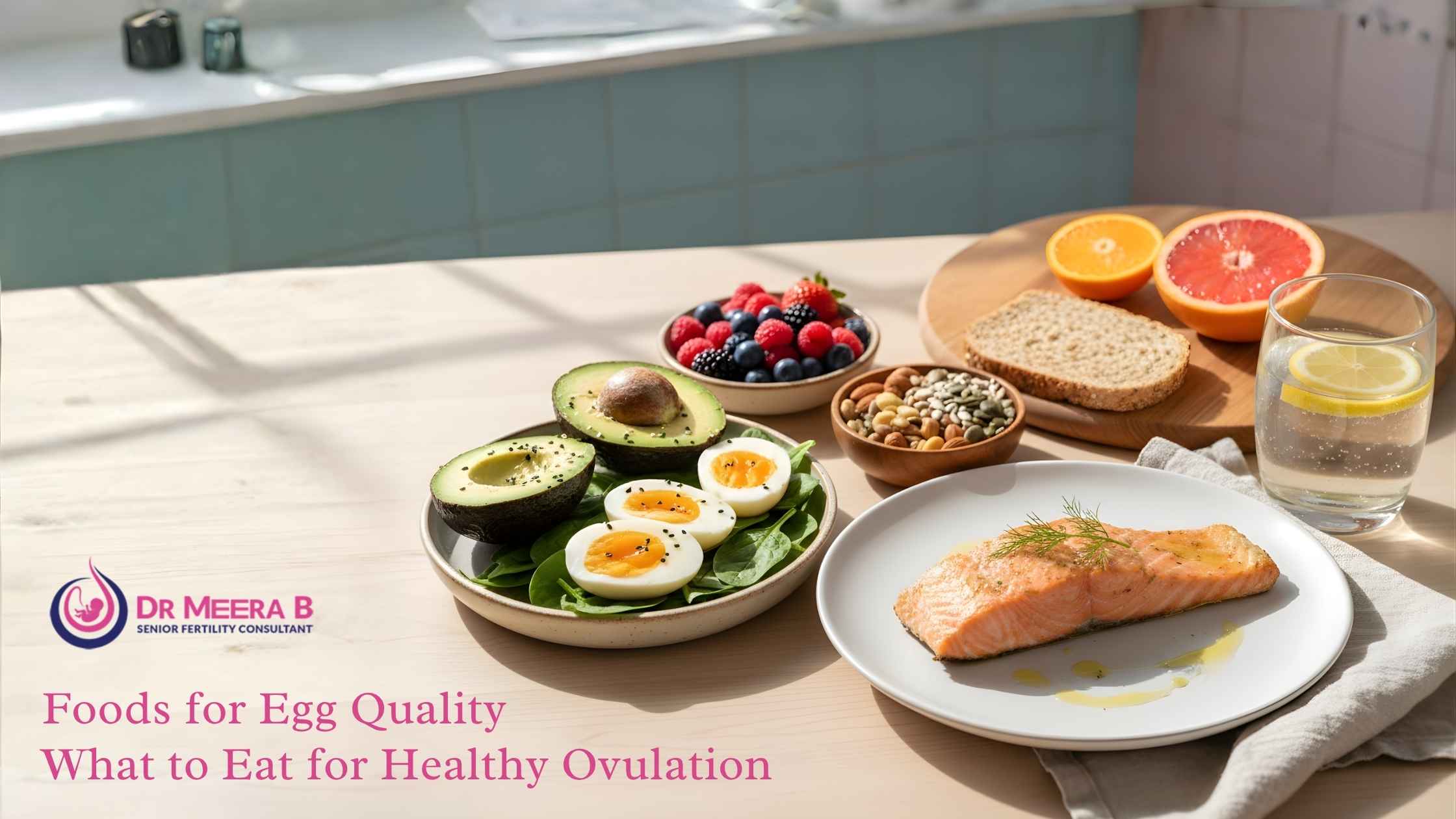
Build your plate around leafy greens, colourful vegetables, berries, legumes, whole grains, nuts and seeds, avocados, extra-virgin olive oil, and 2–3 servings of oily fish weekly. This combination provides fibre, key micronutrients, steady energy for hormonal balance, and protective compounds that support healthy ovulation under clinical supervision with Dr Meera B.
Anchor meals around whole foods and consistent timing: balanced breakfasts, a protein-rich lunch with vegetables and whole grains, and an evening meal with legumes or fish plus greens. Planned snacks like yoghurt, fruit, or a handful of nuts prevent spikes and crashes. Dr Meera B adapts this approach into a practical fertility diet that fits your routines and medical profile.
Vitamins C and E, selenium, carotenoids, and polyphenols help defend developing eggs from oxidative stress, a major biological pressure on egg DNA and cellular energy systems. A rainbow of vegetables and fruits, nuts and seeds, olive oil, and tea or cocoa in moderation can contribute meaningfully within a structured plan designed by Dr Meera B.
Long-chain omega-3s (EPA/DHA) from salmon, sardines, and mackerel support hormone signalling and a healthy inflammatory balance. Most patients do well with 2–3 servings of low-mercury oily fish weekly. If you’re vegetarian, Dr Meera B can discuss algae-based options after reviewing your medical history and lab profile.
Folate is essential for DNA synthesis and early neural development. Leafy greens, legumes, citrus, and fortified grains contribute dietary folate, while targeted supplementation may be recommended. Dr Meera B tailors dose and form to your needs, especially if tests suggest increased requirement.
Absolutely. Conception is a team effort. Adequate protein, antioxidants, and minerals help sperm parameters. Shellfish, meats, legumes, nuts, and seeds supply zinc, while lifestyle adjustments amplify benefits. Dr Meera B commonly aligns both partners’ plans so egg and sperm quality improve in sync.
Iron-rich greens, beetroot, citrus, pomegranate, whole grains, and omega-3-rich foods promote circulation and provide building blocks for a robust endometrium. Combined with sleep, moderate exercise, and stress management, these choices help create conditions that support implantation under medical guidance.
Start with a weekly plan that respects your cuisine, then standardise breakfast and snacks for predictability. Batch-cook legumes and whole grains, pre-prep vegetables, and keep nuts or yoghurt handy. In consultations, Dr Meera B adapts your plan to local ingredients, travel days, and fasting practices so adherence stays high and results compound.
Including quality fats is beneficial for hormone production and cell membranes. Avocado, olive oil, nuts, seeds, and oily fish support satiety and nutrient absorption. Very low-fat patterns may hinder reproductive hormones for some patients; Dr Meera B fine-tunes fat intake to your labs and overall health plan.
Egg development spans roughly three months, so the best time is now. After assessing health history, labs, and lifestyle, Dr Meera B designs a stepwise plan aligned to your goals. Book via
drmeerab.com/contact or call/WhatsApp
+91 9447145101 to begin a structured, evidence-based program at her place of practice in Aster PMF Hospital, Sasthamkotta.
Keywords addressed in this FAQ include: fertility nutrition, antioxidants for fertility, omega-3 and fertility, folate for fertility, zinc for male fertility, uterine health foods, diet for conception, fertility diet, diet to improve egg quality, and healthy fats for fertility.
Book your consultation with Dr Meera B

Comments are closed