
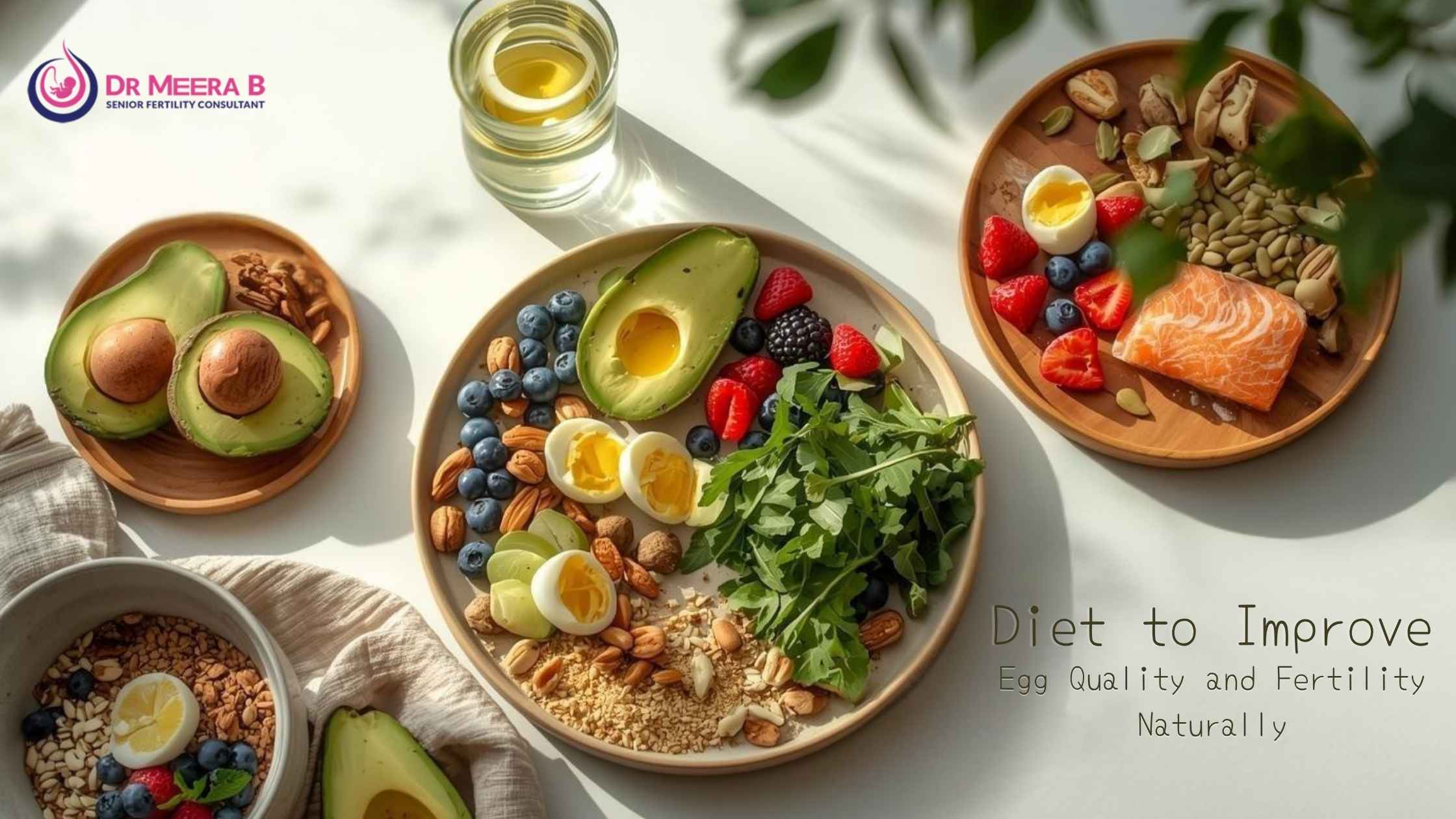
Diet to improve egg quality and fertility naturally
Did you know? Published research in the American Society for Reproductive Medicine shows that nearly 48% of female infertility cases worldwide are related to poor egg quality, oxidative stress, and nutritional deficiency. This powerful statistic highlights why a focused diet to improve egg quality has become one of the most evidence-supported ways to enhance conception chances naturally. Today, with lifestyle stressors, rising average maternal age, and nutritional imbalance affecting women across Kerala and India, couples are searching for real, science-backed solutions instead of random online advice.
This is where the experience and credibility of Dr. Meera B, one of Kollam’s most respected fertility experts, becomes invaluable. With more than 30 years of clinical excellence, global training, and credentials including MBBS, DGO, DNB(O&G), MRCOG(UK), and FRCOG(UK), she brings unmatched reproductive expertise to women trying to conceive naturally. Her professional journey — from graduating at Govt Medical College, Trivandrum, to advancing her specialization at Govt Medical College, Kottayam, and later refining her IVF/Infertility training at the world-renowned Bourn Hall Clinic, Cambridge, UK — gives women absolute confidence that the guidance they receive is medically sound and internationally aligned.
Women from across Kerala are consulting her at Aster PMF Hospital, Sasthamkotta and her other places of practice to understand how dietary changes influence ovarian reserves, hormonal harmony, uterine health, follicular development, and embryo implantation success. When supported by medical supervision, diet can become a strong component of long-term fertility planning — especially for women preparing for pregnancy in their 30s and 40s.
How does diet influence egg development?
Eggs develop gradually inside ovarian follicles over 90 days. During this window, nutrition directly shapes cell energy, chromosome integrity, mitochondrial function, and follicular fluid quality. Therefore, dietary improvement can measurably impact egg health before fertilisation takes place.
Medical studies confirm that mitochondrial activity inside egg cells determines whether an embryo will develop normally. Nutrition plays a central role in maintaining these mitochondria and preventing DNA fragmentation. A nutrient-focused approach does not replace medical treatment — but it supports it, especially when guided by a fertility expert who understands both reproductive science and whole-body health.
What foods for egg quality should women focus on?
Foods rich in vitamins, minerals, proteins, and healthy fats enhance egg cell structure and follicular growth. This includes fruits, vegetables, nuts, fish, whole grains, and iron-rich greens. These foods help reduce oxidative stress and support hormonal balance.
The body forms egg cells early in life, but the environment surrounding these cells continuously changes. Choosing the right nutrients helps strengthen cell membranes, improve oxygen supply, and support stronger ovarian response. Women who combine nutrition with reproductive consultation often see faster, more predictable progress.
Why antioxidants for fertility matter
Cell degeneration in egg tissues is largely linked to oxidative stress — an imbalance between free radicals and the body’s defence system. Antioxidants neutralise this damage, preserving chromosome quality and mitochondrial strength inside the egg.
Dr Meera B continuously educates women that antioxidants are not miracle cures; they are scientifically supported helpers. Incorporating berries, spinach, turmeric, tomatoes, peppers, and flavonoid-rich herbs contributes to reproductive longevity. Patients often share that after structured nutrition, their menstrual cycles stabilise, energy improves, and stress becomes easier to manage.
The role of folate for fertility
Folate is crucial for DNA synthesis, cell division, and early fetal development. Women preparing for pregnancy are strongly recommended to optimise folate intake months before trying to conceive. Folate also works with Vitamin B12 to regulate ovulation signals and to reduce neural tube defect risks.
Dr Meera B highlights that supplement selection should only happen after medical review. Self-prescribing high doses may cause masking of deficiency symptoms or drug interactions. Under her guidance, women learn what foods and supplementation levels are safest.
How fertility nutrition impacts ovarian and hormonal function
Balanced nutrition enhances reproductive hormones, supports egg development, and improves menstrual regularity. It lowers inflammation, stabilises insulin, and protects ovarian function over time.
Carbohydrate quality, protein absorption, iron status, and thyroid hormone balance all influence egg release and follicle maturity. When hormones fluctuate, ovulation becomes irregular, reducing fertility windows. Research consistently shows that nutrition plays a central role in preventing these disruptions.
Important uterine health foods
The uterus requires optimal blood circulation, correct pH levels, and healthy lining thickness for successful embryo implantation. Foods containing iron, magnesium, nitrates, and Vitamin C support tissue healing and lining repair. Dark leafy greens, beetroot, citrus fruits, legumes, and seeds all contribute to stronger implantation conditions.
Why the fertility diet is not a trend, but science
Fertility nutrition is not about shortcuts or popular online lists; it is a medical discipline evaluating nutritional biochemistry. It is integrated into reproductive medicine worldwide because cells respond to nutrient availability. Every follicle carries hormones, enzymes, oxygen, and nutrients; therefore, dietary choices reshape outcomes.
The connection between omega-3 and fertility
Omega-3 fatty acids enhance blood flow to reproductive organs, increase anti-inflammatory response, and support hormone receptors. These fats are linked to stronger ovulation, regular periods, and improved embryo growth. Natural sources include walnuts, flaxseed, and fatty fish.
Why plant-based proteins for fertility help reproductive health
Plant proteins improve insulin sensitivity, reduce inflammation, and support ovulation regularity. Lentils, soy, beans, quinoa, and nuts contribute to better reproductive outcomes when integrated with balanced calorie intake.
Why establishing a diet for conception early is important
Ovarian quality begins declining from the late 20s onward, making early dietary optimisation a strategic advantage. Women who prepare nutritionally achieve more predictable cycles and reduced stress.
Nutrition builds cellular protection that stays with the egg long before fertilisation occurs. For couples planning children in the future, dietary transition today saves time, emotional strain, and treatment cost later.
The importance of a hormonal balance diet for long-term reproductive health
Hormones control every aspect of ovulation and embryo formation. A hormonal balance diet helps stabilise insulin, thyroid hormones, estrogen, and progesterone. Balanced hormones ensure eggs develop at the correct rate and reach ideal maturity for fertilisation.
Why consulting Dr Meera B provides unmatched fertility advantage
Guidance quality determines outcome quality. Online articles cannot replace medical evaluation, ultrasound review, ovarian reserve analysis, or personalised nutrition mapping.
Dr Meera B blends evidence-based treatment, care, and scientific precision when guiding patients. Her global exposure allows Kerala patients to receive world-class guidance locally — at Aster PMF Hospital, Sasthamkotta, and her other places of practice.
To book a consultation:
Submit the form at drmeerab.com/contact, call +91 9447145101, or use WhatsApp via the website interface to request an appointment. Her team will guide you through scheduling.
About Dr Meera B
Dr Meera B is an internationally accredited reproductive specialist from Kollam, Kerala. Her qualifications include MBBS, DGO, DNB(O&G), MRCOG(UK), and FRCOG(UK). She was trained at Bourn Hall Clinic in Cambridge, UK — the birthplace of the first IVF child. Her work supports women across Kerala and abroad to overcome infertility using ethical medical care.
Frequently Asked Questions
A diet to improve egg quality focuses on nourishing the body with whole foods, balanced macronutrients, and vitamins that support ovarian cellular health. Under the guidance of Dr. Meera B, personalised nutrition choices are made to enhance mitochondrial energy, hormonal regularity, and follicular blood flow, especially for women preparing for conception.
Foods for egg quality include vegetables, nuts, fresh fruits, oily fish, legumes, and seeds. These foods contain minerals and vitamins that can support ovarian strength and menstrual cycle consistency. With medical supervision from Dr. Meera B, the intake plan can be tailored to support reproductive goals.
Antioxidants for fertility may help reduce cell damage by neutralising free radicals that affect egg cells. Research has shown their association with improved cellular health. Dr. Meera B may suggest antioxidant-rich foods based on medical history and ovarian profile.
Folate for fertility is essential in supporting DNA formation and reducing the risk of embryo-related defects. Under medical review by Dr. Meera B, folate intake can be balanced to suit age, blood test values, and reproductive goals.
Fertility nutrition works to provide micronutrients that influence hormonal rhythm and ovulation timing. By improving thyroid function, insulin response, and inflammatory profiles, it supports healthier cycles. Consultation with Dr. Meera B provides deeper evaluation, testing, and planning.
Uterine health foods include leafy greens, berries, beetroot, legumes, and Vitamin C rich produce. These foods are associated with improved blood circulation and endometrial lining texture. A tailored plan from Dr. Meera B ensures proper integration into daily meals.
A fertility diet may improve egg response and hormonal stability. When guided by clinical evaluation, nutrition becomes a supportive pillar in reproductive planning. Women consulting Dr. Meera B may receive customised recommendations.
The connection between omega-3 and fertility is rooted in studies showing improved reproductive blood flow and hormone modulation. Foods rich in omega oils may complement clinical treatment. Evaluation at the place of practice of Dr. Meera B enables safe dietary planning.
Plant-based proteins for fertility are considered beneficial for insulin sensitivity, ovulation patterns, and inflammation reduction. Under expert evaluation, intake can be structured to match reproductive goals and lifestyle choices.
A diet for conception may influence ovarian function by improving metabolic balance, blood sugar control, and cell nourishment. Patients working with Dr. Meera B receive clinical assessment focusing on nutritional requirements and reproductive history.
A hormonal balance diet supports ovulation timing and endocrine stability. When combined with lifestyle changes and medical tests, it may uplift egg and menstrual health. Dr. Meera B integrates nutrition science into long-term planning for many patients.
Comments are closed