
When to stop progesterone after frozen embryo transfer (FET)?
For couples undergoing assisted reproduction, one of the most searched and emotionally charged questions is when to stop progesterone after frozen embryo transfer. Publicly available IVF outcome data show that progesterone supplementation is used in nearly all programmed frozen embryo transfer cycles worldwide, underlining how central this hormone is to pregnancy success. Yet, despite its importance, confusion about stopping progesterone often creates unnecessary anxiety at a time when reassurance matters most.
This comprehensive guide is written for patients seeking clarity, confidence, and evidence-based guidance. It reflects the approach followed by Dr Meera B, a senior gynecologist and reproductive medicine expert with over three decades of experience, currently consulting at Aster PMF Hospital, Sasthamkotta, and other places of practice. Every recommendation discussed here is grounded in proven clinical practice, ethical medical standards, and globally accepted IVF protocols.
What does progesterone do after a frozen embryo transfer?
Progesterone plays a decisive role in preparing the uterus for pregnancy. After a frozen embryo transfer, the body may not always produce enough progesterone naturally, especially in medicated cycles. This is why doctors prescribe progesterone routinely as part of IVF hormonal supplementation.
In simple terms, progesterone transforms the uterine lining into a receptive environment. This process is often referred to as embryo implantation support. Without adequate progesterone, even a healthy embryo may fail to implant or may not be sustained in early pregnancy.
- Stabilizes the uterine lining
- Supports early placental development
- Prevents premature uterine contractions
- Reduces the risk of early pregnancy loss
How progesterone fits into the FET timeline
Understanding the FET timeline helps patients appreciate why progesterone is continued for several weeks after transfer. In a frozen embryo transfer cycle, progesterone is started before the embryo is placed in the uterus and continued well beyond implantation.
A typical timeline looks like this:
- Endometrial preparation with estrogen
- Introduction of progesterone to synchronize the lining
- Frozen embryo transfer on a scheduled day
- Continued progesterone through implantation and early pregnancy
Dr Meera B emphasizes that stopping progesterone too early can disrupt this carefully coordinated timeline, while continuing it longer than necessary is generally safe and often reassuring for patients.
When to stop progesterone after frozen embryo transfer?
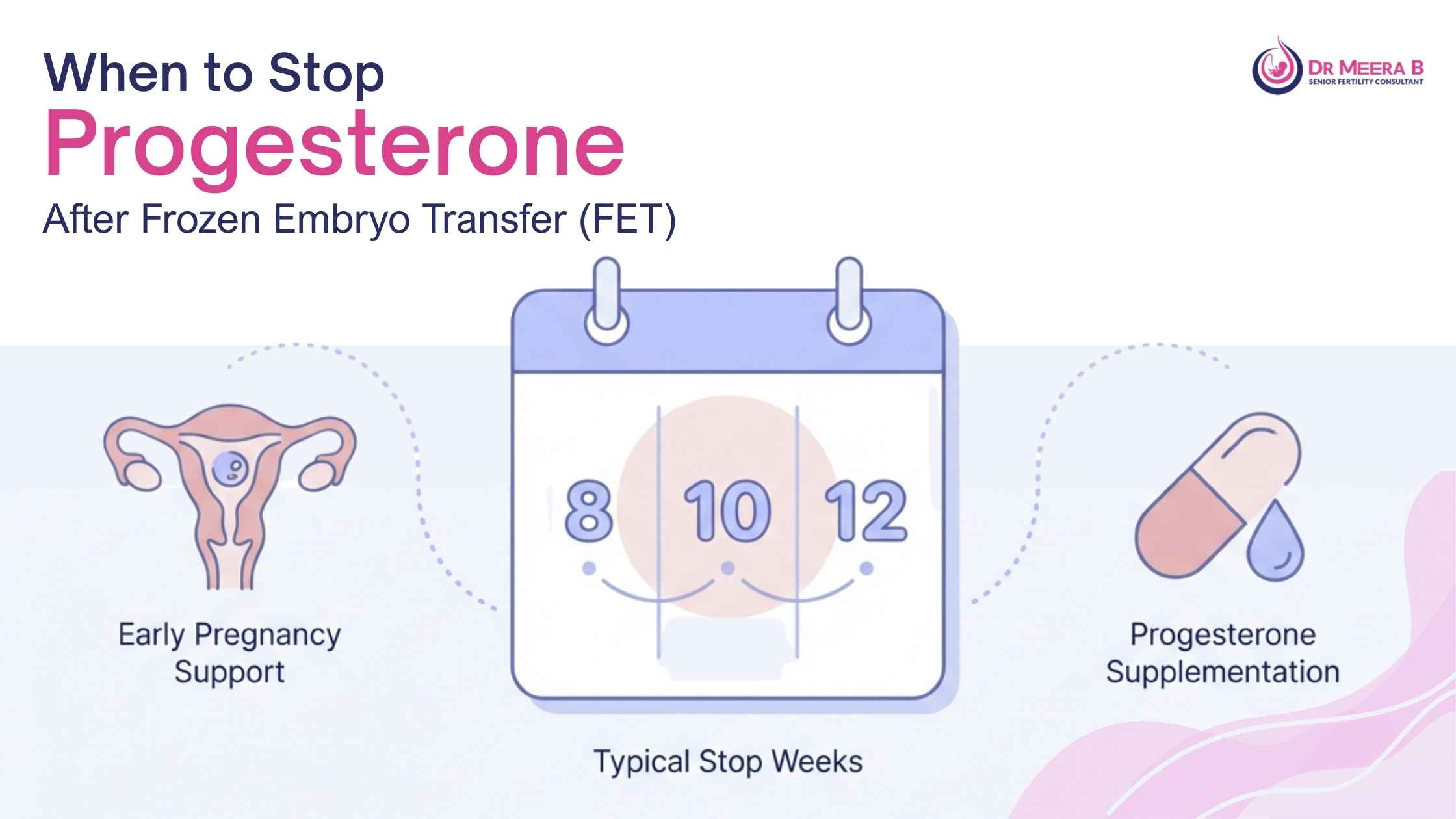
The short, clear answer most patients want is this: progesterone is usually continued until the placenta is capable of producing sufficient hormones on its own. For many women, this transition occurs between 8 and 12 weeks of pregnancy.
However, there is no single universal date. The decision about when to stop progesterone after frozen embryo transfer depends on individual factors, test results, and how the pregnancy is progressing. Dr Meera B follows a personalized, evidence-based approach rather than a rigid calendar-based rule.
Common clinical practice timelines
- Up to 8 weeks: sometimes used in natural or mildly stimulated cycles
- 10 weeks: a widely followed and well-supported timeframe
- 12 weeks: often chosen for added reassurance in high-value or high-anxiety pregnancies
Each of these options is supported by established clinical data, and none represents an experimental or unproven approach.
Why progesterone levels IVF matter before stopping
Before advising patients to discontinue progesterone, doctors often evaluate progesterone levels IVF testing alongside ultrasound findings. These levels help confirm that the pregnancy is hormonally stable and that the placenta has taken over progesterone production.
Dr Meera B does not rely on numbers alone. Instead, she combines laboratory values with clinical signs such as fetal growth, heartbeat confirmation, and overall maternal wellbeing. This balanced assessment protects patients from premature withdrawal while avoiding unnecessary prolonged medication.
The role of luteal support in pregnancy success
Progesterone supplementation is part of a broader concept known as luteal support. In natural cycles, the body’s corpus luteum produces progesterone. In many IVF cycles, especially programmed FET cycles, this natural support is absent or insufficient.
Luteal support ensures continuity during the most vulnerable phase of pregnancy. According to Dr Meera B, this support is not merely a formality but a cornerstone of modern assisted reproduction.
Stopping luteal support too early can result in:
- Hormonal instability
- Endometrial breakdown
- Increased emotional distress for patients
Is it harmful to continue progesterone longer?
One common fear among patients is that continuing progesterone for “too long” may harm the baby. Reassuringly, medical evidence does not support this concern. Progesterone has been used safely in pregnancy for decades.
Dr Meera B often explains that continuing progesterone slightly beyond the minimum required timeframe is usually harmless and can provide emotional reassurance, especially for couples who have experienced previous pregnancy losses.
How Dr Meera B individualizes progesterone withdrawal
With more than thirty years of clinical experience, Dr Meera B has learned that no two fertility journeys are identical. Her decision-making process takes into account:
- Type of FET cycle (natural or medicated)
- Previous IVF outcomes
- Hormonal response and progesterone levels IVF
- Ultrasound findings
- Patient comfort and emotional state
All care is coordinated at Dr Meera B’s place of practice, including her recent consultations at Aster PMF Hospital, Sasthamkotta, ensuring access to modern diagnostic tools and multidisciplinary support.
Why expert guidance matters more than online advice
The internet is full of conflicting timelines and anecdotal experiences about stopping progesterone. Acting on generic advice can create unnecessary risks. This is where experienced medical guidance makes a crucial difference.
Dr Meera B’s training in reproductive medicine, including advanced exposure at the renowned Bourn Hall Clinic in Cambridge, UK, ensures that her recommendations align with internationally accepted standards while remaining sensitive to the needs of Indian patients.
About Dr Meera B
Dr Meera B is a senior gynecologist and fertility specialist with qualifications including MBBS, DGO, DNB (Obstetrics & Gynaecology), MRCOG (UK), and FRCOG (UK). A graduate of Government Medical College, Trivandrum, with postgraduate training from Government Medical College, Kottayam, she has dedicated her career to ethical, patient-centered fertility care.
Her expertise in IVF hormonal supplementation, embryo implantation support, and individualized treatment planning has helped couples from Kerala, across India, and internationally navigate complex fertility journeys with confidence.
Taking the next step
If you are undergoing a frozen embryo transfer or are unsure about when to stop progesterone after frozen embryo transfer, timely expert advice can make all the difference. A personalized consultation with Dr Meera B ensures that decisions are based on proven science, not guesswork.
To book an appointment, you may fill and submit the consultation form at
https://drmeerab.com/contact/,
call +91 9447145101, or send a WhatsApp message using the interface available on the website. Dr Meera’s team will coordinate your appointment and keep you informed at every step.
Comments are closed