
Thyroid levels during pregnancy: Complete guide by trimester
Studies in the public domain indicate that nearly 10–15% of pregnant women in India show some form of thyroid dysfunction, making thyroid levels during pregnancy one of the most overlooked yet critical aspects of maternal and fetal health. Despite its importance, many women only discover an imbalance after conception, when hormonal changes amplify the thyroid’s role in sustaining a healthy pregnancy. Understanding these changes early can make the difference between a smooth pregnancy and preventable complications.
Under the clinical guidance of Dr. Meera B, a senior gynecologist with over three decades of experience, this comprehensive guide explains how thyroid function evolves during pregnancy, what normal values look like trimester by trimester, and why expert monitoring at Dr Meera B’s place of practice is essential for expecting mothers, especially in and around Kollam and Kerala.
Why thyroid function matters so much in pregnancy
The thyroid gland produces hormones that regulate metabolism, brain development, and energy balance. During pregnancy, these hormones directly influence placental development and fetal neurological growth. Thyroid hormone and pregnancy are deeply interconnected, especially in the first trimester when the baby depends entirely on the mother’s thyroid hormones.
Even subtle abnormalities in thyroid hormone levels in pregnancy can affect fertility, implantation, miscarriage risk, and long-term cognitive outcomes in the child. This is why modern obstetric care places strong emphasis on early screening and individualized management rather than a one-size-fits-all approach.
How pregnancy changes thyroid physiology
Pregnancy introduces dramatic hormonal shifts. Human chorionic gonadotropin (hCG) stimulates the thyroid gland, while estrogen increases thyroid-binding proteins in the blood. These changes mean that pregnancy normal thyroid levels are not the same as non-pregnant ranges.
- Increased demand for thyroid hormones
- Altered thyroid-stimulating hormone (TSH) levels
- Greater iodine requirements
- Trimester-specific reference ranges
Understanding these physiological changes helps explain why normal thyroid in pregnancy must always be interpreted using pregnancy-specific standards, not routine lab values.
What are normal thyroid levels by trimester?
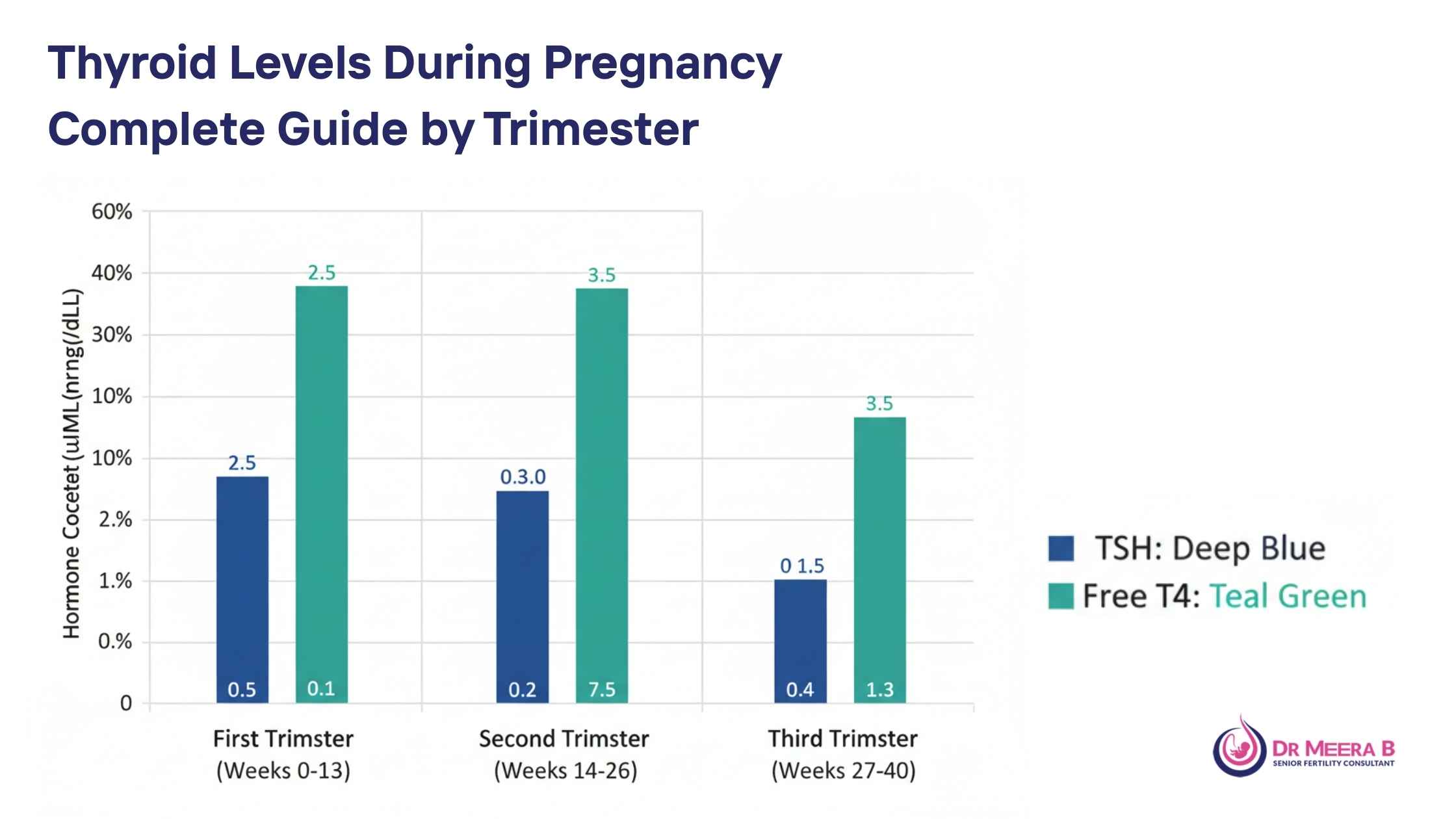
One of the most searched queries online is about the tsh levels during pregnancy chart. While charts offer guidance, interpretation should always be individualized by an experienced clinician like Dr. Meera B.
| Trimester | Typical TSH Range (mIU/L) | Clinical significance |
|---|---|---|
| First trimester | 0.1 – 2.5 | Critical for fetal brain development |
| Second trimester | 0.2 – 3.0 | Supports growth and metabolism |
| Third trimester | 0.3 – 3.0 | Prepares for delivery and neonatal adaptation |
These ranges reflect tsh in pregnancy levels that are widely accepted in obstetric endocrinology. Deviations may signal hypothyroidism or hyperthyroidism, both of which require timely attention.
Understanding thyroid hormone levels in pregnancy
Beyond TSH, doctors evaluate free T4 and sometimes free T3 to understand thyroid hormone levels in pregnancy. These hormones directly affect maternal metabolism and fetal organ development.
Low levels may lead to fatigue, weight gain, anemia, preeclampsia, and developmental concerns in the baby. Excess levels can increase risks of miscarriage, preterm birth, and maternal heart complications. This balance is delicate, reinforcing the importance of experienced clinical oversight.
Common thyroid disorders seen during pregnancy
Hypothyroidism
This condition is more common in Indian women and often remains undiagnosed before pregnancy. Symptoms may be subtle and easily mistaken for normal pregnancy changes. When untreated, it can disrupt pregnancy normal thyroid levels and increase obstetric risks.
Hyperthyroidism
Less common but equally significant, hyperthyroidism can cause palpitations, weight loss, anxiety, and pregnancy complications if not carefully managed.
Why early testing and monitoring is crucial
Dr. Meera B emphasizes that thyroid screening ideally begins during preconception planning or early in the first trimester. At her place of practice, including her recent consultations at Aster PMF Hospital, Sasthamkotta, a structured approach ensures:
- Early identification of abnormal thyroid levels during pregnancy
- Trimester-specific dose adjustments if medication is required
- Close collaboration with laboratory and imaging services
- Continuous maternal and fetal monitoring
This proactive care model prevents small imbalances from becoming major complications later in pregnancy.
Evidence-based management guided by experience
All treatment strategies recommended by Dr. Meera B are rooted in globally accepted clinical guidelines and decades of hands-on experience. Medication adjustments are made cautiously, based on repeat testing, maternal symptoms, and fetal growth patterns. There are no shortcuts, no exaggerated promises—only safe, proven medical care.
Her advanced training in reproductive medicine and IVF at Bourn Hall Clinic, Cambridge, further strengthens her understanding of endocrine factors affecting conception and pregnancy outcomes.
The cost of ignoring thyroid health in pregnancy
Many women only realize the importance of thyroid testing after experiencing infertility, repeated pregnancy loss, or complications that could have been prevented. This is the silent problem—when thyroid imbalance goes unnoticed, opportunities for early intervention are lost.
Choosing expert care early means protecting not just the pregnancy, but the lifelong health of the child.
Why women across Kerala trust Dr. Meera B
Dr. Meera. B MBBS, DGO, DNB(O&G), MRCOG(UK), FRCOG(UK) is a name associated with ethical practice, clinical depth, and compassionate care. A graduate of Govt Medical College, Trivandrum, with post-graduation from Govt Medical College, Kottayam, she has supported couples from India and abroad through complex reproductive and pregnancy-related challenges.
Her recent practice association with Aster PMF Hospital, Sasthamkotta, ensures access to advanced diagnostic and treatment infrastructure, while maintaining personalized care at every step.
Booking a consultation with Dr. Meera B
If you are pregnant, planning a pregnancy, or have concerns about thyroid hormone and pregnancy, timely consultation can change outcomes dramatically.
To book an appointment with Dr. Meera B:
- Fill and submit the consultation form at https://drmeerab.com/contact/
- Call directly at +91 9447145101 to request an appointment
- Use the WhatsApp interface on the website to send an appointment request
Dr. Meera’s team will coordinate scheduling and keep you informed throughout the process, ensuring a smooth and reassuring experience.
About Dr. Meera B
Dr. Meera B is a senior consultant obstetrician and gynecologist based in Kollam, Kerala, with over 30 years of clinical experience. Her expertise spans fertility care, high-risk pregnancies, reproductive endocrinology, and IVF. As a Member and Fellow of the Royal College of Obstetricians and Gynaecologists (UK), she brings global best practices to local patient care.
For women seeking clarity, safety, and evidence-based guidance on thyroid levels during pregnancy, Dr. Meera B’s place of practice offers trusted care backed by experience, ethics, and excellence.
Frequently Asked Questions: Thyroid Levels During Pregnancy
Thyroid levels during pregnancy directly influence fetal brain development, metabolism, and overall growth. Even mild imbalances can affect both mother and baby, which is why Dr. Meera B emphasizes early screening, trimester-wise monitoring, and timely treatment to maintain hormonal stability throughout pregnancy.
A tsh levels during pregnancy chart helps compare your lab values against trimester-specific reference ranges. Dr. Meera B uses these charts alongside clinical symptoms, ultrasound findings, and antibody testing to ensure results are interpreted accurately rather than relying on numbers alone.
Thyroid hormone levels in pregnancy naturally fluctuate due to increased demand, higher estrogen levels, and placental hormones. Dr. Meera B carefully adjusts treatment plans across trimesters so that these physiological changes do not turn into clinical thyroid disorders.
Pregnancy normal thyroid levels differ from non-pregnant ranges and vary by trimester. Dr. Meera B follows evidence-based guidelines to define safe upper and lower limits, ensuring that both overt and subtle thyroid imbalances are identified early.
Yes, maintaining normal thyroid in pregnancy significantly reduces the risk of complications such as miscarriage, preterm birth, and low birth weight. Dr. Meera B focuses on proactive monitoring to keep thyroid function within optimal limits from conception to delivery.
Tsh in pregnancy levels are usually checked once every trimester, or more frequently if abnormalities are detected. Dr. Meera B customizes testing intervals based on medical history, prior thyroid disease, and response to treatment.
Thyroid hormone and pregnancy management becomes more nuanced in women with autoimmune thyroid disease, prior pregnancy loss, or fertility concerns. Dr. Meera B offers individualized care plans, combining medication adjustments, nutritional guidance, and close follow-up to support a safe pregnancy journey.
Comments are closed