
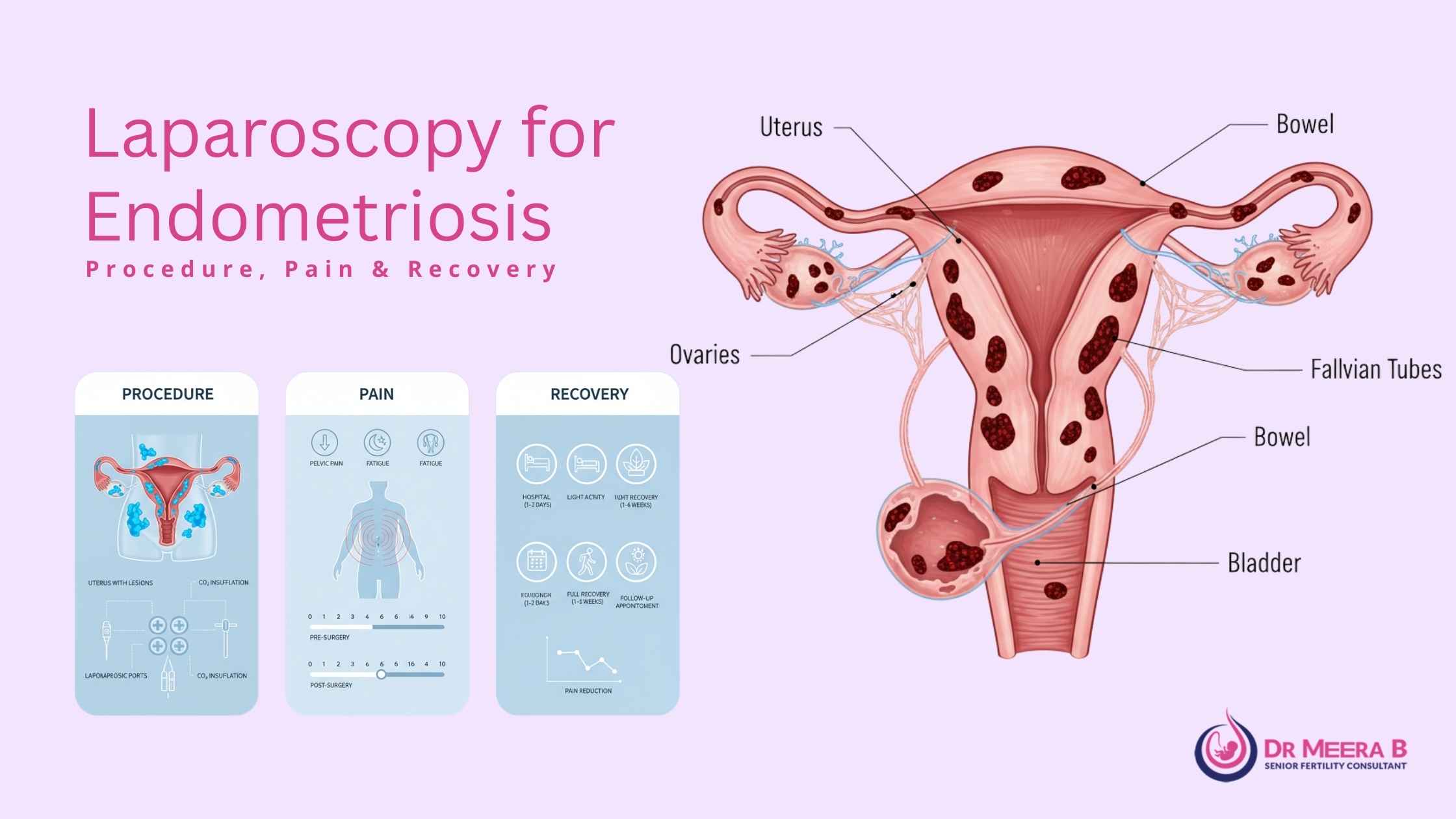
Laparoscopy for endometriosis: Procedure, pain & recovery
Laparoscopy for endometriosis has become one of the most effective ways to diagnose and treat the condition, especially as endometriosis affects an estimated 10% of women of reproductive age globally, according to public domain statistics from the WHO. For many women in Kerala and across India, this number is not just a statistic—it represents years of pain, delayed diagnosis and uncertainty. The introduction of advanced minimally invasive treatment at Dr Meera B’s place of practice, including Aster PMF Hospital, Sasthamkotta, provides hope, relief and clarity in ways that traditional methods never could.
With more than 30 years of experience, Dr Meera B MBBS, DGO, DNB(O&G), MRCOG(UK), FRCOG(UK) continues to be one of the most trusted names in laparoscopy and fertility care in Kollam. Her extensive training at institutions such as Bourn Hall Clinic, Cambridge—the birthplace of IVF—makes her uniquely equipped to guide patients through complex cases of endometriosis with precision and empathy.
What is laparoscopy for endometriosis and how does it help?
Laparoscopy for endometriosis is a minimally invasive surgery that allows a gynecologist to visualize and remove endometriotic lesions using small incisions. It provides the most accurate diagnosis and is also the gold-standard treatment because it targets the disease directly. Through this approach, women experience faster recovery, reduced scarring and improved fertility outcomes.
Unlike external imaging tools, laparoscopy gives the surgeon a direct view of pelvic organs. This is crucial because many women have symptoms that do not appear on scans yet severely impact daily life. Dr Meera B uses advanced laparoscopic systems available at her place of practice to ensure maximum accuracy and minimal discomfort.
What happens during a laparoscopy procedure endometriosis?
A laparoscopy procedure endometriosis typically involves inserting a thin telescope-like instrument (laparoscope) through small abdominal incisions to inspect and remove endometriosis tissue. The abdomen is gently inflated with gas for clarity, and specialized tools help excise or ablate problematic lesions.
This step-by-step precision dramatically increases the chances of pain relief and fertility restoration. Under Dr Meera B’s supervision, each procedure follows international safety standards, ensuring comfort and faster postoperative healing.
How painful is laparoscopy endometriosis pain?
Laparoscopy endometriosis pain is significantly less than traditional open surgery, and most discomfort typically resolves within a few days. Patients generally report mild to moderate pain at incision sites or temporary shoulder pain from residual gas used during the procedure.
Pain management is tailored to each patient’s tolerance and medical history. At Aster PMF Hospital, Sasthamkotta, modern anesthesia support and postoperative care protocols ensure minimal downtime and superior comfort for women undergoing treatment under Dr Meera B.
How does laparoscopic surgery and endometriosis treatment improve fertility?
Laparoscopic surgery and endometriosis treatment often boosts fertility by removing adhesions, restoring anatomical alignment and improving ovarian and tubal function. Studies show that fertility rates can significantly improve in women after expert-directed laparoscopic excision.
For those who have struggled with conception, the procedure offers renewed hope. Because of Dr Meera B’s deep expertise in reproductive medicine and IVF, she evaluates each case strategically, guiding couples toward the most effective sequence of treatment—whether natural conception, assisted reproduction or IVF.
What is the recovery time after laparoscopy for endometriosis?
Most women resume light activities within 3–5 days after laparoscopy, and complete recovery typically occurs within 2–3 weeks. Deep lesions or extensive surgical work may extend the healing period slightly, but recovery is still much faster than traditional surgery.
Dr Meera B ensures every woman receives a customized recovery plan, which may include mild activity, dietary balance and follow-up evaluations to monitor healing and symptom improvement.
How can you treat endometriosis effectively?
When evaluating how can you treat endometriosis, the most effective approach usually involves a combination of laparoscopy, hormonal therapy and lifestyle modification. Laparoscopy remains the gold standard when symptoms are severe or fertility is a concern.
Dr Meera B’s approach includes evidence-based hormonal treatments, medical therapy and advanced surgical options, ensuring that each patient receives a tailored, safe and scientifically validated plan.
Endometriosis how to cure: Is a permanent cure possible?
There is currently no absolute endometriosis how to cure solution, but symptoms can be managed effectively, and long-term relief is achievable with proper medical care. Expert laparoscopic removal combined with hormonal regulation offers sustained improvement.
While the disease may recur, consistent monitoring with an experienced specialist like Dr Meera B greatly reduces its long-term impact on fertility, pain and daily functioning.
How to prevent endometriosis naturally and medically?
Understanding how to prevent endometriosis revolves around evidence-based methods such as hormonal balance, maintaining a healthy weight, reducing inflammatory triggers and timely medical interventions. While endometriosis cannot always be prevented, risk can be minimized.
At Dr Meera B’s place of practice, only clinically proven and globally accepted strategies are recommended. These may include monitored hormonal therapies, anti-inflammatory diet patterns, stress reduction and lifestyle optimization.
How to prevent endometriosis from recurring?
To understand how to prevent endometriosis from recurring, patients should follow postoperative hormonal management, regular check-ups and lifestyle modifications aligned with medical guidance. Recurrence rates are notably reduced when treatment is personalized and monitored by an expert.
Patients under the care of Dr Meera B benefit from structured follow-up plans designed to maintain long-term relief and preserve fertility for future family planning.
Why choosing Dr Meera B for laparoscopy for endometriosis matters
When dealing with a challenging condition like endometriosis, choosing the right specialist makes a significant difference. With extensive academic credentials, international training and three decades of hands-on surgical experience, Dr Meera B stands out as one of Kerala’s most trusted gynecologists.
Her consultations at Aster PMF Hospital, Sasthamkotta and other places of practice offer access to cutting-edge medical infrastructure, making advanced treatment safe, precise and comfortable. This synergy of experience and technology ensures patients are not missing out on world-class medical care.
About Dr Meera B
Dr Meera. B MBBS, DGO, DNB(O&G), MRCOG(UK), FRCOG(UK) is a distinguished gynecologist from Kollam, Kerala, specializing in fertility, reproductive medicine and minimally invasive surgery. She completed her MBBS at Govt Medical College, Trivandrum and post-graduation at Govt Medical College, Kottayam. She became a Member of the Royal College of Obstetricians and Gynaecologists in 2008, later receiving the Fellowship (FRCOG) in 2022.
Her advanced training in IVF at the prestigious Bourn Hall Clinic, Cambridge has shaped her expertise in helping couples worldwide achieve parenthood.
Book your appointment
To book an appointment with Dr Meera B, you may fill and submit the form at https://drmeerab.com/contact/. You can also contact +91 9447145101 or reach out via the WhatsApp interface on the website to request a consultation. Her team will assist you with scheduling and follow-ups.
Frequently Asked Questions
During a laparoscopy procedure endometriosis, Dr. Meera B inserts a thin laparoscope through small abdominal incisions to view and treat endometriosis deposits. This minimally invasive technique allows precise removal of lesions with very little trauma, supporting quicker recovery and improved fertility outcomes. The advanced equipment available at her place of practice helps ensure accuracy, safety, and patient comfort throughout the procedure.
Laparoscopy endometriosis pain after surgery is usually mild to moderate and significantly less than what is experienced after open abdominal surgery. Most discomfort comes from the incisions or residual gas used during the procedure. Under the supervision of Dr. Meera B, patients receive personalized pain management plans to ensure smooth recovery and faster return to daily activities.
Laparoscopic surgery and endometriosis treatment improves long-term outcomes by removing adhesions and restoring healthy pelvic anatomy. This method offers significant relief from chronic pain and increases the chances of natural conception. As a fertility expert with global training, Dr. Meera B ensures that every surgical approach is tailored to maximize reproductive health and minimize recurrence.
When evaluating how can you treat endometriosis, the most effective strategies include laparoscopic excision, hormonal therapy, and lifestyle-based clinical recommendations. Dr. Meera B uses evidence-backed treatment pathways to help patients achieve long-term relief while safeguarding fertility. Each treatment plan is customized using proven, internationally accepted medical protocols.
No absolute endometriosis how to cure solution exists because endometriosis is a chronic condition. However, expert laparoscopic removal performed by a specialist like Dr. Meera B, followed by appropriate hormonal management, can significantly reduce symptoms and recurrence rates. Many women enjoy long-term relief and improved fertility after undergoing properly planned treatment.
Understanding how to prevent endometriosis involves reducing inflammation, maintaining hormonal balance, and seeking early medical evaluation. While prevention is not always fully possible, evidence-based lifestyle adjustments—combined with timely gynecological care from experts like Dr. Meera B—help minimize symptom progression and improve reproductive health.
To understand how to prevent endometriosis from recurring, patients should follow postoperative recommendations, hormonal therapy where medically indicated, and scheduled follow-ups. Under continuous guidance from Dr. Meera B, patients receive recurrence-prevention strategies that are clinically proven and tailored to their specific stage of endometriosis and future fertility goals.
Comments are closed