• Meera Bhavan, Kollam, Kerala
  • meerahridya1@rediffmail.com

How to Prevent Endometriosis & Reduce Risk

Prevent Endometriosis

How to Prevent Endometriosis & Reduce Risk

 
Endometriosis affects an estimated 10% of women of reproductive age worldwide, according to data published by the World Health Organization, making it one of the most common yet underdiagnosed gynecological conditions. For many women, the real concern is not just diagnosis but understanding how to prevent endometriosis, reduce its long-term impact, and protect fertility and quality of life. This comprehensive guide brings together proven medical insights, lifestyle strategies, and clinical expertise shared by Dr Meera B, a senior gynecologist and fertility specialist practicing at Aster PMF Hospital, Sasthamkotta.

Can endometriosis be prevented?

While endometriosis cannot always be completely prevented, its risk, progression, and recurrence can often be reduced with early intervention and evidence-based care. Understanding how do you prevent endometriosis begins with identifying risk factors, managing hormones responsibly, and seeking timely gynecological evaluation. Dr Meera B emphasizes that prevention is not about unrealistic promises but about minimizing disease burden, improving symptom control, and protecting reproductive health through medically validated approaches.

Understanding endometriosis and why prevention matters

Endometriosis occurs when tissue similar to the uterine lining grows outside the uterus, commonly affecting the ovaries, fallopian tubes, and pelvic lining. Over time, this can lead to inflammation, scarring, chronic pelvic pain, and fertility challenges. Without timely care, symptoms may worsen, impacting work, relationships, and mental well-being. This is why women often search online for answers like endometriosis how to prevent, hoping to find ways to take control before complications arise.

How can you prevent endometriosis from worsening?

The most effective preventive strategy is early diagnosis followed by individualized management. According to Dr Meera B, women who seek expert consultation early often experience better symptom control and reduced disease progression.
  • Prompt evaluation of painful periods, pelvic pain, or unexplained infertility
  • Regular gynecological follow-up, especially if there is a family history
  • Evidence-based medical therapy when indicated
  • Continuous monitoring at Dr Meera B’s place of practice

How to reduce risk of endometriosis through lifestyle choices

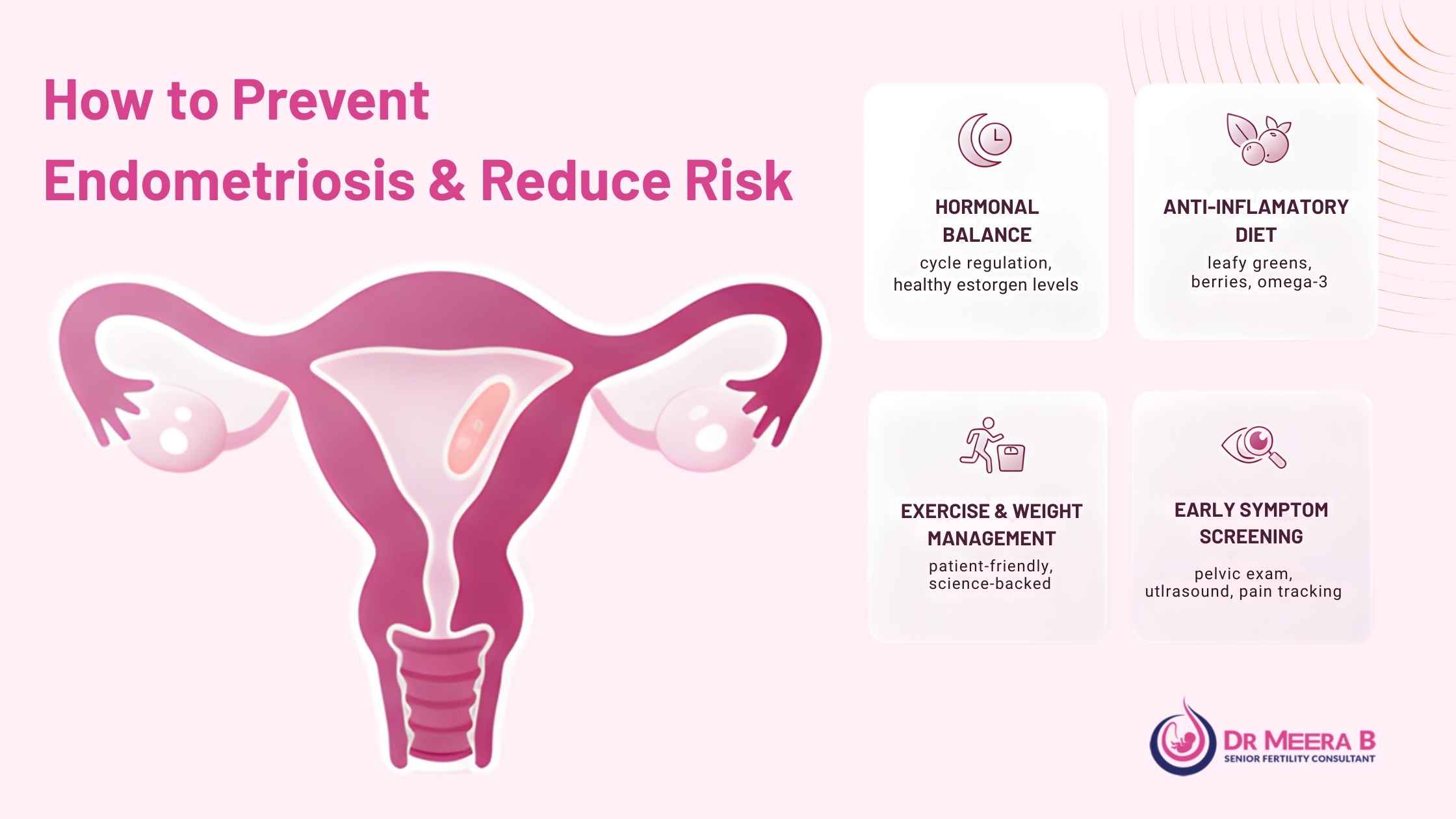
Lifestyle factors alone do not cause endometriosis, but research suggests they may influence inflammation and hormonal balance. Knowing how to reduce risk of endometriosis involves adopting habits that support overall reproductive health.

Diet and inflammation

Diets rich in fruits, vegetables, whole grains, and omega-3 fatty acids may help reduce systemic inflammation. Dr Meera B often advises patients to limit ultra-processed foods and trans fats, which are associated with inflammatory responses.

Maintaining a healthy body weight

Excess body fat can influence estrogen levels, potentially aggravating symptoms. Maintaining a healthy weight under medical guidance may help reduce symptom severity.

Physical activity

Regular moderate exercise has been shown to improve circulation, reduce estrogen levels, and support mental health, all of which can benefit women managing endometriosis risk.

Medical strategies: How do you prevent endometriosis progression?

Medical management plays a crucial role, especially for women with confirmed or suspected disease. Dr Meera B relies only on proven, guideline-based treatments that prioritize patient safety.
  • Hormonal therapies prescribed after thorough evaluation
  • Individualized pain management strategies
  • Fertility-focused planning for women wishing to conceive
  • Care coordination at Aster PMF Hospital, Sasthamkotta

How to prevent endometriosis from coming back after treatment

Recurrence is one of the biggest fears among women treated for endometriosis. Understanding how to prevent endometriosis from coming back requires a long-term, proactive approach rather than one-time treatment. Dr Meera B stresses the importance of post-treatment follow-up, adherence to prescribed therapies, and timely reassessment if symptoms recur. Preventive strategies may include ongoing hormonal management, lifestyle optimization, and fertility planning when relevant.

How to prevent endometriosis from recurring with expert follow-up

Knowing how to prevent endometriosis from recurring often comes down to continuity of care. Women who discontinue follow-up or self-manage symptoms without medical advice are more likely to experience recurrence. At Dr Meera B’s place of practice, care is structured to ensure long-term monitoring, patient education, and timely intervention, significantly improving outcomes.

The fertility connection: Why prevention protects future options

Endometriosis is closely linked with infertility in a significant proportion of women. With over three decades of experience and advanced training in reproductive medicine and IVF at Bourn Hall Clinic, Cambridge, Dr Meera B integrates fertility preservation into preventive strategies whenever appropriate. This forward-looking approach ensures that women do not lose valuable time or reproductive potential due to delayed or fragmented care.

Why expert guidance matters more than online advice

Many women search repeatedly for answers such as how can you prevent endometriosis or experiment with unverified remedies. Unfortunately, misinformation can delay effective treatment and worsen outcomes. Dr Meera B’s credentials—MBBS, DGO, DNB (O&G), MRCOG (UK), FRCOG (UK)—and her extensive clinical experience ensure that every recommendation is grounded in science, ethics, and patient safety.

About Dr Meera B

Dr Meera B is a senior gynecologist and fertility specialist based in Kollam, Kerala, with more than thirty years of experience in women’s health. She graduated from Government Medical College, Trivandrum, completed her post-graduation at Government Medical College, Kottayam, and later earned prestigious international qualifications including MRCOG and FRCOG from the United Kingdom. Currently consulting at Aster PMF Hospital, Sasthamkotta, Dr Meera B is widely respected for her compassionate care, clinical excellence, and patient-centered approach in managing complex gynecological conditions like endometriosis.

Take the next step toward prevention and peace of mind

If you are concerned about symptoms, fertility, or long-term health, delaying expert consultation may cost you valuable time and options. Early guidance can make a meaningful difference in outcomes and quality of life. To book an appointment with Dr Meera B, you can fill and submit the consultation form at https://drmeerab.com/contact/, call +91 9447145101, or send a WhatsApp message through the website interface. Dr Meera’s team will coordinate and schedule your appointment, keeping you informed at every step.

Frequently asked questions on preventing endometriosis

The most practical way to reduce long-term impact is early evaluation of symptoms such as painful periods, pelvic pain, or difficulty conceiving. While the condition cannot always be completely avoided, timely diagnosis, medical guidance, and consistent follow-up with an experienced gynecologist like Dr Meera B can significantly limit disease progression and complications.

Preventing progression focuses on evidence-based medical management, symptom control, and monitoring. Dr Meera B emphasizes regular reviews, appropriate hormonal therapy when indicated, and addressing pain early rather than ignoring symptoms, especially for women with a family history or fertility concerns.

A combined approach works best. Medical care addresses hormonal and inflammatory factors, while lifestyle measures such as balanced nutrition, regular physical activity, and stress management support overall hormonal health. Under Dr Meera B’s guidance at her place of practice, these strategies are personalized rather than generalized.

Women with a family history should seek early gynecological consultation, even if symptoms seem mild. Tracking menstrual pain, cycle changes, and reproductive health allows earlier intervention. Dr Meera B often recommends proactive monitoring to reduce delayed diagnosis and long-term complications.

Recurrence prevention depends on long-term follow-up rather than one-time treatment. This may include continued medical therapy, symptom monitoring, and fertility planning where relevant. Patients under consistent care with Dr Meera B are guided on when to return for reassessment to reduce relapse risk.

Preventing recurrence and protecting fertility go hand in hand. Individualized treatment plans, timely referrals for fertility support, and ongoing monitoring are essential. With advanced training in reproductive medicine, Dr Meera B integrates fertility-focused decision-making into endometriosis care when required.

Preventing complications requires accurate diagnosis, ethical medical management, and continuity of care. Consulting a senior specialist like Dr Meera B at Aster PMF Hospital, Sasthamkotta ensures that decisions are based on proven guidelines, reducing the chances of unnecessary delays or ineffective treatments.

Comments are closed