
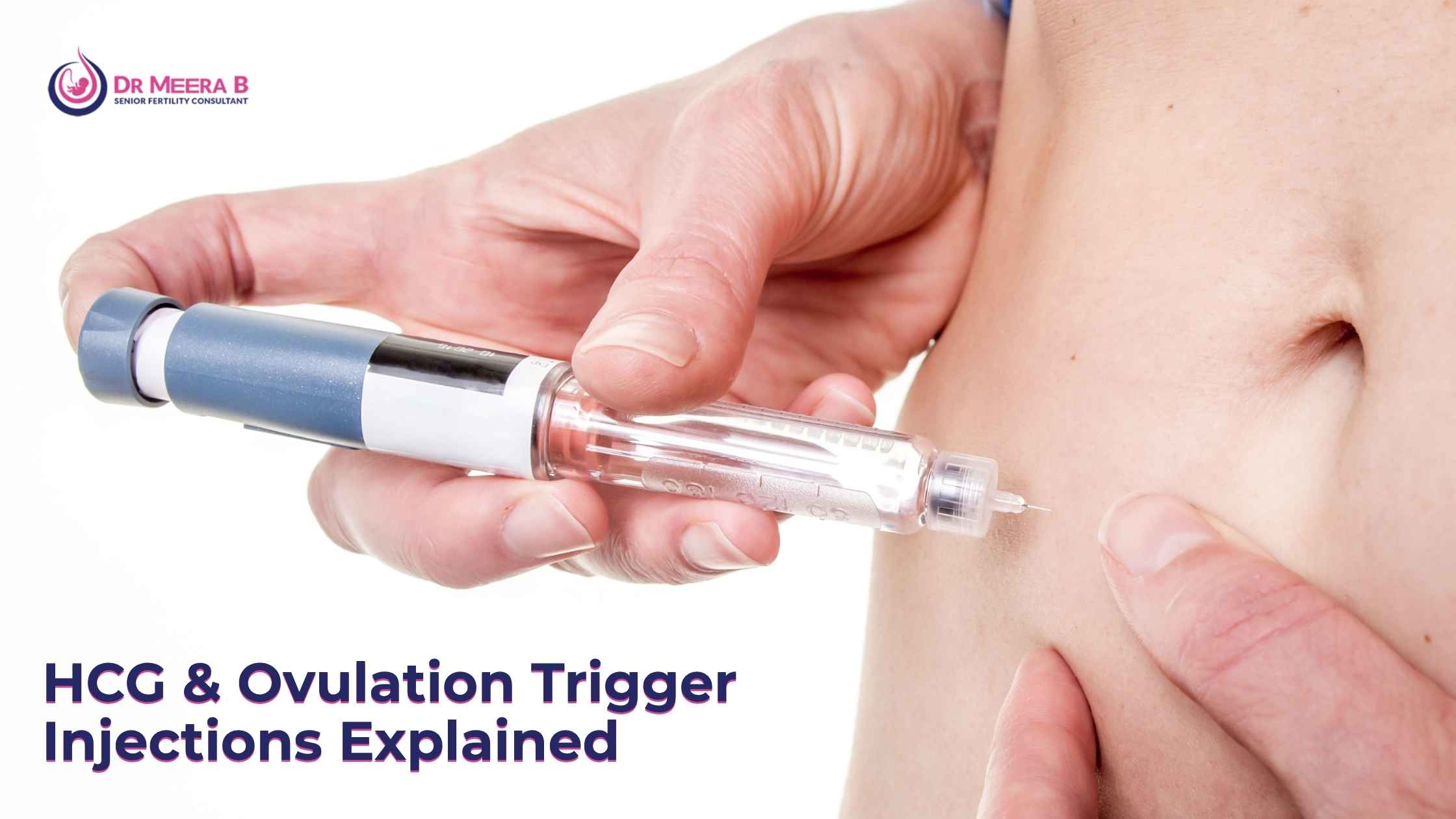
HCG & Ovulation Trigger Injections Explained
Did you know that ovulation trigger injections using HCG are a critical part of fertility treatments and are used in a significant percentage of assisted reproductive procedures like IVF and IUI worldwide? Studies indicate that properly timed ovulation triggers can increase the chances of successful conception by improving egg release timing and quality. Understanding HCG & Ovulation Trigger Injections Explained can make a decisive difference for couples trying to conceive.
What are HCG and ovulation trigger injections?
HCG (Human Chorionic Gonadotropin) injections are hormonal medications used in fertility treatments to trigger ovulation. These injections mimic the natural luteinizing hormone (LH) surge in a woman’s body, which is responsible for releasing a mature egg from the ovary.
In simpler terms, ovulation trigger injections help doctors precisely control when ovulation occurs. This precision is essential in treatments such as IUI and IVF, where timing plays a crucial role in success.
- Stimulates final egg maturation
- Triggers egg release (ovulation)
- Helps synchronize treatment cycles
- Improves fertilization timing
At Dr Meera B’s place of practice, including Aster PMF Hospital, Sasthamkotta, these injections are administered with precision and personalized planning to ensure optimal outcomes for each patient.
Why are ovulation trigger injections important in fertility treatments?
Ovulation does not always occur naturally or predictably in many women facing fertility challenges. This is where ovulation trigger injections become essential.
Without proper ovulation timing:
- Eggs may not release at all
- Fertilization timing may be missed
- Egg quality may not be optimal
With the right trigger injection:
- Ovulation occurs within 36–40 hours
- Doctors can plan IUI or egg retrieval accurately
- Chances of conception improve significantly
This level of precision is one of the reasons why couples who delay consulting an expert often lose valuable time. With over 30 years of experience, Dr Meera B ensures that each treatment is tailored, safe, and evidence-based.
How do HCG injections work in the body?
HCG works by mimicking the body’s natural LH surge. Once injected, it signals the ovary to release a mature egg. The process unfolds in a predictable timeline:
- Injection is administered at the right follicle size
- Hormone stimulates egg maturation
- Ovulation occurs within 36–40 hours
- Fertilization window is optimized
This predictable response is what allows fertility specialists like Dr Meera B to plan procedures with accuracy, minimizing guesswork and maximizing success.
What is the ovulation injection price and what affects it?
The ovulation injection price can vary depending on several factors, including the brand, dosage, and treatment protocol.
| Factor | Impact on Cost |
|---|---|
| Type of HCG brand | Imported brands may cost more |
| Dosage required | Higher doses increase price |
| Treatment type (IUI/IVF) | IVF cycles may require more monitoring |
| Location of treatment | Hospital infrastructure affects pricing |
At Dr Meera B’s place of practice, patients receive transparent guidance about treatment planning, ensuring they understand both medical and financial aspects before proceeding.
What is the hcg injection cost in India?
The hcg injection cost in India typically ranges from moderate to premium depending on quality and brand. However, cost should never be the only deciding factor.
Choosing a highly experienced specialist ensures:
- Correct dosage
- Proper timing
- Reduced risk of complications
- Better success rates
Dr Meera B’s extensive training, including experience at Bourn Hall Clinic in Cambridge, UK, ensures patients receive world-class fertility care right here in Kollam.
What are the symptoms of egg rupture after hcg injection?
Recognizing the symptoms of egg rupture after hcg injection helps patients understand whether ovulation has occurred successfully.
Common symptoms include:
- Mild lower abdominal pain (mittelschmerz)
- Increased cervical mucus
- Slight bloating
- Breast tenderness
- Light spotting (in some cases)
These symptoms indicate that the ovary has released the egg, which is the goal of the trigger injection. However, not all women experience noticeable signs, which is why medical monitoring is essential.
What are egg rupture symptoms and when should you worry?
Typical egg rupture symptoms are mild and temporary. However, certain signs require immediate medical attention:
- Severe abdominal pain
- Persistent bloating
- Nausea or vomiting
- Rapid weight gain
These could indicate complications like ovarian hyperstimulation syndrome (OHSS), which must be managed promptly by an experienced specialist.
At Dr Meera B’s place of practice, patients are closely monitored to ensure safety at every stage of treatment.
How Dr Meera B personalizes ovulation trigger treatments
Not every patient responds the same way to fertility medications. This is where expertise becomes critical.
Dr Meera B follows a highly individualized approach:
- Detailed hormonal evaluation
- Ultrasound follicle tracking
- Customized dosage planning
- Precise timing of trigger injection
- Post-trigger monitoring
Her decades of experience, combined with international training, ensures that patients receive care that is both scientifically accurate and deeply personalized.
When should you consider ovulation trigger injections?
You may benefit from ovulation trigger injections if:
- You have irregular ovulation
- You are undergoing IUI or IVF
- You have PCOS-related ovulation issues
- You are not responding to oral medications alone
Delaying treatment can reduce fertility potential over time. Early consultation with a specialist like Dr Meera B can significantly improve outcomes.
About Dr Meera B
Dr Meera B is a highly respected gynecologist and fertility specialist based in Kollam, with over three decades of experience in reproductive medicine. She holds prestigious qualifications including MBBS, DGO, DNB (O&G), MRCOG (UK), and FRCOG (UK).
She trained at the renowned Bourn Hall Clinic in Cambridge, UK, a globally recognized center in reproductive medicine. Her approach combines advanced medical science with compassionate patient care.
Currently, Dr Meera B consults at Aster PMF Hospital, Sasthamkotta, where advanced fertility technologies are accessible to patients seeking reliable solutions.
Take the next step toward parenthood
Every day you delay could mean missing the optimal fertility window. With the right guidance, the journey becomes clearer, safer, and more hopeful.
To book an appointment with Dr Meera B:
- Visit: https://drmeerab.com/contact/
- Call: +91 9447145101
- Send a WhatsApp message via the website
Her team will schedule your consultation and guide you through the next steps with care and professionalism.
HCG & Ovulation Trigger Injections – FAQs
An HCG trigger injection is used in fertility treatments to mimic the natural luteinizing hormone (LH) surge that causes ovulation. Under the guidance of Dr. Meera B, it is carefully timed to ensure that the egg is released at the optimal moment, improving the chances of conception in both natural and assisted cycles.
The injection is usually administered when the follicle reaches the right size, typically observed through ultrasound monitoring. Dr. Meera B personalizes the timing to align with your body's response, ensuring better outcomes whether you are trying naturally, undergoing IUI, or IVF.
The ovulation injection price can vary depending on the brand, dosage, and clinic protocols. Typically, it may range from affordable to moderately priced, but Dr. Meera B ensures transparent guidance so patients understand the overall treatment cost and receive the most suitable option.
The hcg injection cost depends on whether it is part of a complete fertility package or prescribed individually. At Dr. Meera B’s clinic, patients are guided through cost-effective plans that balance quality care with affordability, ensuring no compromise on treatment success.
The symptoms of egg rupture after hcg injection may include mild lower abdominal pain, slight bloating, or a feeling of heaviness in the pelvic region. Some women may also notice increased cervical mucus. These signs indicate that ovulation has likely occurred.
Not necessarily. While some women experience clear egg rupture symptoms like mild cramps or spotting, others may not feel anything at all. This is why ultrasound monitoring and expert evaluation by Dr. Meera B are crucial to confirm ovulation accurately.
The injection is generally well tolerated and causes minimal discomfort, similar to any routine injection. Side effects are rare but may include mild soreness or bloating. Under the supervision of Dr. Meera B, safety protocols are strictly followed to minimize any risks.
Ovulation typically occurs within 34 to 40 hours after the injection. This precise timing helps couples plan intercourse or fertility procedures effectively. Dr. Meera B provides clear instructions to ensure patients make the most of this critical window.
Comments are closed