
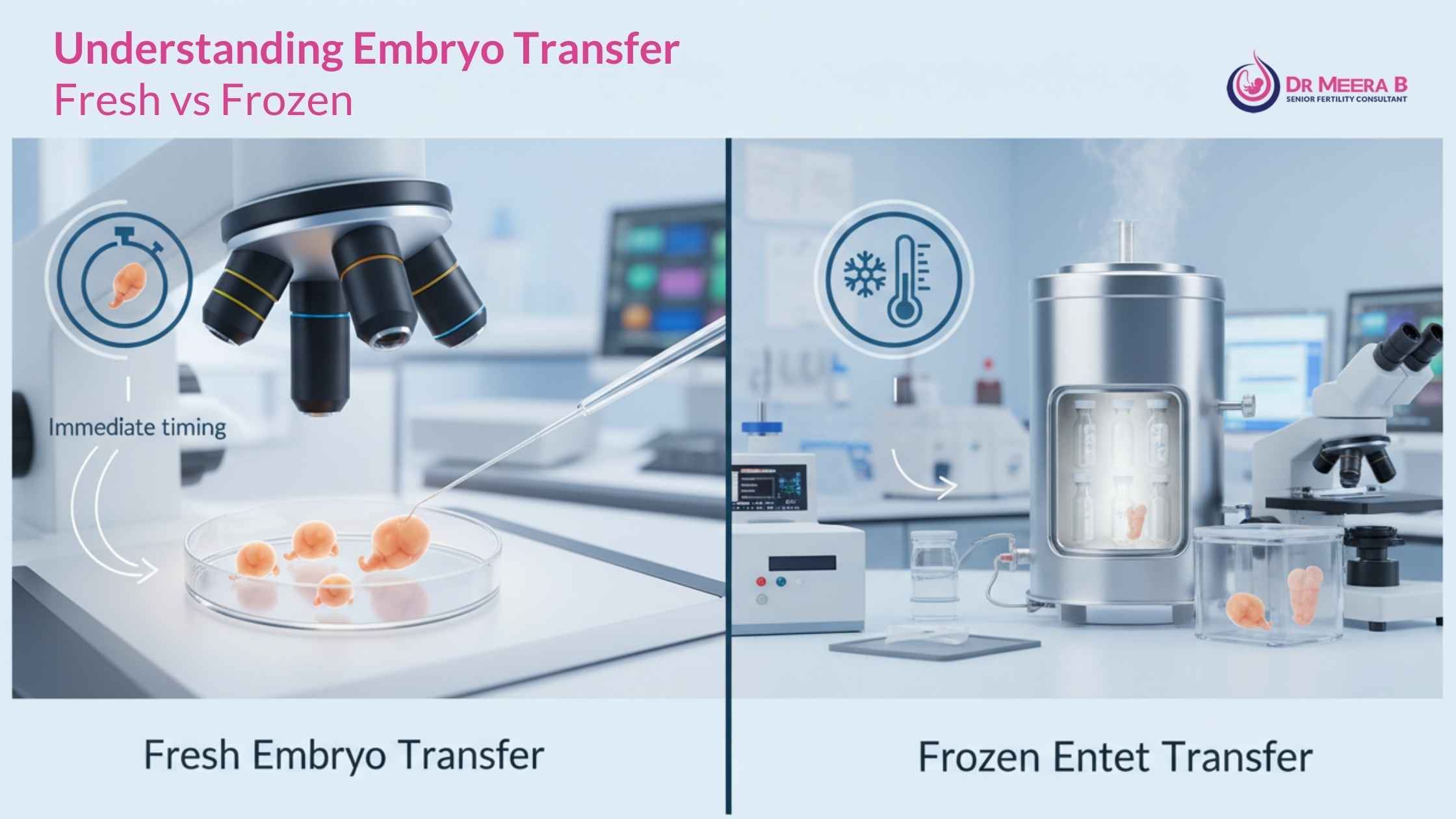
Embryo transfer is the most crucial stage of an IVF journey. According to global fertility research, nearly 40–50% of successful IVF pregnancies occur after embryo transfer, making this stage the defining moment for hopeful parents. When couples begin researching Fresh vs Frozen Embryo Transfer, they often feel overwhelmed by medical terms, success rates, and decisions that could influence their future family.
Under the guidance of Dr Meera B, an internationally trained reproductive specialist with more than three decades of experience, couples receive scientifically proven fertility guidance designed to maximize the chances of pregnancy while ensuring safe and ethical treatment practices.
Practicing at Dr Meera B’s place of practice, including Aster PMF Hospital, Sasthamkotta, Dr Meera B combines advanced reproductive medicine with compassionate counseling to help couples understand each step of the IVF process—from the IVF lab process to embryo grading and the final embryo transfer decision.
What is embryo transfer in IVF?
Embryo transfer is the stage in an IVF cycle where a fertilized embryo is placed inside the uterus so that it can implant and develop into a pregnancy. The procedure itself is usually simple and painless, but the preparation leading up to it is highly sophisticated.
During IVF treatment:
- Eggs are retrieved from the ovaries
- They are fertilized with sperm in the laboratory
- The resulting embryos are monitored carefully
- The best embryo is selected and transferred to the uterus
Modern fertility care offers two main approaches: Fresh vs Frozen Embryo Transfer. Both methods are widely practiced, and the choice depends on several medical factors including hormone levels, uterine health, and embryo development.
Fresh vs Frozen Embryo Transfer: What is the difference?
The decision between Fresh vs Frozen Embryo Transfer is based on timing and preparation of the uterus.
| Feature | Fresh Embryo Transfer | Frozen Embryo Transfer |
|---|---|---|
| Timing | Embryo transferred 3–5 days after fertilization | Embryo frozen and transferred in a later cycle |
| Preparation | Uses the same IVF cycle hormones | Uterus prepared separately |
| Flexibility | Less flexibility | More planning options |
| Embryo Storage | No freezing required | Embryos preserved through cryopreservation |
Dr Meera B carefully evaluates each patient’s hormonal balance, uterine lining condition, and embryo development before recommending the best transfer strategy.
How the IVF lab process influences embryo transfer success
The IVF lab process plays a crucial role in determining whether an embryo will successfully implant. Advanced laboratories use precise environmental controls, incubators, and imaging technology to monitor embryo development.
Key steps in the IVF lab process include:
- Egg and sperm preparation
- Fertilization through IVF or ICSI
- Embryo culture for 3–5 days
- Monitoring embryo growth
- Selection of the healthiest embryo
At Dr Meera B’s place of practice, advanced laboratory facilities ensure that embryos develop in conditions that closely mimic the natural environment of the human body.
What is embryo grading and why does it matter?
Embryo grading is a scientific method used to evaluate embryo quality before transfer. It helps fertility specialists determine which embryo has the best potential for implantation.
During embryo grading, specialists analyze:
- Cell number
- Cell symmetry
- Fragmentation
- Development stage (blastocyst quality)
While embryo grading provides valuable insight, Dr Meera B emphasizes that it is only one factor influencing pregnancy success. Uterine receptivity, hormonal balance, and overall reproductive health are equally important.
What are the fresh embryo transfer benefits?
For some patients, immediate transfer of embryos offers several advantages. The fresh embryo transfer benefits include reduced waiting time and the ability to proceed with pregnancy attempts without delaying the cycle.
Some of the commonly observed fresh embryo transfer benefits include:
- Shorter overall IVF timeline
- No need for embryo freezing
- Reduced cost compared with additional cycles
- Immediate transfer after fertilization
However, fresh transfer may not be recommended in situations where hormone levels are elevated or when ovarian stimulation has been intense. In such cases, waiting for the body to recover can significantly improve outcomes.
Understanding frozen embryo transfer success
Advances in cryopreservation technology have significantly improved frozen embryo transfer success. Modern vitrification techniques allow embryos to be frozen and thawed without compromising quality.
Many fertility specialists now consider frozen transfers equally effective—and sometimes even better—depending on the patient’s condition.
Factors that influence frozen embryo transfer success include:
- Quality of the embryo before freezing
- Uterine lining preparation
- Patient age and health
- Precision of laboratory freezing techniques
Dr Meera B carefully evaluates each case to determine whether a frozen transfer could improve implantation chances.
What are the FET cycle steps?
A frozen embryo transfer cycle follows a carefully structured protocol. Understanding the FET cycle steps helps patients prepare physically and emotionally for the process.
- Hormonal preparation of the uterus
- Monitoring uterine lining thickness
- Scheduling embryo thawing
- Embryo transfer procedure
- Post-transfer monitoring
These FET cycle steps ensure that the uterine environment is optimized for implantation at the precise moment the embryo is transferred.
How Dr Meera B personalizes embryo transfer decisions
Every fertility journey is unique. Instead of applying a standard protocol, Dr Meera B evaluates several medical factors before recommending a strategy.
These include:
- Age of the patient
- Hormone levels during IVF stimulation
- Endometrial thickness
- Embryo development and grading
- Previous IVF history
This individualized approach ensures that couples receive treatment strategies that align with the latest evidence in reproductive medicine.
Why advanced fertility expertise matters
Dr Meera B is a senior gynecologist and reproductive medicine specialist with more than 30 years of experience helping couples overcome infertility challenges. She holds multiple international qualifications including:
- MBBS
- DGO
- DNB (Obstetrics & Gynaecology)
- MRCOG (UK)
- FRCOG (UK)
Her advanced training includes reproductive medicine exposure at the renowned Bourn Hall Clinic in Cambridge, a historic fertility center known for pioneering IVF technology.
Through her work at Aster PMF Hospital, Sasthamkotta and other practice locations, she provides evidence-based fertility consultation to couples from Kerala and across India.
About Dr Meera B
Dr Meera B is a highly respected fertility specialist and gynecologist based in Kollam, Kerala. With more than three decades of clinical experience, she specializes in reproductive medicine, IVF consultation, and advanced fertility guidance.
Her international training and extensive clinical exposure enable her to guide couples through complex fertility decisions—including choosing between Fresh vs Frozen Embryo Transfer—using proven medical science and ethical clinical practices.
She currently consults at Aster PMF Hospital, Sasthamkotta and other locations where advanced fertility technology and laboratory infrastructure are available.
Schedule a consultation
Couples seeking expert fertility guidance can schedule a consultation with Dr Meera B through multiple options.
- Fill out the consultation form at https://drmeerab.com/contact/
- Call +91 9447145101 to request an appointment
- Send a WhatsApp message using the interface on the website
Dr Meera B’s team will coordinate the consultation schedule and guide you through the next steps of your fertility journey.
Understanding embryo transfer options today could be the first step toward building the family you have been hoping for.
Comments are closed