
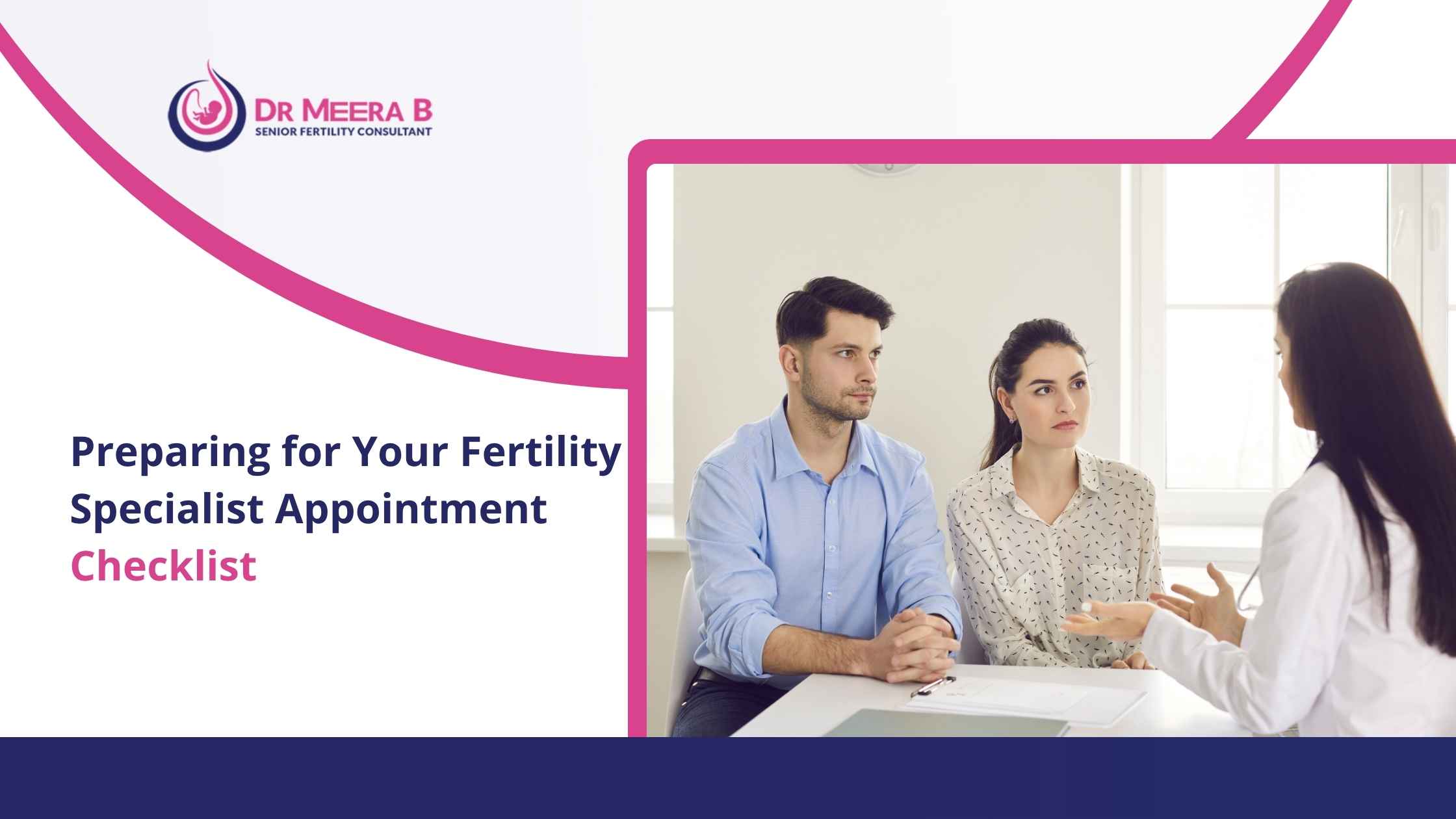
Preparing for your fertility specialist appointment: checklist
Approximately 10–15 percent of couples in India experience fertility challenges during their reproductive years. This statistic alone highlights how crucial proper preparation can be before visiting a fertility expert. A well-planned consultation ensures your time and effort lead to productive results rather than confusion or repetition. For couples preparing to meet Dr Meera B at her place of practice—often Aster PMF Hospital in Sasthamkotta, Kollam—this comprehensive checklist will help you arrive confident, informed, and emotionally ready for your next step toward parenthood.
Why thorough preparation makes a difference
When you invest time in fertility specialist appointment prep, you set the tone for a meaningful and effective consultation. Proper preparation allows Dr Meera B to interpret your history accurately, recommend tests efficiently, and personalise advice that aligns with your goals. Couples who arrive prepared often leave their first consultation with greater clarity, realistic timelines, and renewed optimism.
Gathering essential medical records to bring
One of the most important steps before meeting a fertility specialist is compiling the medical records to bring. These documents provide valuable insights into your medical history and previous evaluations. Make sure to collect:
- Reports of previous hormone tests, thyroid profiles, and ultrasound scans.
- Records of fertility treatments, medications, or surgeries such as laparoscopy or hysteroscopy.
- Information on chronic health conditions, current prescriptions, or allergies.
- Partner’s semen analysis, if available, and any previous diagnostic results.
Having complete medical documentation saves significant time during the consultation. It enables Dr Meera B to understand the background quickly and recommend precise investigations instead of repeating older tests.
Preparing questions to ask fertility doctor
Walking into a consultation without clarity on what you wish to know can lead to missed opportunities. Create a personalised list of questions to ask fertility doctor that address your most pressing concerns. Examples include:
- What are the key reasons that might be affecting our ability to conceive?
- Which fertility tests are most relevant at this stage?
- How do age, lifestyle, or past conditions influence our chances?
- What treatment options would you suggest and in what order?
- What are the expected costs, timelines, and possible side effects?
Dr Meera B encourages open conversation. She believes that informed patients make empowered decisions, leading to stronger compliance and better outcomes. Having your questions ready ensures your consultation remains focused and productive.
Starting ovulation tracking for consultation
Recording your menstrual and ovulation details before the visit is extremely helpful. Begin ovulation tracking for consultation at least one or two cycles before the appointment. Note details such as:
- Cycle length and variations across months.
- Basal body temperature changes indicating ovulation.
- Use of ovulation-predictor kits and results observed.
- Physical signs like cervical mucus changes or mild mid-cycle pain.
This data allows Dr Meera B to assess whether ovulation is regular and if further hormonal evaluation is needed. It also helps determine the ideal timing for conception attempts or fertility tests.
Partner preparation fertility visit
Fertility involves both partners equally, making partner preparation fertility visit vital. Encourage your partner to be part of the journey from day one. He should:
- Attend the consultation with you whenever possible.
- Prepare personal health details including medical conditions, medications, or habits such as smoking or alcohol use.
- Complete a semen analysis beforehand or be ready to schedule one after the appointment.
When both partners participate, Dr Meera B can assess male and female factors together and create a joint, practical strategy. This shared responsibility often reduces emotional stress and fosters mutual understanding.
Understanding fertility test timing
Knowing the correct fertility test timing helps you plan visits and sample collection efficiently. Some tests must be performed at specific points of the menstrual cycle—for instance:
- Day 2–3: Baseline hormone tests such as FSH, LH, and AMH.
- Day 21: Progesterone test to confirm ovulation.
- Any day: Semen analysis, thyroid and prolactin checks.
Accurate timing ensures your test results truly reflect your reproductive status. Dr Meera B will guide you regarding the sequence of investigations depending on your cycle and medical background.
Making lifestyle changes before appointment
Before visiting a fertility specialist, start implementing evidence-based lifestyle changes before appointment. These adjustments significantly enhance fertility potential and general well-being. Both partners should:
- Maintain a healthy weight and exercise regularly but moderately.
- Eliminate smoking and restrict alcohol intake.
- Eat balanced meals rich in antioxidants, proteins, and essential vitamins such as folic acid and zinc.
- Get adequate sleep and manage stress through yoga, meditation, or counselling if required.
Simple yet consistent changes make your body more receptive to fertility treatments. Dr Meera B often notices that couples adopting healthy habits before treatment progress more smoothly through the process.
Emotional preparation consultation
Fertility evaluation can be an emotional experience. Taking steps toward emotional preparation consultation helps you manage expectations and stay resilient. Try the following:
- Discuss feelings openly with your partner and acknowledge anxieties about diagnosis or treatment.
- Keep a journal to note thoughts, fears, or questions you want to address during the visit.
- Join a supportive environment—friends, family, or groups who understand fertility journeys.
- Focus on optimism: every evaluation brings you one step closer to answers and solutions.
Dr Meera B’s empathetic approach ensures patients feel heard and respected. Her consultations are not limited to medical facts but extend to emotional well-being, ensuring holistic care.
Step-by-step pre-appointment plan
- Four weeks prior: Start ovulation tracking for consultation and maintain a healthy routine.
- Two weeks prior: Gather all medical records to bring and note down your questions.
- One week prior: Confirm partner participation and finalise fertility test timing with Dr Meera B’s team.
- One day prior: Prepare documents, ensure adequate rest, and maintain a calm mindset.
This sequential plan ensures that by the time you meet Dr Meera B, you’re well organised and confident about discussing your fertility goals.
During your consultation with Dr Meera B
At the appointment, Dr Meera B will review your history, analyse reports, and discuss lifestyle patterns. Expect a detailed conversation covering your ovulation records, partner findings, test schedule, and next steps. The session typically includes:
- Comprehensive evaluation of both partners’ medical data.
- Recommendations for diagnostic tests based on fertility test timing.
- Clarification of treatment options like ovulation induction, IUI, or IVF if indicated.
- Personalised advice on nutrition, exercise, and stress management.
Her commitment to ethical, evidence-based care ensures you receive realistic and practical guidance, not exaggerated promises.
About Dr Meera B
Dr Meera B MBBS, DGO, DNB (O&G), MRCOG (UK), FRCOG (UK) is a leading gynecologist in Kollam with more than three decades of experience in reproductive medicine and fertility care. She earned her MBBS from Govt Medical College, Trivandrum and completed postgraduate training at Govt Medical College, Kottayam. In 2008, she became a Member of the Royal College of Obstetricians and Gynaecologists, UK, and achieved Fellowship in 2022. Her specialised training at the world-renowned Bourn Hall Clinic, Cambridge — the birthplace of IVF — adds international expertise to her compassionate practice in Kerala.
At her place of practice, including Aster PMF Hospital Sasthamkotta, Dr Meera B consults couples from across India and abroad. She believes that proper fertility specialist appointment prep empowers patients to make informed decisions and move forward with confidence. Her approach blends clinical excellence with empathy, ensuring couples feel supported at every stage of their fertility journey.
Take the next step
Preparation transforms anxiety into confidence. Whether you are planning your first consultation or seeking a second opinion, follow this checklist and take action today. To schedule a session with Dr Meera B, fill the contact form at https://drmeerab.com/contact/, call +91 9447145101, or send a WhatsApp message through the website. Her team will coordinate your appointment and keep you informed. The sooner you prepare, the closer you are to turning your dream of parenthood into reality.
Preparing for your fertility specialist appointment: checklist — FAQs
Fertility specialist appointment prep is a simple, structured routine that helps you arrive organised and confident. By pulling together history, tracking cycles, and aligning partner involvement, you give Dr. Meera B everything she needs to provide personalised next steps efficiently at her place of practice in Sasthamkotta, Kollam.
- Bring collated medical information and a concise health summary for both partners.
- Track cycles and note symptoms so timing-sensitive tests can be planned correctly.
- Prepare priority questions and agree on goals before the consultation.
Outcome: a more productive first session, fewer repeat tests, and a clear roadmap.
Collect the medical records to bring that reflect both partners’ health and prior fertility workups. Neatly organise them in date order and keep digital copies if possible.
- Past hormone profiles, thyroid tests, prolactin, vitamin D, and metabolic panels.
- Pelvic ultrasound reports, HSG/HyCoSy, laparoscopy or hysteroscopy notes (if done).
- Previous treatment summaries (ovulation induction, IUI, IVF) and drug histories.
- Semen analysis, prior infections or surgeries, and ongoing medications for either partner.
Tip: add a one-page summary of timelines, key results, and allergies for quick review.
Begin ovulation tracking for consultation at least one to two cycles before your visit. Capture the basics consistently so patterns are easy to interpret.
- Cycle length variations, first day of each period, and any spotting.
- Ovulation predictor kit results and basal body temperature trends.
- Symptoms such as mid-cycle pain or cervical mucus changes.
- Intercourse timing relative to suspected ovulation.
These notes help Dr. Meera B confirm regularity and decide if additional hormone testing is required.
Prepare a short list of questions to ask fertility doctor so your priorities are addressed early and clearly.
- Which factors likely impact our fertility and what tests confirm them?
- What treatment sequence do you recommend for our profile and why?
- Expected outcomes, timelines, and safety considerations for each option.
- What lifestyle steps should we start today to support the plan?
Keep notes. A shared understanding improves decisions and reduces stress later.
Partner preparation fertility visit means both partners actively participate from day one. Arrive together whenever possible and share complete histories.
- Confirm or schedule semen analysis; note urological issues or prior infections.
- List medications, lifestyle factors, sleep, and occupational exposures.
- Align expectations and preferred timelines before meeting Dr. Meera B.
Joint planning helps the doctor tailor a unified, practical roadmap for you both.
Evidence-based lifestyle changes before appointment can improve natural and treatment-assisted outcomes.
- Achieve a balanced BMI; prioritise regular, moderate exercise.
- Stop smoking, moderate alcohol, and review supplements with your clinician.
- Adopt a nutrient-dense diet rich in folate, protein, and healthy fats.
- Improve sleep hygiene and add stress-reduction practices you can sustain.
Simple habits, done consistently, amplify the impact of your medical plan.
Fertility test timing ensures results reflect true physiology. Some tests are cycle-dependent, while others are flexible.
- Day 2–3: baseline hormones (FSH, LH) and ultrasound antral follicle count.
- Mid-luteal (often Day ~21 in a 28-day cycle): serum progesterone to confirm ovulation.
- Any day: thyroid profile, prolactin, vitamin D, and semen analysis.
Share your cycle tracking so Dr. Meera B can book the right test windows.
Emotional preparation consultation means acknowledging feelings, setting realistic expectations, and creating support systems that make the process sustainable.
- Talk openly as a couple about hopes, fears, and boundaries.
- Use a brief journal to capture questions and reflections between visits.
- Lean on trusted friends or support groups for perspective.
- Focus on small, controllable steps; celebrate progress, not just endpoints.
Compassionate, evidence-based guidance from Dr. Meera B helps you move forward with clarity and calm.
Comments are closed