
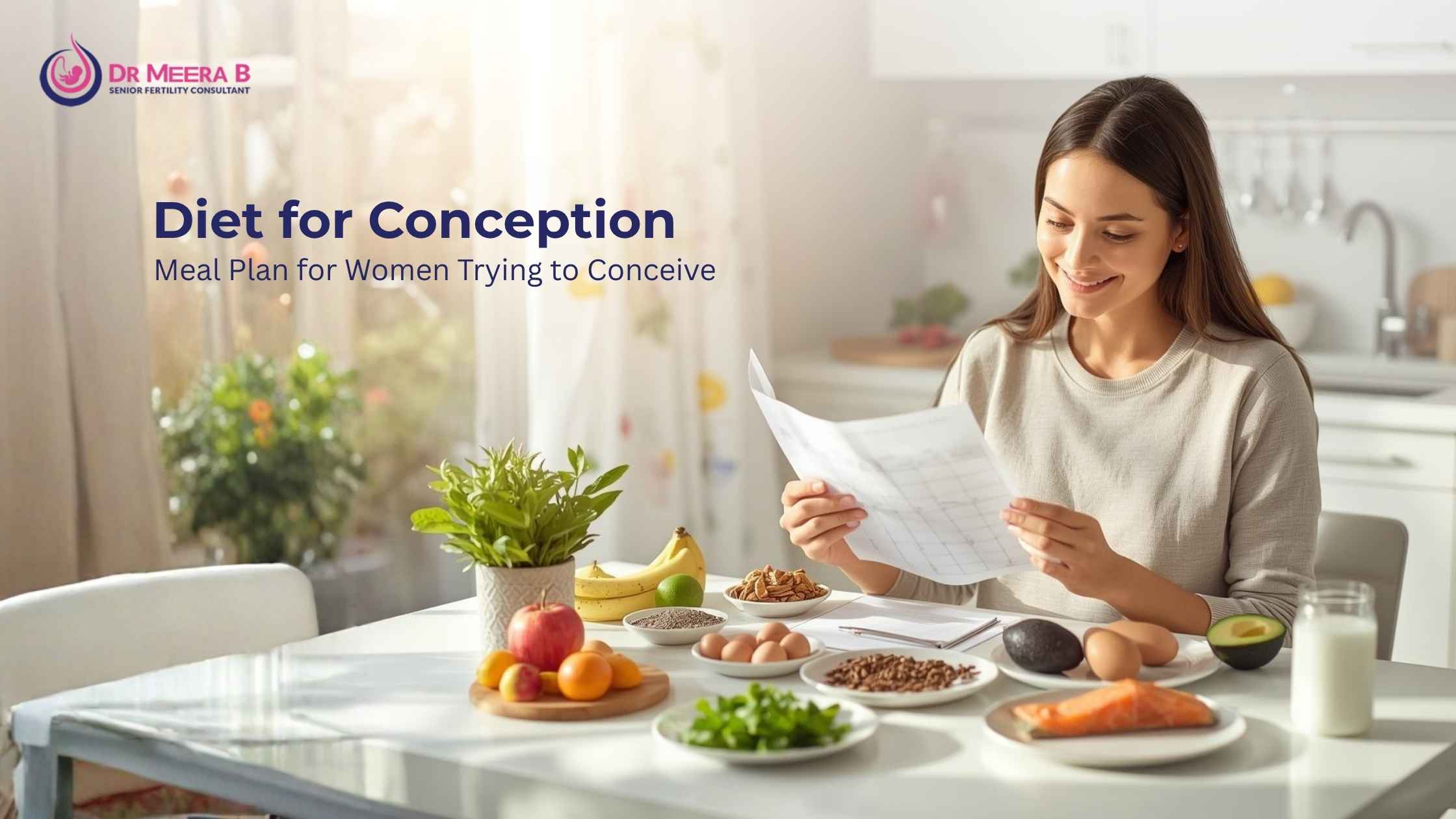
Diet for conception: Meal plan for women trying to conceive
According to data published by the World Health Organization, nearly 1 in 6 couples globally experience infertility at some point in their reproductive life. Nutrition is one of the most modifiable factors influencing reproductive health, making diet for conception a critical starting point for women planning pregnancy. What you eat in the months before conception can influence ovulation, egg quality, hormonal balance, and even early implantation. This is where a medically guided, evidence-based approach becomes essential.
At Dr Meera B’s place of practice, including her consultations at Aster PMF Hospital, Sasthamkotta, dietary guidance is not treated as a generic checklist. Instead, it is integrated into a woman’s overall fertility assessment, ensuring nutrition works in harmony with her reproductive physiology, lifestyle, and medical history.
What is a conception diet and why does it matter?
A conception diet refers to a structured nutritional approach designed to support ovulation, hormonal balance, and uterine readiness before pregnancy. In simple terms, it focuses on nourishing the body before fertilization occurs, rather than reacting after pregnancy is confirmed.
Dr Meera B, with over three decades of experience in obstetrics, gynecology, and reproductive medicine, emphasizes that conception success is rarely accidental. Nutrition influences insulin sensitivity, inflammation levels, and micronutrient availability, all of which affect reproductive outcomes. When diet is ignored, even advanced treatments may not yield optimal results.
How does diet for conceiving support fertility?
A well-planned diet for conceiving works on multiple biological pathways simultaneously. It supports regular ovulation, improves cervical mucus quality, enhances uterine lining receptivity, and reduces oxidative stress that can damage eggs.
- Stabilizes blood sugar to support ovulatory cycles
- Provides antioxidants that protect developing eggs
- Supplies essential fats for hormone production
- Supports healthy implantation through micronutrient balance
At Dr Meera B’s place of practice, dietary advice is always aligned with clinical findings, ensuring safety, scientific validity, and realistic expectations.
What are the best foods for conception according to medical science?
The best foods for conception are those that provide high nutrient density without triggering inflammation or hormonal imbalance. These foods are not exotic or difficult to source; they are practical, culturally adaptable, and supported by research.
- Whole grains such as brown rice and millets
- Fresh vegetables, especially leafy greens
- Seasonal fruits rich in antioxidants
- Legumes and lentils for plant-based protein
- Nuts and seeds providing essential fatty acids
Dr Meera B guides patients to personalize these choices based on body weight, metabolic health, and any existing gynecological or endocrine conditions.
Why a fertility diet is not the same as a general healthy diet
A fertility diet goes beyond general wellness. While a healthy diet supports overall health, fertility-focused nutrition targets reproductive tissues, hormonal pathways, and egg maturation cycles.
Women undergoing fertility evaluation often discover subtle deficiencies or imbalances that are not apparent in routine health checks. Addressing these through diet can significantly improve natural conception potential and responsiveness to assisted treatments when required.
Understanding fertility nutrition from a clinical perspective
Fertility nutrition is a clinical discipline that combines reproductive endocrinology with nutritional science. It considers timing, nutrient bioavailability, and interaction with medications or supplements.
Dr Meera B’s advanced training in reproductive medicine, including her experience at the renowned Bourn Hall Clinic in Cambridge, UK, allows her to integrate global best practices into locally relevant dietary guidance for women in Kerala and beyond.
Which fertility-friendly foods support hormonal balance?
Fertility-friendly foods are those that reduce inflammation and support estrogen and progesterone balance without overstimulating insulin or cortisol pathways.
- Vegetables rich in fiber for estrogen metabolism
- Omega-3 sources such as flaxseeds and walnuts
- Fermented foods supporting gut health
- Natural calcium and vitamin D sources
These foods form the foundation of dietary guidance offered during consultations with Dr Meera B.
Why folate for fertility is non-negotiable
Folate for fertility plays a crucial role in DNA synthesis, cell division, and early embryonic development. Adequate folate levels before conception reduce the risk of neural tube defects and support healthy ovulation.
Rather than relying solely on supplements, Dr Meera B encourages natural dietary sources of folate alongside medically indicated supplementation when required, ensuring safe and effective intake.
How uterine health foods support implantation
Uterine health foods focus on improving blood flow to the uterus, reducing oxidative stress, and supporting endometrial thickness.
- Iron-rich foods to support oxygen delivery
- Vitamin E sources for tissue repair
- Hydration-focused foods like fruits and soups
These dietary choices become especially important in women with previous implantation failures or irregular cycles.
Why balanced diet for pregnancy should start before conception
A balanced diet for pregnancy should ideally begin months before conception, not after a positive test. Early embryonic development occurs before many women even realize they are pregnant.
By starting early, women reduce nutritional stress during critical developmental windows. Dr Meera B emphasizes preconception readiness as a cornerstone of reproductive success.
How diet to improve egg quality influences fertility outcomes
A targeted diet to improve egg quality focuses on reducing oxidative stress and supporting mitochondrial function within the egg.
- Antioxidant-rich fruits and vegetables
- Adequate protein for cellular repair
- Healthy fats for membrane integrity
Egg quality cannot be changed overnight, but consistent dietary changes over three to six months can have measurable effects.
Why guidance from Dr Meera B makes a difference
Dr. Meera. B MBBS, DGO, DNB(O&G), MRCOG(UK), FRCOG(UK) is a senior gynecologist and reproductive medicine specialist with more than thirty years of experience. A graduate of Govt Medical College, Trivandrum, with postgraduate training from Govt Medical College, Kottayam, she brings international expertise to local care.
Her advanced training at Bourn Hall Clinic, Cambridge, where the world’s first IVF baby was born, equips her with deep insight into evidence-based fertility management. Patients consulting her at Aster PMF Hospital, Sasthamkotta, benefit from a holistic approach where diet, diagnostics, and treatment plans work together.
How to book a consultation with Dr Meera B
If you are actively planning pregnancy or facing delays in conception, early consultation can make a meaningful difference. To book an appointment with Dr Meera B:
- Fill and submit the consultation form at https://drmeerab.com/contact/
- Call or WhatsApp +91 9447145101 to request an appointment
- Use the WhatsApp interface available on the website
Dr Meera’s team will coordinate your appointment and keep you informed at every step.
About Dr Meera B
Dr Meera B is a renowned gynecologist in Kollam specializing in fertility care, reproductive medicine, and IVF. She consults at multiple leading hospitals, including Aster PMF Hospital, Sasthamkotta, offering ethical, patient-centric care rooted in decades of clinical expertise.
Frequently asked questions on diet for conception
A diet for conception is a structured nutritional approach started ideally three to six months before trying to conceive, aimed at supporting ovulation, hormonal balance, and early implantation. Dr. Meera B recommends beginning early because egg development and uterine preparation occur well before pregnancy is detected.
A conception diet specifically targets reproductive health by focusing on nutrients that influence ovulation, egg maturation, and uterine receptivity. Under Dr. Meera B’s guidance, this approach is individualized based on age, cycle regularity, and medical history rather than following a generic healthy eating plan.
Yes, a medically guided diet for conceiving can improve natural fertility by stabilizing blood sugar, reducing inflammation, and supporting hormonal balance. Dr. Meera B integrates nutrition with clinical evaluation at her place of practice, including Aster PMF Hospital, Sasthamkotta, to ensure safe and evidence-based results.
The best foods for conception include whole grains, fresh vegetables, fruits, legumes, nuts, and seeds that provide antioxidants and essential micronutrients. Dr. Meera B advises selecting foods that suit the woman’s metabolic profile rather than following trends or restrictive diets.
A fertility diet supports reproductive hormones, improves cycle regularity, and enhances the body’s response to fertility treatments if needed. Dr. Meera B uses fertility nutrition as a foundational tool, aligning dietary advice with diagnostic findings for realistic and ethical care.
Folate for fertility is essential for DNA synthesis, healthy ovulation, and early embryonic development. Dr. Meera B emphasizes achieving adequate folate levels through diet and supplements when required, as part of a broader plan that includes uterine health foods to support implantation.
Yes, a balanced diet for pregnancy should ideally begin before conception, as early fetal development starts before pregnancy is confirmed. Dr. Meera B encourages preconception nutritional readiness to reduce risks and support a healthy pregnancy journey.
A diet to improve egg quality focuses on reducing oxidative stress and supporting cellular energy within the egg. While age-related decline cannot be reversed, Dr. Meera B uses fertility-friendly foods and evidence-based strategies to optimize outcomes within ethical medical boundaries.
Comments are closed