
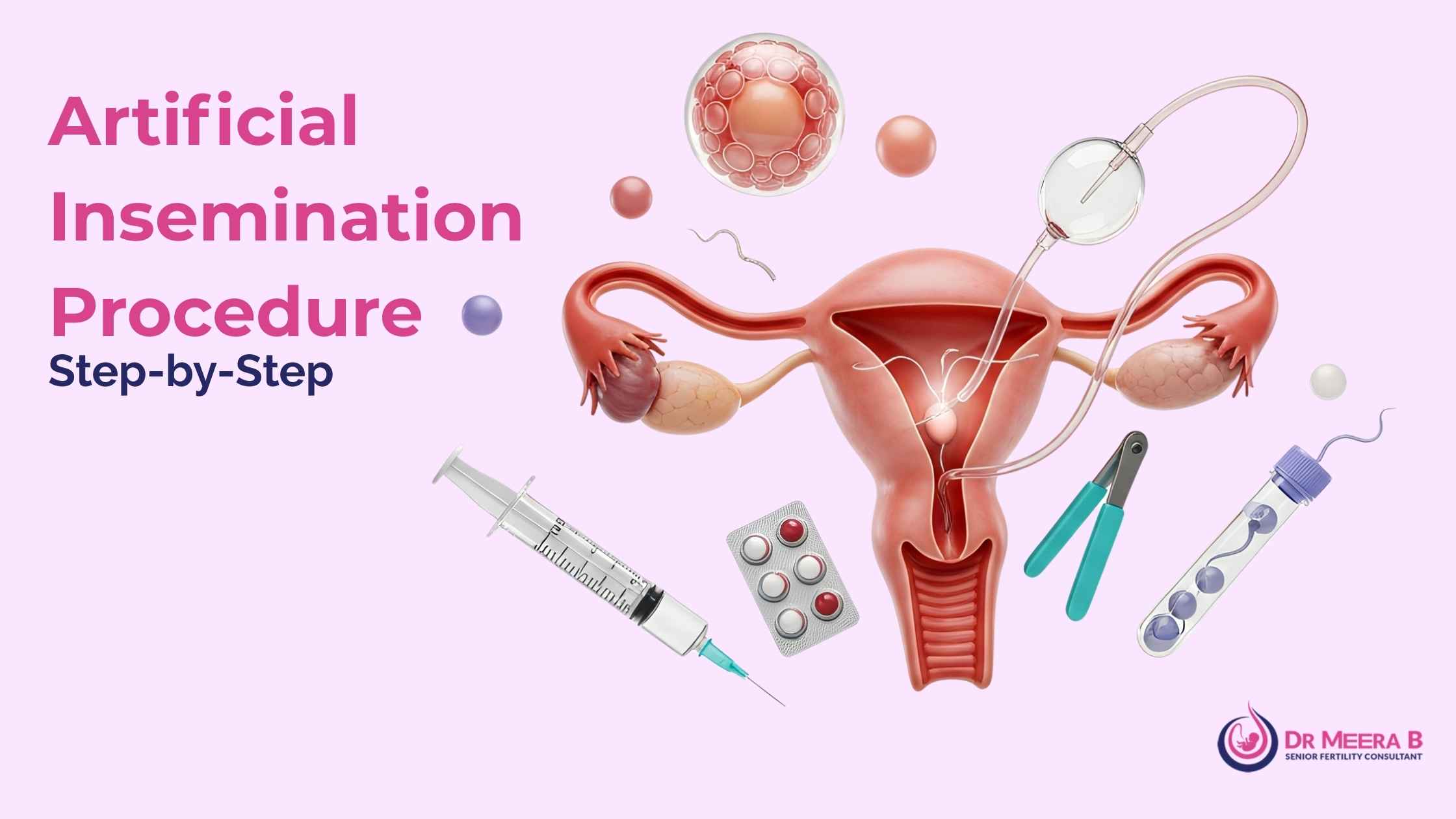
Artificial insemination procedure step-by-step
The artificial insemination procedure is one of the most widely performed fertility treatments in the world today. Publicly available global fertility data shows that intrauterine insemination (IUI), the most common form of artificial insemination, contributes to successful conception in nearly 10–20% of suitable couples per treatment cycle, depending on age and diagnosis. This makes it a powerful first-line option for couples facing infertility challenges—especially when guided by an experienced specialist like Dr Meera B.
For many couples, infertility brings emotional strain, unanswered questions, and months or even years of uncertainty. The good news is that modern reproductive medicine offers proven, ethical, and scientifically validated solutions. When performed at the right time, for the right indications, and under expert supervision, artificial insemination can gently bridge the gap between hope and parenthood.
What is artificial insemination and why is it recommended?
Artificial insemination is a medically assisted fertility technique in which carefully prepared sperm is placed directly into the female reproductive tract during the fertile window. The goal is to increase the chances of sperm meeting the egg naturally, without more invasive interventions.
Couples often ask, what is insemination process and how it differs from IVF. Unlike IVF, fertilization in artificial insemination still happens inside the body. This makes it less invasive, more affordable, and emotionally easier for many couples, particularly at the early stages of fertility treatment.
Dr Meera B, with over three decades of experience in obstetrics, gynecology, and reproductive medicine, recommends artificial insemination only when it is medically appropriate and supported by diagnostic evidence. Her approach is grounded in safety, ethics, and realistic expectations.
Who is an ideal candidate for artificial insemination?
Artificial insemination is not a one-size-fits-all solution. Careful patient selection plays a major role in success. At Dr Meera B’s place of practice, including Aster PMF Hospital, Sasthamkotta, a thorough evaluation is always the first step.
- Couples with unexplained infertility
- Mild male factor infertility
- Ovulation-related issues that respond to medication
- Cervical factor infertility
- Couples seeking donor sperm under ethical and legal guidelines
By addressing the root cause of infertility, Dr Meera ensures that artificial insemination is used only when it offers a genuine chance of success, rather than false reassurance.
How insemination is done: step-by-step explanation
One of the most searched questions online is how insemination is done. Below is a clear, step-by-step explanation of the insemination journey, as followed under expert supervision.
Step 1: Detailed fertility assessment
The process begins with a comprehensive evaluation of both partners. This includes hormonal tests, ultrasound scans, semen analysis, and assessment of ovulation patterns. This step ensures that artificial insemination is both safe and suitable.
Step 2: Ovulation monitoring and stimulation (if required)
Depending on individual needs, mild ovulation-inducing medications may be prescribed. Ultrasound monitoring helps identify the precise fertile window, which is critical for timing the insemination process accurately.
Step 3: Semen collection and preparation
On the day of insemination, the semen sample is collected and processed in a laboratory. This preparation concentrates healthy, motile sperm and removes impurities, increasing the likelihood of fertilization.
Step 4: The insemination procedure
The prepared sperm is gently introduced into the uterus using a thin, sterile catheter. This part of the insemination process is usually painless and takes only a few minutes. No anesthesia is required, and the patient can resume normal activities shortly afterward.
Step 5: Post-procedure care and follow-up
After insemination, patients are advised on lifestyle measures and medications, if necessary. A pregnancy test is typically scheduled about two weeks later to confirm the outcome.
Understanding the insemination process in simple terms
The insemination process works by shortening the distance sperm must travel to reach the egg. By placing sperm closer to the site of fertilization and timing the procedure precisely, the chances of natural conception are significantly improved.
While some patients search online for an insemination procedure video to understand the technique visually, it is important to remember that every patient’s body and fertility journey is unique. A personalized consultation with Dr Meera B provides clarity that no generic video can replace.
Safety, success rates, and ethical considerations
Artificial insemination is considered a safe and well-established fertility treatment when performed by qualified specialists. Complications are rare and usually mild, such as temporary discomfort or minimal spotting.
Success rates depend on several factors:
- Age of the female partner
- Underlying cause of infertility
- Sperm quality
- Accurate ovulation timing
- Clinical expertise
Dr Meera B emphasizes evidence-based medicine and avoids exaggerated claims. Her recommendations are rooted in globally accepted reproductive guidelines and decades of clinical experience.
Why expert guidance makes all the difference
Many couples delay seeking expert help, hoping time alone will solve fertility issues. Unfortunately, this delay can reduce treatment effectiveness—especially as age advances. Consulting a senior fertility specialist early can significantly improve outcomes.
Dr Meera B is a highly respected gynecologist in Kollam, with qualifications including MBBS, DGO, DNB (Obstetrics & Gynaecology), MRCOG (UK), and FRCOG (UK). She received advanced training in reproductive medicine and IVF at the world-renowned Bourn Hall Clinic in Cambridge, UK.
With experience spanning over thirty years, Dr Meera B brings a rare combination of clinical expertise, international exposure, and compassionate patient care. Her current place of practice includes Aster PMF Hospital, Sasthamkotta, where advanced fertility technologies are available to support modern treatments.
About Dr Meera B
Dr Meera B is a senior gynecologist and fertility specialist based in Kollam, Kerala. She specializes in reproductive medicine, infertility management, and assisted conception techniques. Patients from India and abroad seek her guidance for ethical, transparent, and medically sound fertility care.
To book an appointment for consultation with Dr Meera B, you may fill and submit the form at https://drmeerab.com/contact/, call +91 9447145101, or send a WhatsApp message using the interface on the website. Dr Meera’s team will schedule your appointment and keep you informed every step of the way.
Frequently Asked Questions: Artificial Insemination Procedure
The artificial insemination procedure is a fertility treatment in which carefully prepared sperm is placed directly into the woman’s reproductive tract to improve the chances of conception. It is commonly recommended for couples facing mild male infertility, unexplained infertility, ovulation-related issues, or cervical factors. Under the guidance of Dr. Meera B, the approach is personalized after evaluating both partners’ medical history and fertility reports.
Many patients ask how insemination is done in a clinical setting. The process usually involves cycle monitoring, ovulation tracking, sperm collection and preparation, and then gently introducing the sperm into the uterus using a thin catheter. Dr. Meera B ensures that each step is performed in a safe, sterile, and comfortable environment, minimizing stress for the patient.
If you are wondering what is insemination process, it typically begins with identifying the most fertile window in the menstrual cycle. The actual insemination itself usually takes only a few minutes, while the entire appointment may last around 20–30 minutes. Patients can resume normal activities shortly after, following Dr. Meera B’s post-procedure guidance.
The insemination process is generally not painful. Most women describe it as mildly uncomfortable, similar to a routine gynecological examination. Dr. Meera B focuses on patient comfort, explaining each step clearly and using gentle techniques to reduce anxiety and physical discomfort.
Artificial insemination is considered a low-risk fertility treatment. Some women may experience mild cramping or spotting, which usually resolves quickly. At Dr. Meera B’s practice, patients are closely monitored, and any concerns are addressed promptly to ensure safety throughout the treatment journey.
Some patients find it helpful to view an insemination procedure video for educational purposes. While videos can provide a general understanding, Dr. Meera B emphasizes personalized counseling, as every patient’s fertility plan is unique and best explained during a one-on-one consultation.
Success rates depend on factors such as age, underlying fertility issues, and overall health. Dr. Meera B follows evidence-based protocols and tailors treatment plans to optimize outcomes, while also setting realistic expectations and providing emotional support throughout the process.
Comments are closed